

Audio By Carbonatix
Policy Advisor at the John A. Kufuor Foundation, Nana Ama Oppong-Duah, is urging private companies in the agriculture mechanisation sector to support rice farmers in the country.
She says mechanisation is a key service rice farmers need if the country can become self-sufficient in rice production.
Nana Oppong–Duah says the foundation and other partners are working with the Ministry of Food and Agriculture to get that highly needed service for farmers.
"We also have a mechanisation component which we were talking about to be able to identify mechanisation service providers and link them directly to rice and cassava farmers to be able to have a more efficient value chain in the districts," she explained.
"The good thing about this is that we are partnering with private sector actors like TATA, John Deere, Troto Tractor, and of course some of the government bodies to be able to bring this service to farmers," she added.
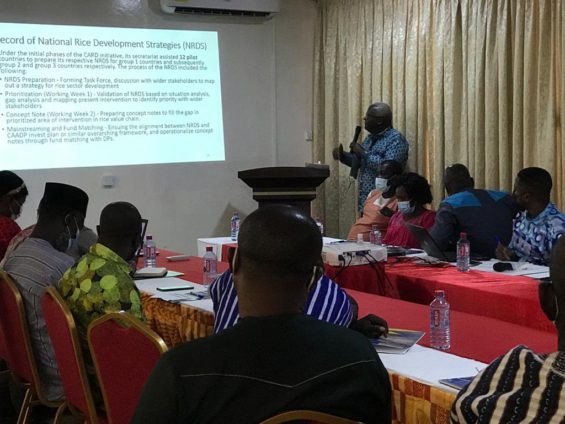
Nana Oppong–Duah was speaking to the media at a learning event on the Ghana Rice Project in Accra.
The event saw the unveiling of findings from research carried out in about 140 districts to identify gaps in local rice production following the implementation of the "Public-Private Partnership for Competitive and Inclusive Rice Value Chain Development: Planting for Food and Jobs (PFJ) Rice Chapter Project."
The Alliance for a Green Revolution in Africa (AGRA) is funding the project to improve the rice value chain so Ghana is less dependent on imported rice.
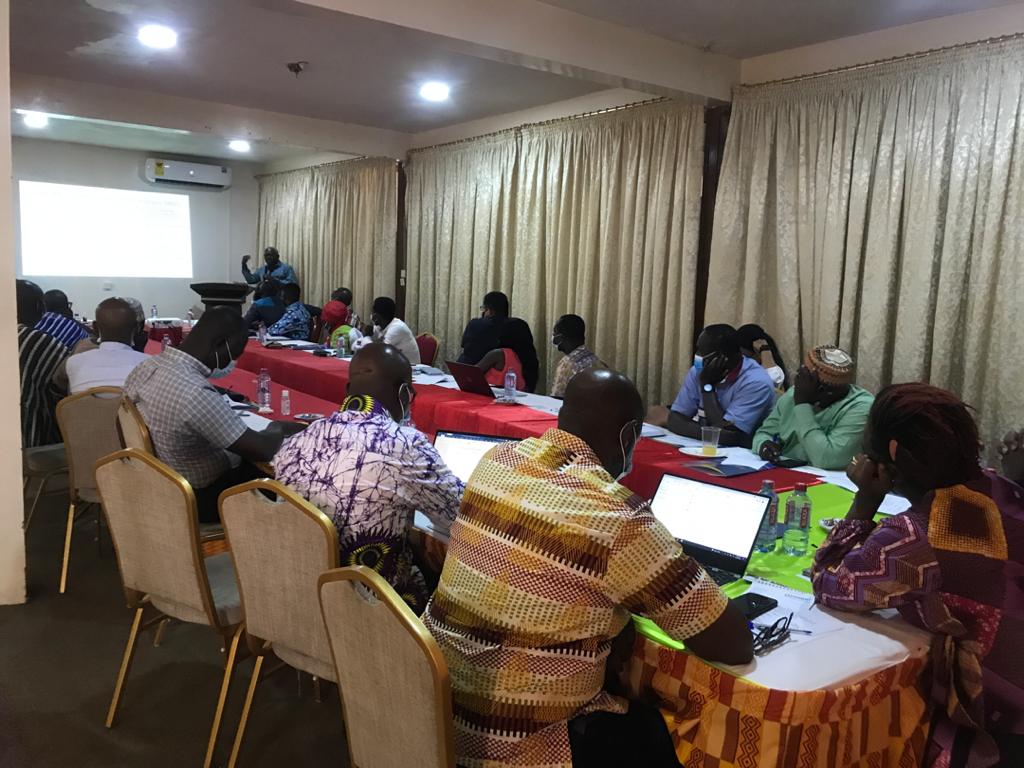
The Ministry of Food and Agriculture, the John A. Kufuor Foundation, Intervale Ghana, Hopeline Institute, Sparkx Farms and Volta City Farms are the consortium partners implementing it.
"We are training the service providers and mapping them based on the physical location of farmers. So, we are training service providers who are located in areas where farmers are. We started with the farmer database. And so, farmers are aligned to service providers in clusters," Madam Oppong-Duah explained.
"We are working with Ghana Rice Inter-professional Body (GRIB) because they are private sector mainly. That is a sustainability measure. So, we are facilitating the process for the private sector actors to meet. This meeting is bringing partners together so we can learn," she added.
The policy advisor also noted the need for effective coordination in the rice sector to ensure farmers' availability of inputs and markets. "One of the things is coordination. How do we coordinate?
"Some farmers don't even know input dealers are nearby. If there is rice in the district, how do we move to the miller? When we bring them together, the synergy comes to play," she observed.
She also noted the need for farmers to have access to improved seeds and funding. "We advocated for government to put together a fund for the rice sector. And the disbursement for that has taken place," Madam Oppong Duah explained.
President of GRIB Nana Agyei Ayeh identified difficulties with land preparation and funding as key challenges militating against efforts to boost local rice production in the country.
"GRIB is advocating for land development first. That is the foundation. If you are able to develop the land, that is where everything will be dictated," Nana Ayeh observed.
"Rice is a special crop. So before you start the rice, develop the land. When I say the development of land, it is different from, let's say, doing cassava. With rice, you need to go in there, clear the land, go deep and remove stumps for proper mechanisation like combine harvesters and rooters and power turners to work on the land. Without that, you cannot do so much," he explained.
On the high cost of loans, he said, "money is very expensive in Ghana. We are looking at the government to do something on the interest rate. "As it stands now, with the 25 per cent interest rate, it is very difficult.
"We are competing with people who are getting 5%. In Thailand for instance, their interest, rate is so low. So how can you be a rice farmer here and compete with a farmer from Thailand?" he quizzed.
Latest Stories
-
550 pupils in Kintampo South get educational lifeline as ‘Seeds of Hope’ reaches farming communities
19 minutes -
Opoku Mensah urges Christian Council, House of Chiefs to speak up on democratic freedoms
36 minutes -
Teacher unions’ strike: Minority demands immediate payment of teacher arrears, 20% deprived area allowance
44 minutes -
The Accra-Kumasi Expressway: Building it right
53 minutes -
Beyond gold exports: Building value and economic resilience from Ghana’s gold
59 minutes -
2027 AFCONQ: Ghana under pressure as Gambia beat Somalia 2-1
1 hour -
Eastern NPP Women’s Organiser calls on AG, Police to secure bail for Salomey Baffoe
1 hour -
Poverty, illiteracy driving acceptance of vote-buying among women – Damongo Queen Mother
2 hours -
Photos: Democracy Is Not For Sale forum in Savannah region
2 hours -
GNFS launches 2026/27 National Anti-Bushfire campaign in Atebubu, records 62.8% reduction in bushfire cases
2 hours -
I’ll vote for a female president; women are less likely to steal from the state – Okyeame Kwame
2 hours -
More public education needed to stop vote-buying – Savannah Region MP
2 hours -
Absa Bank commissions new head office, commits to strengthening operations in Ghana
2 hours -
Republic Bank-JoyNews Habitat Fair clinic: Day 1 ends on positive note as patrons explore housing solutions at Junction Mall
3 hours -
Vanderpuye: NDC welfare system needed to support former officials, cadres
3 hours