

Audio By Carbonatix
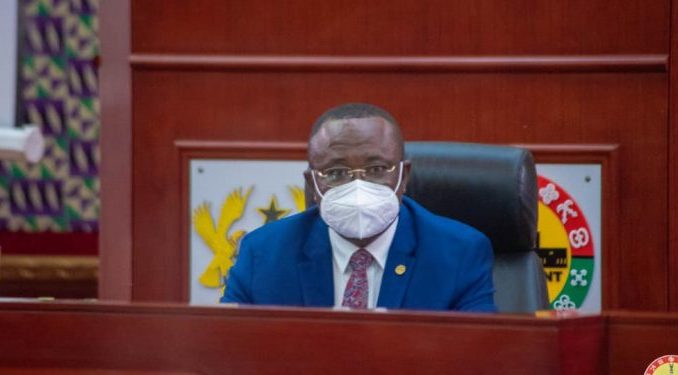
First Deputy Speaker, Joesph Osei-Owusu, has justified why Parliament's approval of the 2022 budget cannot be described as unconstitutional.
Addressing the House on Wednesday, the Bekwai MP explained that, unlike Speaker Alban Bagbin who is not an MP, he is.
According to him, due to this, he does not lose his right as a legislator when presiding in the House in the absence of the unavailable Speaker.
Joseph Osei Owusu said his role is to assist the Speaker as indicated in Article 96 (1) of the 1992 Constitution.
"A few matters I'd want to clarify. First, it must be clear that a Deputy Speaker is not a Speaker. Mr Speaker is not a Member of Parliament. I am a Member of Parliament. The Second Deputy Speaker is an MP and our role is to assist the Speaker in managing this House.
"But when Mr Speaker is not available, either of us could preside on the House, so can any other member if necessary. Any other member can be elected by the House to preside. That member does not lose his right to be a member of the House. That is what our Standing Order says," he stated.
Article 96 (1) of the 1992 Constitution states "there shall be two Deputy Speakers of Parliament who shall be elected by Members of Parliament from among Members of Parliament."
He made this statement in reaction to comments by Minority leader, Haruna Iddrisu, that he, Joewise erred by approving the budget since it contravened portions of the Standing Orders.
The Bekwai MP, while acting as Speaker on Tuesday, counted himself as an MP for the Majority to get the 138 members it needed as quorum to approve the 2022 Budget statement.
He subsequently overturned the earlier rejection by the Minority group and approved the policy document in the absence of the Minority Group and the Speaker, Alban Bagbin.
The Tamale South MP based his assertions on Article 104 (3) of the Constitution and standing order 109 of Parliament.
Mr Iddrisu then moved a motion to reverse the approval of the 2022 budget that occurred in the absence of the Minority.
The motion was, however, overruled by the first Deputy Speaker who argued that he did not partake in the voting for the approval of the budget, hence his ruling.
"When it comes to the question of voting, it is very clear anytime any of the Deputy speakers or any other member elected to preside is in the chair, that member does not vote. That has never been in dispute. I did not vote while presiding."
He held the view that those in the Minority are misinterpreting the law since he never voted over the matter.
"Any attempt to read and interpret the constitution of the Speaker to include the Deputy speakers is a misreading and misinterpretation of the constitution."
Latest Stories
-
‘Ghana became Ghana only eight years ago?’ – Tampuli challenges Chief Justice
9 minutes -
Local Government Service partners Celltel to accelerate digital transformation
13 minutes -
CJ’s role includes building working relationships with state institutions — NDC’s Hamza Suhuyini
15 minutes -
Police intercept vehicle carrying suspected contraband at Jema
15 minutes -
BOSTenergies pays first-ever GH¢34.2m dividend to government
17 minutes -
Accra–Kumasi Expressway: 170km of corridor cleared, only 6km remains – GAF
25 minutes -
Maritime security and naval cooperation in a changing international order
26 minutes -
Over 8,000 candidates compete for just 800 places at Aburi Girls’ SHS – CSSPS
26 minutes -
‘Did he lie? I don’t see anything political about Chief Justice’s comments’ – Franklin Cudjoe
29 minutes -
NDC’s Hamza Suhuyini accuses NPP of hypocrisy over Chief Justice’s remarks
30 minutes -
Sekondi-Takoradi records 152 new HIV infections in 2025
40 minutes -
Agbodza orders Wa-Bulenga road contractor back to site
41 minutes -
The Last Embers Are Burning: On Ali Mazrui and the scholarship we forgot to save
45 minutes -
GIF calls for more forest guards as attacks on frontline officers escalate
50 minutes -
GMR records 12,172 patient service touchpoints in Ho West medical mission
1 hour