

Audio By Carbonatix
Colombia's constitutional court has decriminalised abortions within the first 24 weeks of pregnancy.
Under the new rules, no one will be prosecuted for having an abortion within that time frame.
Since 2006, abortions have been allowed in Colombia in cases of rape, when the woman's life is at risk, or if the pregnancy is not viable.
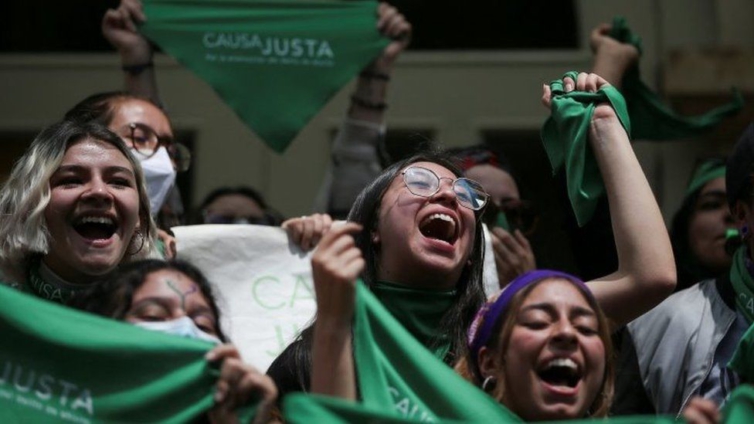
The ruling was welcomed by pro-choice groups, who called it "a historic achievement".
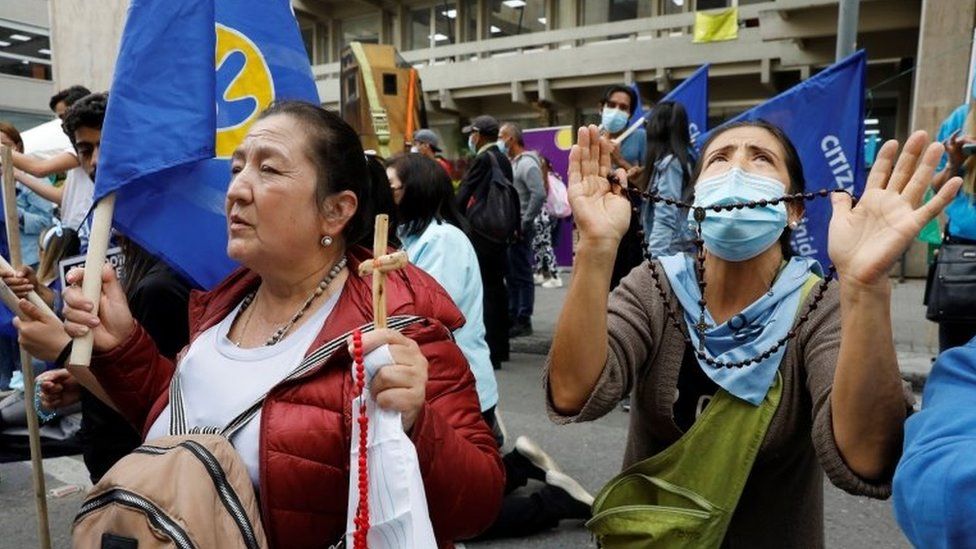
But Archbishop José Luis Rueda said the Catholic Church would "continue to proclaim, defend and promote human life from gestation until natural death".
Pro-choice activists say it is the latest in a series of victories in recent years, including a similar ruling by Mexico's Supreme Court in September and the legalisation of abortion up to the 14th week in Argentina.


This is a massive step for Latin America, a Catholic region and one with deeply conservative values.
But the fact that Mexico, Argentina and now Colombia have decriminalised abortion feels like there is momentum growing.
The activist movement in the region has been huge these past few years and that has definitely influenced change.
But the fight is not over yet. Many Latin American countries still severely limit abortion rights, namely Brazil, the region's biggest nation by far.
And in several Central American states abortion is banned outright, even in the case of rape and incest.
There are women in prison serving long sentences, many of whom say that they suffered miscarriages. But with so few reproductive rights in some countries, women who need medical help are instead abandoned by the state.
The ruling came about as a result of a lawsuit filed by the umbrella group Causa Justa (Just Cause) whose aim is to have abortion removed from the penal code.
Causa Justa argued that because abortions were defined as a crime outside of the three cases allowed under the 2006 ruling, doctors who performed abortions and their patients were often stigmatised.
The group estimates that 90% of abortions in Colombia are carried out clandestinely, putting the health and life of women at risk.
While Monday's decision has not removed abortion from Colombia's penal code entirely, it is seen as a victory in the battle to widen access to the procedure.
Following its 5-4 ruling, the court urged the Congress and the government to come up with legislation which will protect the rights of pregnant women, including providing family planning services, eliminating obstacles to abortion care and helping with adoptions.
Latest Stories
-
Dr. Bawumia reiterates call for inclusion and unity at meeting with new Savannah and Western regional NPP executives
5 minutes -
I’ll consider review — Oppong Nkrumah hints at next move after Supreme Court dismisses injunction
29 minutes -
Bodies of two hikers missing for decades found after Swiss glacier melts
45 minutes -
NSMQ 2026: North East Region denied one-eighth stage as Kumasi High kicks out Nalerigu
49 minutes -
Useless Column: ‘Weytin do Akosua?’
53 minutes -
Context Matters: Understanding the Tony Elumelu First-Name Debate – Afanyi Dadzie writes
56 minutes -
Microwaving is safe, but minimise aluminium foil use – Food Scientist advices
1 hour -
Supreme Court clears way for legal vacation criminal trials, dismisses Oppong Nkrumah’s injunction bid
1 hour -
Restaurant portions, surplus food worsening Ghana’s food waste problem — Food Scientist
1 hour -
NPP extends 2026 National Officers Elections filing deadline to August 29
2 hours -
NDC has not shown it can manage power sector effectively — Fiifi Boafo
2 hours -
Ghana secured US$2.6bn FDIs in 2025 – GIPC Report
2 hours -
GRIDCo restores power nationwide after August 20 blackout, says grid strengthening measures ongoing
2 hours -
Journalism must prioritise public interest over attention — Kwesi Pratt
2 hours -
Ghana Mineworkers Union demand suspension of contract mining directive, threaten industrial action
3 hours