

Audio By Carbonatix
Food Scientist at the University of Ghana’s Department of Nutrition and Food Science, Dr Joycelyn Quansah, has said that Restaurant portion sizes and surplus food are contributing to Ghana’s wider food waste problem.
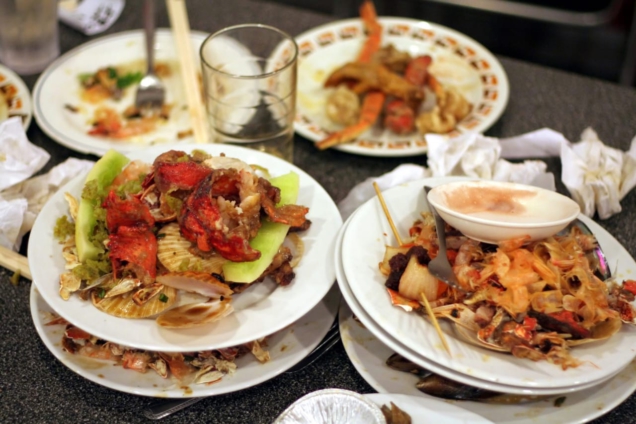
She explained that restaurants often prepare more food than they may eventually sell to ensure customers are served quickly, while standard portion sizes can also result in significant amounts of food being left uneaten.
Speaking on Joy FM’s Super Morning Show on Friday, August 21, as part of Joy Sustainability Month discussions on “Food Waste: How We Are Throwing Away Millions,” Dr Quansah said restaurants were one of several points along the food chain where waste occurred.
“When we go to the restaurants, within some number of minutes, we are hoping to have our food ready,” she said.
“To be able to meet us, they always try to prepare more than they may need at a time so that they don't get their customers going hungry.”
Dr Quansah said the number of customers visiting restaurants could vary from one day to another, leaving some businesses with surplus food.
“There may be some days that they may not get their customers as usual, and they are likely to have surplus food,” she said.
She also identified portion sizes as another factor contributing to food waste in restaurants.
According to her, restaurants usually have standard serving sizes that may be larger than what some customers would normally eat at home.
“When we also go to the restaurant, you know, they have a standard way of serving the food,” she said.
“I want a plate of rice. I want a plate of banku. The sizes could even be larger than what you and I can eat at home.”
She said customers could therefore leave portions of their meals uneaten even though the food itself was still fit for consumption.
“Even if you tell them, ‘Oh, I just want a piece,’ it will only come at the serving size, and you just eat a small portion that you want,” she said.
Dr Quansah said food left on a customer's plate could not normally be served to another person at the restaurant, even though it could potentially have been consumed if it were at home.
“So whatever is left, even though it is food, and if you were at home, you could have given it to you or another person by you,” she said.
“In the restaurant, you don't have to throw it away. It is still food, but they cannot serve it to someone.”
Dr Quansah said that restaurants were only part of the wider food waste problem, with significant losses occurring from the farm through to markets and households.
She estimated that between 30% and 40% of food reaching markets could be wasted, depending on the category.
“It’s usually very high with the fruits and vegetables and lower with the grains and cereals,” she said.
Dr Quansah said the scale of food waste becomes more concerning when its potential to support people facing hunger is considered.
She cited a scenario in the Ashanti Region where food waste from about 49 restaurants was estimated to be enough to feed 5,000 people for three weeks.
“There is a scenario in the Ashanti Region whereby the waste from about 49 restaurants is estimated to feed about 5,000 people for three weeks,” she said.
She said the example demonstrated how much food was being lost when considered against the number of people who struggle to access adequate food.
“So if Ghana as a country, we're losing more than a quarter of our food going waste. If just 49 restaurants can feed about 5,000 people, then it means that as a country, whatever is wasted, it could feed a lot of people who are on an everyday basis going hungry,” she said.
Latest Stories
-
Tema Fire Commander calls for private-sector support
8 minutes -
Adaklu is not a safe haven for environmental degradation – DCE
12 minutes -
Judiciary urged to expedite corruption cases
16 minutes -
Adenta-Accra travel time improves significantly under contra-flow – GAPTE
20 minutes -
SEND-Ghana, UCC students march for mandatory food warning labels
27 minutes -
Auditor-General vows tough surcharges, unveils tracker, AI audits
33 minutes -
Government vows no political protection for drug trafficking suspects
44 minutes -
Government clarifies Interior Minister’s ‘involvement’ comment in drug probe
1 hour -
Mahama orders security agencies to make Ghana’s ports ‘ironclad’ against drug trafficking
1 hour -
Government admits turf war among security agencies is undermining port security
2 hours -
Government rejects ‘Cocaine Coast’ label, says drug busts show security agencies are working
2 hours -
Banks NPL ratio of 16.1% is still too high – S&P
2 hours -
US death row inmate Christa Pike taken to hospital after surviving two lethal injections, says lawyer
2 hours -
Japan raises residency fee for foreign nationals by twenty-fold
2 hours -
Nollywood actor CJay Nwoks dies in Lagos hospital
3 hours