

Audio By Carbonatix
The World Bank says Ghana’s public debt stock as of now has exceeded the 80% of Gross Domestic Product (GDP) mark, putting the country in a tighter corner with respect to financing and interest payments.
The Bank of Ghana, in its January 2022 Monetary Policy Report, said the stock of public debt was equivalent to 78.4% of GDP at the end of 2021, compared with 76.1% of GDP at the end of 2020.
The country's total public debt stock stood at about ¢344.5 billion as of November 2021.
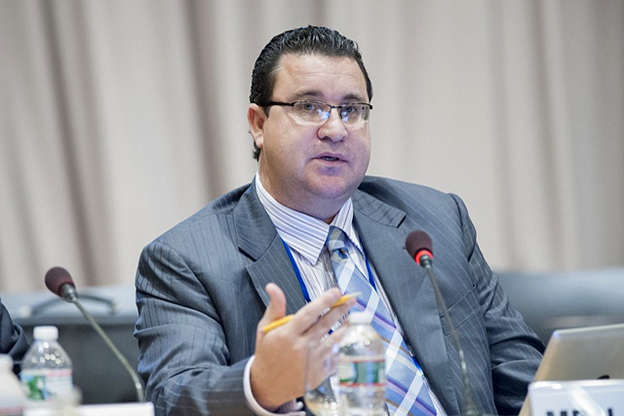
But the Country Director of the World Bank, Pierre Laporte, speaking at the One Ghana Movement lecture, said the situation might have changed now as Ghana keeps borrowing.
“The data as we know is close to 80% of GDP. Probably, now as we speak, it might have exceeded.”
“The fiscal deficit [9.7% in December 2021], unfortunately, with COVID-19 needs to be urgently brought down. Inflation must also be brought down. This is an interesting discussion, and we must acknowledge the situation on the ground”, Mr Laporte said
He further said the country is in a very challenging situation “as some of the panel have acknowledged that. We call it a crisis. We can describe it in many ways”.
“It's a really serious situation, and at the World Bank, we've not hidden the fact. When we discussed with the Minister [Ken Ofori-Ata] and with all the people in finance and the Head of State [President Akufo-Addo]. The situation is very difficult right now; Ghana faces a very tough road ahead to restore macro sustainability”, Mr Laporte added.
Economic challenges persisted before COVID-19
The World Bank Country Director emphasised that macroeconomic challenges persisted even with the emergence of the COVID-19 pandemic.
“Yes, COVID-19 has not helped, but even before COVID-19, there were signs that the situation was getting a little bit challenging”.
“So, the key thing is to be transparent with the people”, he suggested.
“Yes, the figures speak for themselves, but not everybody is as educated as we are. Not everyone understands what the numbers mean, so it is important to talk about it like we are doing”, he noted.
“More important is for us to find solutions for the problem,” he added.
IMF is not needed now
There had been suggestions for the country to seek economic and financial support from the International Monetary Fund.
But Mr Larporte said, “my basic principle, at a starting point your country should not go to the IMF, really truly speaking. Many countries in the world are not with the IMF but are performing well”.
“But the reality is different countries are with the IMF…that is why they were established”, he added.
Latest Stories
-
Tarkwa court jails labourer for three years over GH¢123,000 theft
47 minutes -
GAEC must retain nuclear scientists for Ghana’s nuclear ambitions – Minister
1 hour -
Man reportedly mistaken for game and shot by hunter dead in forest
1 hour -
19-year-old mason jailed 15 years for defiling seven-year-old pupil
1 hour -
Ghana’s banking sector assets rise 20.47% to GH¢500.2bn – BoG Governor
1 hour -
22 injured as Sprinter bus overturns at Sege after tyre burst
2 hours -
UN housing expert urges Ghana to strengthen Rent Control Department amid housing affordability concerns
2 hours -
Delta-BCI partnership reaches 166,000 people with breast cancer education
2 hours -
Power restoration fault suspected in Kumasi Central Market fire
7 hours -
The 7-foot giant of Ngleshie Amanfro: Seven-foot Ghanaian Ephraim Saawa dreams of joining the national basketball team
8 hours -
Government promises support for Kumasi Central Market fire victims
8 hours -
Vibes The Movie: Big Ghun’s Ghanaian film earns five nominations at 2026 REFFA
8 hours -
‘I’m a fulfilled man’—Justice Korbieh on missing out on Supreme Court despite two nominations
8 hours -
MamaCare CEO warns unresolved conflicts among health workers could undermine maternal and neonatal care
9 hours -
Health professionals urged to translate medical knowledge into practice to save mothers
9 hours