

Audio By Carbonatix
The National Disaster Management Organisation (NADMO) has said adequate measures are being implemented to forestall any flooding catastrophe during the rainy season.
While embarking on public education and sensitisation programmes, the outfit says it will soon be inspecting flood-prone areas in the capital and other cities to reduce the impact of floods when the rains strike.
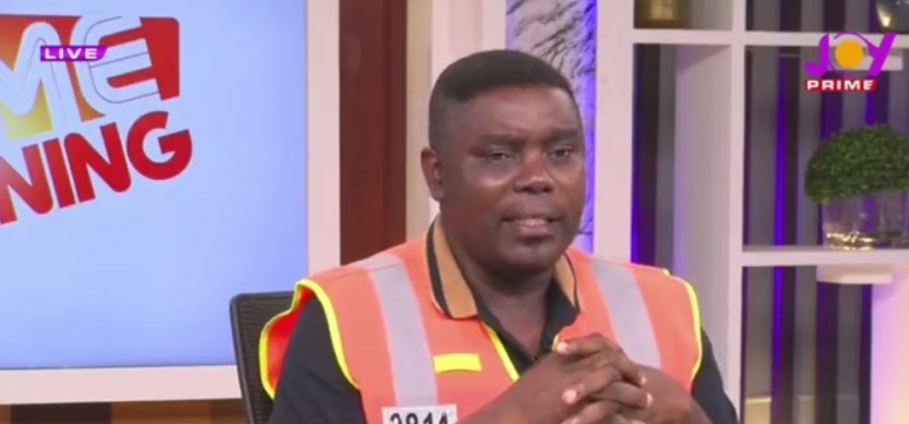
In an interview with JoyNews, the Communications Director for the Organisation, George Ayisi, added that some major drains have already been dredged as attempts are being made to identify safer places for stranded people.
“In partnership with the assemblies, some areas are dredged and anytime soon, maybe next week, the Director-General and the team will pay visit to some of the flood-prone areas to carry out inspections and see how prepared we are as far as the drains are concerned.
“There are some identified areas that we want to go. We identify safe havens where they can easily access and seek refuge till the rains are over because we know when the floods get there, it’s so dangerous and so that’s what we do,” he said.
On Sunday, April 3, some residents of Keta and Agavedzi in the Volta Region were displaced by tidal waves, leaving many homeless.
Some moved to higher grounds to seek shelter, while others had no choice but to sleep on mattresses along major roads.
In a related development, more than 3,000 persons were forced out of their homes after tidal waves swept through homes in the Ada East and West districts of the Greater Accra Region on Sunday.
Per reports received by NADMO, the disaster also destroyed more about 251 households in four communities, including Lolonya, Agblabanya and Anyamam.
These incidents have awakened the disaster management stakeholders to what is to come this rainy season.
The Meteorological Agency has warned there could be similar patterns to be expected.
But NADMO says the impacts can be mitigated if adequate measures are put in place by city authorities while the citizenry also takes the necessary precautions.
“…to take them out is sometimes difficult; relocation, evacuation and you need to get another place and that is central government’s responsibility.
“For now, we need to identify safe havens where they can seek refuge and then when the rains are down, they can go back,” George Ayisi added.
Latest Stories
-
Allround Baby Pants launched in Ghana to ease diapering for mothers
2 hours -
Aggrieved Gold Coast Fund Management Company customers to petition Mahama over locked-up funds
2 hours -
NSMQ 2026: PRESEC, Legon dethrones defending champions Mfantsipim in thrilling battle to book semi-final spot
2 hours -
NPP set to overhaul constitution as delegates prepare to vote on sweeping reforms
3 hours -
Ghana’s cashew industry faces processing gap as Côte d’Ivoire moves to capture more value
3 hours -
“Our greatest wealth is not in our soil but our people” — Upper West Minister
3 hours -
Luex Healthcare launches children’s health education book series with Luey the Lion
3 hours -
NAGRAT urges gov’t to communicate early if September deadline cannot be met
3 hours -
We trust government to meet September deadline on teachers’ promotions – NAGRAT
4 hours -
“We dare not fail” – Gov’t promises to honour teachers’ promotion pay deal
4 hours -
The GH¢19.8 billion mirage: Inside Ghana’s state enterprise turnaround
4 hours -
Luv FM High School Debate: KNUST SHS and Osei Adutwum SHS set up thrilling final after dramatic semi-finals
4 hours -
KNUST AI Coordinator urges structured adoption of AI in teacher education
4 hours -
Nepal rescuers blast hillside in search of hydropower workers as families wait anxiously
4 hours -
Teachers who pass promotional exam to get January 2026 start date after gov’t resolves promotion dispute – Dr Apaak assures
5 hours