

Audio By Carbonatix
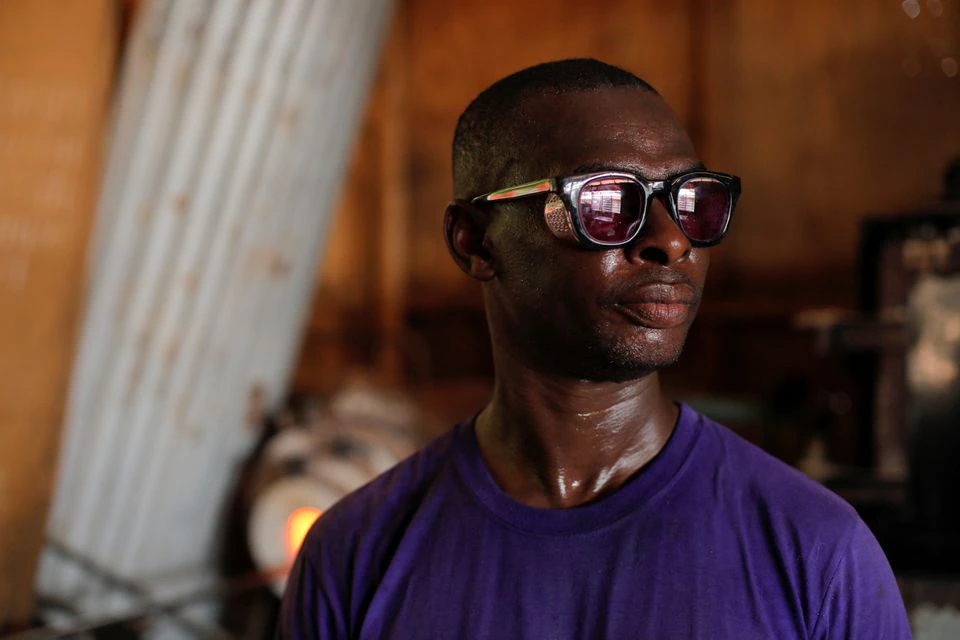
Michael Tetteh, Ghana's only professional glassblower, clenched his teeth as he gripped a red-hot ball of molten glass, his burned and blistered hands bare against the steaming stack of wet newspaper he used to protect them.
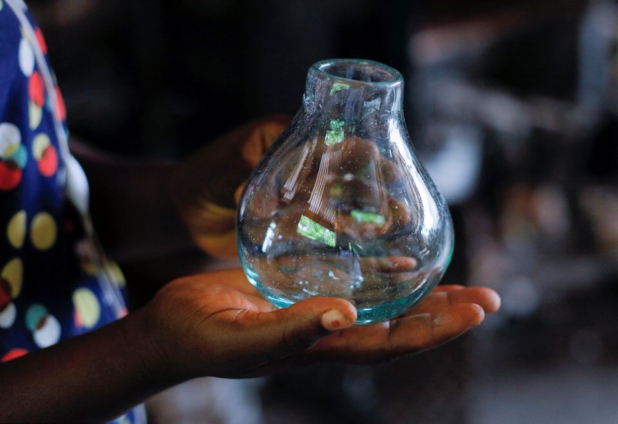
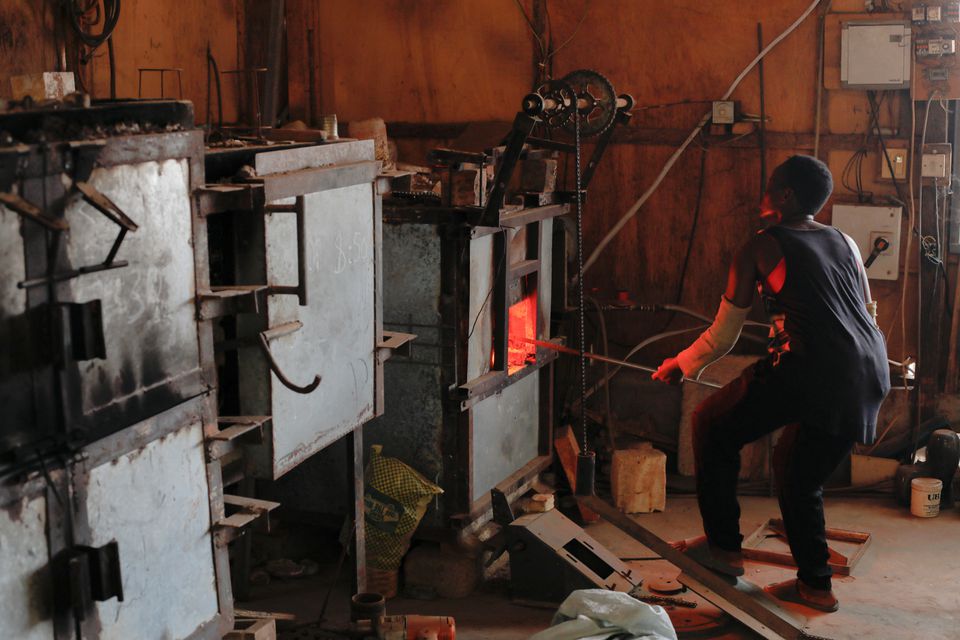
The 44-year-old toiled in the heat of scrap-metal kilns burning at nearly 1,500 celsius (2,700 Fahrenheit), pregnant with melted windowpanes, TV screens, and soda bottles he would soon transform into elaborate vases swirling with psychedelic colour.
Some become red vases with streaks of black, other green pitchers and some clear, everyday bottles.
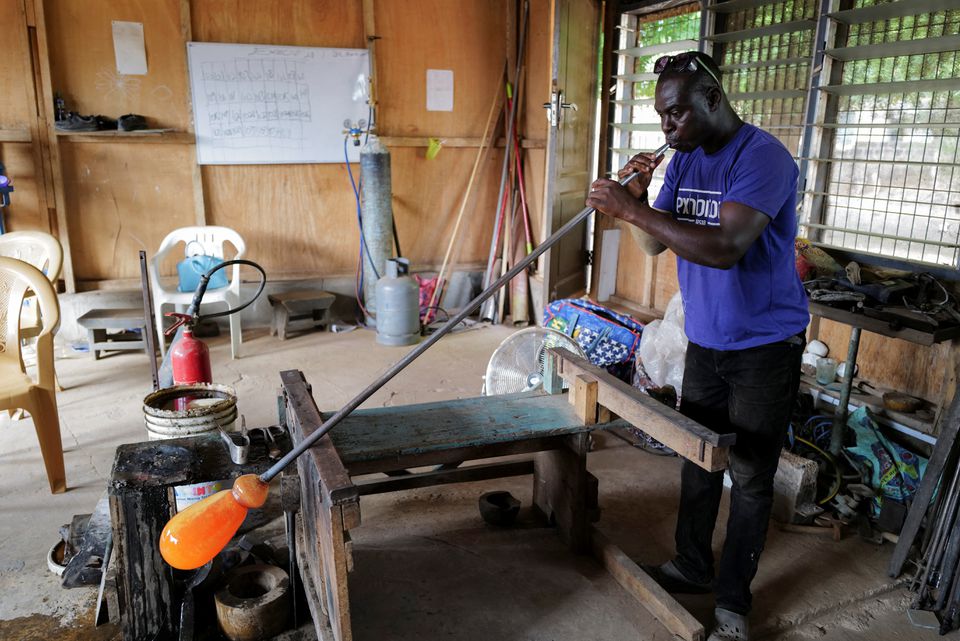
"Glass... is my passion, my heart," he said. "It's like life. It takes you on a journey from one (stage) to another."
Tetteh's strict use of recycled materials, which he collects from scrap yards and landfills in the capital Accra, is part of a stated mission to reduce Ghana's glass waste and what he considers wasteful imports.
He envisions a Ghana free of foreign glass, having channelled its glass bead-making tradition into a modern, multi-faceted industry.
According to the Observatory for Economic Complexity, Ghana imports around $300 million in glass and ceramic products each year. More than 80% of that comes from China, the world's top glass exporter.
While some private companies recycle their glass, Tetteh says the majority of Ghana's glass waste ends up either in landfills or scattered throughout the nation's streets, posing a safety hazard.
"We don't have a (glass waste) collection process, and we don't want broken glass flowing around like that," he said. "If we use recycled (materials), we can make money."
Hailing from the town of Odumase-Krobo, the epicentre of Ghana's traditional glass bead culture, Tetteh discovered glassblowing in 2012 after spending several months in France and the Netherlands learning the craft with other Ghanaian bead-makers.
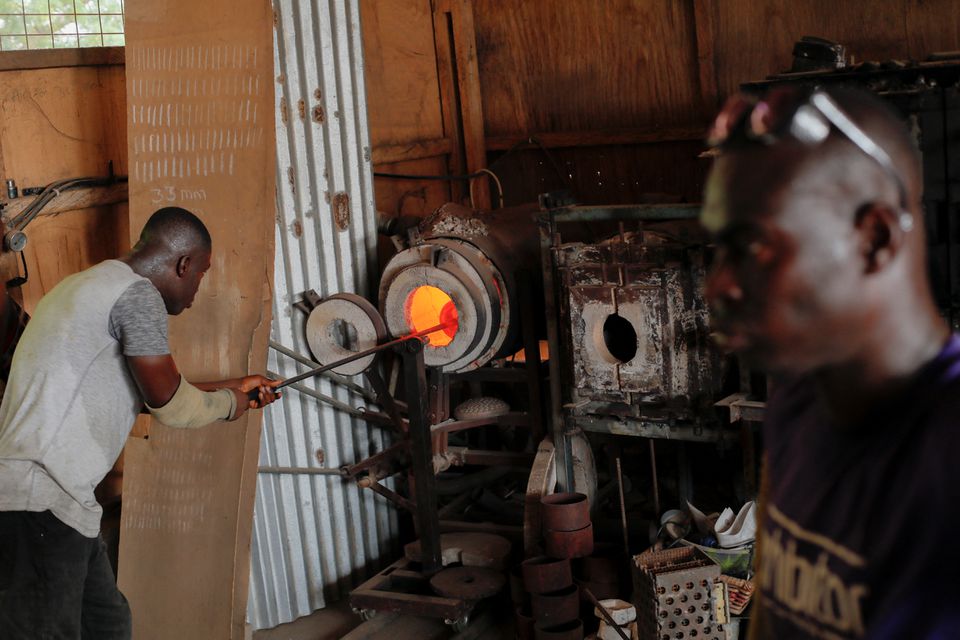
He was alone in his desire to continue upon returning home and set a goal to establish a proper hot shop in Odumase-Krobo.
Undeterred by lack of finance, he built furnaces from scrap metal and clay using online tutorials. He fine-tuned his abilities by watching YouTube videos of famous glass artists like America's Dale Chihuly.
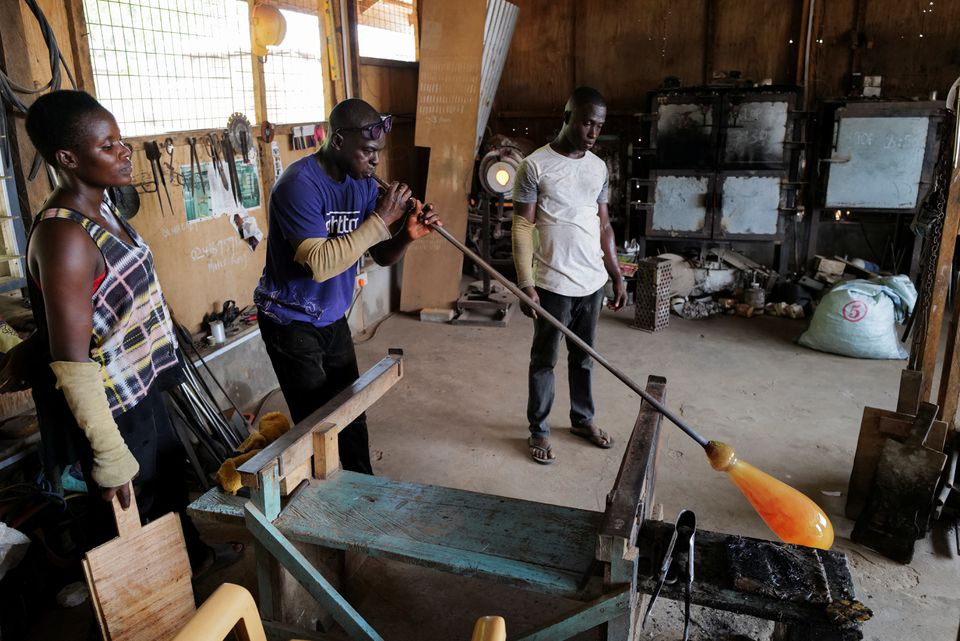
He has since hired several young assistants from Odumase-Krobo, who he is training and hopes will one day run their own workshops. Their work can be found in boutique shops in Ghana and Ivory Coast, and has appeared in European and American art galleries.
"My heart (wants) to train young Ghanaians, both men and women, so they can learn this job," he said. "We will not have to go to other countries like China to buy what we want for Ghana."
Latest Stories
-
Black Star International Film Festival outlines four pillars for 2026
21 minutes -
Peace Council urges restraint over religious controversies to prevent tensions
24 minutes -
Empower Vault Summit challenges Ghana’s youth to embrace purpose, leadership and opportunity
30 minutes -
Fuel prices set to witness mixed reviews at pumps from August 16, 2026
32 minutes -
GRA signs partnership with UK counterpart to strengthen customs protection
50 minutes -
Rethink MMDCE elections – Dr Tando proposes MP-led appointment model
1 hour -
Rethink MMDCE elections – Dr Tando proposes MP-led appointment model
1 hour -
GSTS honours former Chief of Naval Staff Commodore Stephen Obimpeh at 117th Founders’ Day
2 hours -
Togbe Afrika, Enam, Jah Phinga to light up Dzodze-Penyi at “Togbe Afrika Homecoming” Concert
2 hours -
Otumfuo pushes for funding to complete Boankra Inland Port
2 hours -
Mahama announces rehabilitation of Pwalugu tomato factory, $5bn boost for agriculture
2 hours -
MTN Ghana’s growing economic footprint puts spotlight on telecom sector
2 hours -
Free Primary Health Care to reach all districts by 2028 – Health Minister
2 hours -
Mahama commissions Paga SHS E-Block, promises facilities to end double-track by 2027
2 hours -
Zambia resumes vote counting after security concerns halt electoral process
2 hours