

Audio By Carbonatix
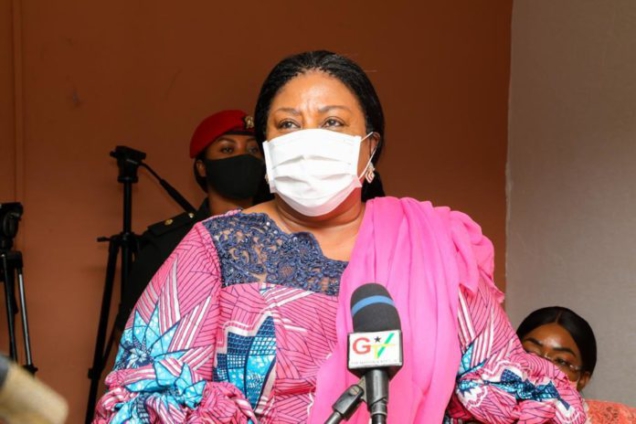
The First Lady, Rebecca Akufo-Addo has on Tuesday launched a report on “Cancer in Sub-Saharan Africa: A Lancet Oncology Commission,” in Accra.
The report called on all stakeholders, especially policy makers in the health sector to unite and chart a collective response to the increasing burden of cancer in Africa.
The Commission, which comprised of national and international experts from academia and healthcare, presented a framework that can be used by governments and non-governmental organisations to increase access to cancer care, accelerate cancer prevention and increase survival in Sub-Saharan Africa.
Professor Wilfred Ngwa, the Commission Chair, said projected trends underscored the devastating costs of inaction on cancer incidence rates and cancer mortality in sub-Saharan Africa.
Professor Ngwa said while the list of barriers hindering effective cancer control in the region was long, the pursuit of robust cancer registries, effective cancer control plans, early cancer screening and detection, and the integration of palliative care into the cancer care pathway was critical.
He called for greater focus on the implementation of telemedicine and new technologies, building and training the oncology workforce, and boosting cancer research to radically improve cancer care across the region.
“Digital health is already being adopted at a high rate as seen in examples in Nigeria and South Africa, including in cancer care, where tele-oncology became a necessity for providing remote chemotherapy supervision, symptom management, and palliative care to many cancer patients.”
Dr Beatrice Wiafe Addai, Commission co-chair, said population knowledge and attitudes about cancer risk factors were critical to reducing the burden of cancer in sub-Saharan Africa.
She said public health campaigns needed to form an instrumental part of any effective cancer control programme to raise population awareness about harmful risk factors, and healthy habits and dispel misinformation.
“At the same time, transformative policies must be in place to foster cancer prevention uptake. Previous case studies have shown that civil societies could work with governments to design cancer awareness education programmes, scalable across the Sub-Saharan Africa in parallel with other initiatives,” she said.
Latest Stories
-
Today’s front pages: Tuesday, October 13, 2026
32 minutes -
Wealth Over Water: How Galamsey Is Threatening Ghana’s Water Security
1 hour -
LA 2028: Black Queens pumped up for second leg of Mauritius tie
1 hour -
LA 2028: Black Queens hold final training session ahead of second leg against Mauritius
2 hours -
Standards are not Seasonal: What the EC appointments teach both sides
2 hours -
King Mohammed VI urges private sector to create youth jobs and spread benefits of growth
2 hours -
KGL U17 Colts 2026: Greater Accra win title after penalties win over Western Region
2 hours -
UK Investment Roadshow opens in London to advance UK-Ghana growth partnership
2 hours -
Assemblies of God requires pastors to resign before entering partisan politics – Rev. Wengam
2 hours -
Ghana targets 20% annual reduction in maternal deaths – Health Minister
2 hours -
Cyber attacks in Africa grow faster than global rate, report finds
3 hours -
Ghana signs UAE deal to create 5,000 overseas jobs
3 hours -
One Million Coders Programme targets 100,000 digital jobs in two years – Sam George
3 hours -
John Jinapor, Italian Ambassador explore opportunities for energy sector investment
3 hours -
NHIA seeks legal reforms to support Free Primary Healthcare
3 hours