

Audio By Carbonatix
The current implementation rate of the Ghana Agricultural Sector Investment Programme (GASIP) is 86 percent.
This was accomplished by assisting smallholder farmers and fostering shared values and possibilities throughout the rice, maize, soya, and vegetable value chains.
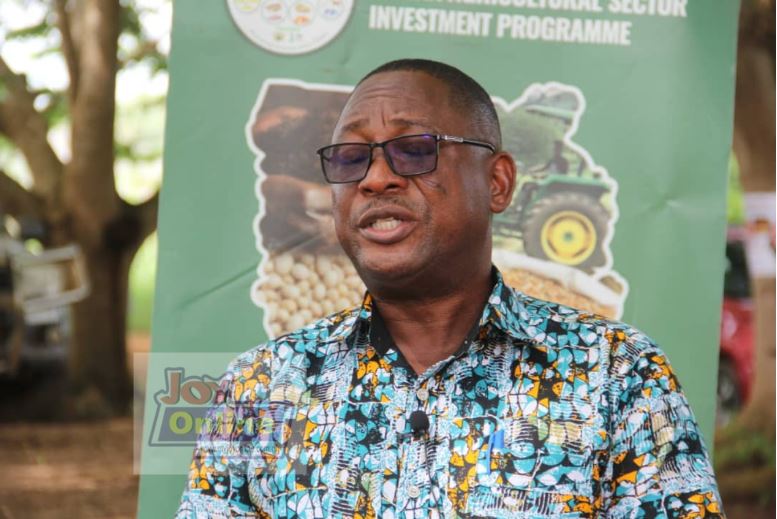
According to the National Programme Coordinator, Klutse Kudomor, GASIP also invested in capacity building and training of smallholder farmers in good agricultural practices and climate change resilient technology.

Through the provision of appropriate technology, rural infrastructure, and gender transformation, including equal participation of women, youth, the GASIP design leverages private sector resources and expertise to make smallholder farmers more competitive by increasing their efficiency and resilience to climate change.
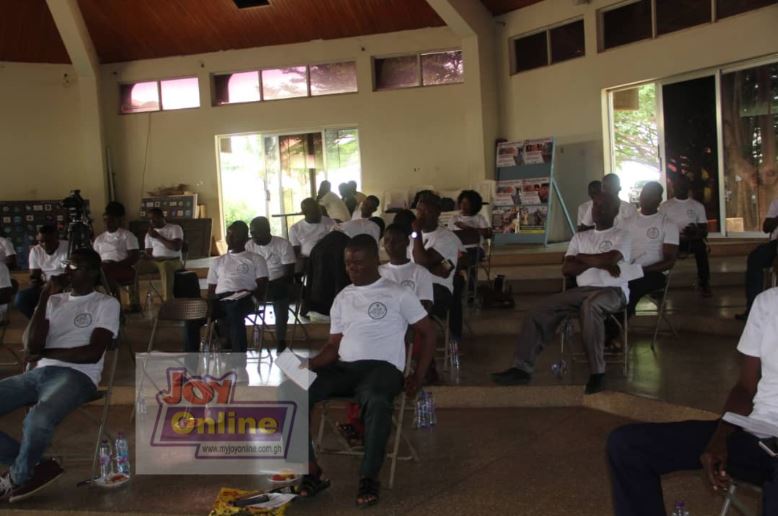
Mr. Kudomor was speaking at workshop on the theme "Building Champions in Agribusiness Value Chains for Climate Change Resilience."
The four-day workshops at Nkawie in the Ashanti Region will prepare them to become ambassadors who will engage and sensitise stakeholders, particularly farmers, about climate change and environmental sustainability in their organisations, communities, schools, and faith-based organisations.

The Ministry of Food and Agriculture is implementing the Ghana Agricultural Sector Investment Program (GASIP), which is funded by an IFAD loan of USD 36 million and a USD 10 million Adaptation for Smallholder Agriculture Program (ASAP) grant.
IFAD's primary climate-channeling initiative is the Adaptation for Smallholder Agriculture Programme.
"GASIP over the last two years has achieved some remarkable successes which need to be emphasized," Mr. Kudomor said.
According to the National Program Coordinator, GASIP has made significant investments in rural infrastructure, including providing access roads to connect farmers to markets, solar-powered boreholes for dry-season vegetable production and weather stations to provide accurate and timely weather information.
According to him, the program has constructed 600 hectares of rice-growing irrigation land and provided tractors, power tillers, and handheld rice harvesters to 628 smallholder farmer organisations.
According to the National Programme Coordinator, GASIP has heavily invested in rural infrastructure - providing access roads to link farmers to markets, providing solar-powered boreholes to communities for dry season vegetable production and installed weather stations to provide accurate and timely weather information.
He said the program has developed about 600 Ha irrigation land for rice production and provided tractors, power tillers, and handheld rice harvesters to 628 selected smallholder farmer organisations.
"GASIP has also supported over 150,000 smallholder farmers with production inputs, training in good agricultural practices, climate change resilience, food safety and food quality, business operational excellence, food processing among others."
GASIP is also collaborating with agribusinesses to give smallholder farmers with market access by signing them up to receive market price information from the Ghana Commodity Exchange.
"During the outbreak of the COVID-19 pandemic in 2020, IFAD nested a new Project, the Emergency Support to Rural Livelihoods and Food Systems Exposed to COVID-19 (ESRF) under GASIP. Through the ESRF, GASIP has distributed improved seeds and fertilizers to more than 20,000 smallholder farmers across the country."
According to him, a total of US$1.85 million has been disbursed to the Gender Ministry and the World Food Programme for highly vulnerable farmers, including people living with disability, from the country's nine lowest regions.
GASIP's goal is to eliminate poverty in rural Ghana by enhancing agribusinesses' and smallholder farmers' profitability and climate change resistance.
The implementation status of GASIP in the first four years (between 2015 and 2019) was barely 12 percent, causing IFAD to stop the program prematurely due to non-performance.
Mr. Kudomor says, in less than a year after the current management took control in 2019, the performance increased from 12% to 76 percent by February 2020.
As a result, the IFAD reclassified GASIP's implementation status from "non-performing" to "performing."
Latest Stories
-
NPP sets August 31 to September 3 for vetting of national officer aspirants
12 minutes -
Can Chairman Wontumi contest NPP National Chairman?
14 minutes -
NPP 2026 National Officers Elections: Nomination window ends with 50 aspirants in race for nine positions
26 minutes -
Labadi Beach Hotel marks 35 years with plans for new investments and developments
29 minutes -
Was Afenyo-Markin’s GoldBod criticism justified or exaggerated?
29 minutes -
Energy Commission, Ghana Hotels Association train Bono East hoteliers on energy efficiency
41 minutes -
NSMQ 2026: Boa Amponsem roars into one-eighth as Berekum SHS, Bolgatanga Girls’ bow out from prelims
43 minutes -
NSMQ 2026: Asanteman SHS books one-eighth spot as Senya SHS’s 2nd bid ends in heartbreak
54 minutes -
GHS unveils new framework to improve Ghana’s preparedness for health emergencies
59 minutes -
Suspected robber crashes stolen taxi into traders while fleeing mob at Ejisu
2 hours -
NSMQ 2026: Kumasi Academy secures one-eighth spot after commanding win over Bueman SHS, Hohoe EP SHS
2 hours -
Republic Bank-JoyNews Habitat Fair: Day 2 ends on high note as patrons enjoy exciting discounts
2 hours -
Big Push: Upper West MPs inspect N12 works, optimistic improved roads will curb robberies
3 hours -
India is turning to ancient water systems as modern ones run dry
3 hours -
NSMQ 2026: Anum Presby survive tense battle to deny St. Charles Minor Sem. one-eighth spot
3 hours