

Audio By Carbonatix
The International Monetary Fund (IMF) has described its second round of negotiation with Ghana for a loan support facility for the country’s homegrown economic programme as constructive.
The Fund, however, said, the team would advance its technical work including further progress on assessing Ghana’s debt sustainability in the weeks ahead, including discussions at its Annual Meetings in Washington D.C.
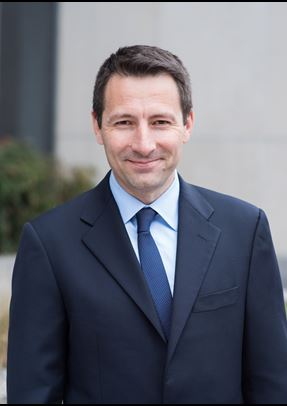
Mr Stéphane Roudet, the IMF Mission Chief to Ghana, at the end of the meeting on Friday, said: “We had constructive discussions on policies aimed at restoring macroeconomic stability and laying the foundation for stronger and more inclusive growth.”
“We reaffirm our commitment to support Ghana in these challenging times, consistent with the IMF’s policies”.
He expressed the IMF team’s gratitude to the Ghanaian authorities, private sector, civil society, development partners and other stakeholders for their constructive engagement and support during this mission.”
The second in a series of negotiations dealt with issues including ensuring public finance sustainability while protecting the vulnerable, bolstering the credibility of monetary and exchange rate policies to reduce inflation and rebuild external buffers.
The discussions also touched on preserving Ghana’s financial sector stability, and steps to encourage private investment and growth, including by improving governance, transparency, and public sector efficiency.
The IMF team was in Ghana from September 26 to October 7 and discussed policies that could be supported by an IMF arrangement to help the country navigate through the current economic hardship and improve its fiscal balances sustainably.
They met with President Nana Addo Dankwa Akufo-Addo, and his Vice, Dr Mahamudu Bawumia, as well as the Finance Minister Ofori-Atta, and Bank of Ghana Governor, Dr Ernest Addison and their respective teams.
The IMF team also met with the Parliament’s Finance Committee, and representatives from various government agencies, the Trades Union Congress, the private sector, civil society organizations, and development partners.
Latest Stories
-
Patient safety must extend across entire NCD care journey – FOCOS Hospital’s orthopaedics chief
9 minutes -
Collateral Registry: Security interest registrations declined by 32.2% in quarter 2, 2026
16 minutes -
Ninani Group staff take part in health walk, football and games at annual wellness programme
17 minutes -
Total value of secured loans hits GH¢31.5bn in quarter 2 2026
29 minutes -
Ghana needs national dialogue to end political insult culture — Kpebu
1 hour -
‘Relax, I’m not contesting you in 2028’ — DVLA CEO tells Zanetor
3 hours -
From cowboy to Republic Bank MD – Dr. Benjamin Dzoboku tells it all
3 hours -
Insurance sector offers huge job opportunities as Ghana faces actuarial skills shortage — GIU Rector
3 hours -
Newsfile to discuss Ghana Jollof nurse case, cocaine shipment, COVID audit and constitutional reforms
3 hours -
CPP urges Ghanaians to revive Nkrumah’s vision of self-reliance and industrialisation
4 hours -
Bagbin re-inaugurates African Commission of Health and Human Rights Promoters with GH¢100,000 donation
4 hours -
Why Republic Bank is betting big on mortgages
4 hours -
GNPC, Explorco pay condolence visit to Regent of Dagbon, reaffirm commitment to sustainable operations
4 hours -
Western Regional YMCA turns plastic waste into school bags for pupils
5 hours -
Do you have the capacity to investigate narcotic seizure? – Majority questions Minority’s recall of Parliament
5 hours