

Audio By Carbonatix
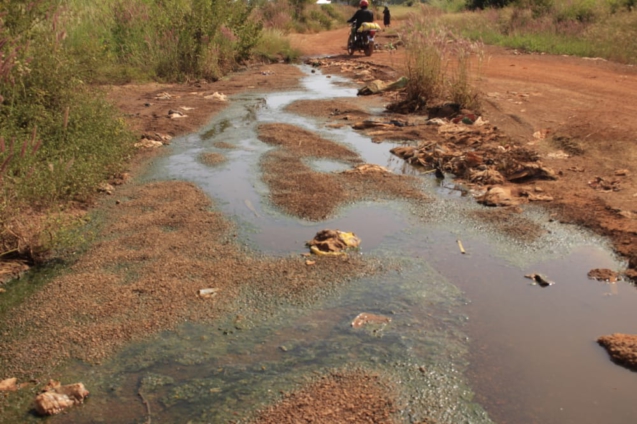
Residents of four communities around the landfill site in the Sagnarigu Municipality of the Northern Region say sewage from the site is contaminating their source of drinking water.
They allege that water from the site moves into a stream and finds its way into their wells and dams.
The communities of Gbalahi, Santugu Kontaliga and Kula are situated down the hill from the landfill site which makes it possible for elements from the site to easily get into these communities.
The people say the situation is heightened during the rainy season.
According to them, diarrhoea, cholera and typhoid are the most common illnesses in the area.
A farmer within the enclave, Yamba Salifu, said during the rainy season faecal matter overflows and runs into their water bodies.
He said farmers who have their farms around the area are forced to carry water from home anytime they go to the farm.
"You see that I am carrying my pure water. We the farmers know the toilet runs into the water so we can't drink it," Mr Yamba stressed.
He said it is an age-long problem that has been left unsolved.
A resident of Kontalga, one of the communities affected, said cholera is a common illness in the area.
He appealed to the government to intervene.
"We do not have potable water here. The only water is from the dam which is polluted; making us sick all the time. We also do not have a clinic, so you see the difficulty?" he added.
The Chief Linguist of Santugu said it is a huge problem facing the community but they have no option. According to him, most residents have been in and out of the hospital, especially this year.
Afa Abukari said the people most affected are women and children.
On her part, a midwife at the Kula CHIPS compound, Isaiah Swad, confirmed that diarrhoea, typhoid and cholera are top cases they record in children under five.
“The most common sickness is diarrhoea and vomiting and it is always among children," she said.
Madam Swad added that typhoid is also common among the adult population.
She attributed these sicknesses to the contamination of the water the people drink.
Meanwhile, an Engineer at the Tamale Metro Assembly, the department that manages the landfill site, Demedeme Emmanuel, said the site was established after due process.
He said per their assessment and by the design, there shouldn't be residues running into waterbodies; adding that pipes were laid to convey the water into the wastewater treatment facility.
Mr Demedeme explained that what is happening could be excess water or rainfall that has saturated around the premises of the landfill site running into the stream and not from the landfill site.
Latest Stories
-
Journalists look back on a decade of breast cancer reporting in Ghana
21 minutes -
President Mahama ends Resetting Ghana tour of Ahafo Region
2 hours -
African negotiators seek delivery of climate commitments at COP31
2 hours -
BoG develops AI rules for financial sector
2 hours -
‘Big Push’: Government assures contractors of prompt payments
2 hours -
Court fines miner for breaking into gold buying shop
3 hours -
Tarkwa court jails labourer for three years over GH¢123,000 theft
3 hours -
GAEC must retain nuclear scientists for Ghana’s nuclear ambitions – Minister
4 hours -
Man reportedly mistaken for game and shot by hunter dead in forest
4 hours -
19-year-old mason jailed 15 years for defiling seven-year-old pupil
4 hours -
Ghana’s banking sector assets rise 20.47% to GH¢500.2bn – BoG Governor
4 hours -
22 injured as Sprinter bus overturns at Sege after tyre burst
4 hours -
UN housing expert urges Ghana to strengthen Rent Control Department amid housing affordability concerns
4 hours -
Delta-BCI partnership reaches 166,000 people with breast cancer education
4 hours -
Power restoration fault suspected in Kumasi Central Market fire
10 hours