

Audio By Carbonatix
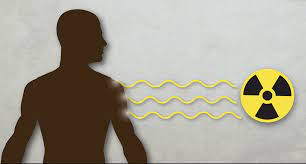
Radiation is one of the most feared and misunderstood phenomena by a large section of society. Radiation is a good servant but a bad master.
It is a double-edged sword. The peaceful applications of radiation in our everyday lives have brought a lot of comfort to many. It is a known fact that radiation can cause harm to the body and the environment.
The evidence of such abounds from the storied history of nuclear accidents, the use of nuclear bombs in battles during World War II, and many other radiological incidents. That notwithstanding, radiations have proved very beneficial in diagnosing cancer, identifying swallowed objects, treatment of cancer, and many others.
The potential use of radiation for human benefit is ever-growing. Today, shipping containers at the Ports and Harbours do not go through laborious and time-consuming physical inspections which often leads to the theft of items. Radiations from X-ray scanners make the contents of shipping containers visible in shades of grey on screens before the prying eyes of port authorities. It is upon suspicion that there might be contraband or undeclared goods among the lot that physical examination of the contents of such containers are sanctioned.
A similar practice is in place at airports for examining luggage. To test the integrity of structures, built and welded, radiations are applied in like manner to detect cracks or airspaces within the structures without destroying them in an internationally sanctioned protocol known as Non-Destructive Testing. Every day introduces a new possibility for radiation to be useful to us.
There are many consumer products we use daily that have components emitting radiations (radioactive) and most people are unaware of. Most smoke detectors in use in our homes, offices, and public places utilise a radioactive element known as americium-241.
Radioactive elements are known to discharge particles continuously. These particles, whilst passing through matter, interact with it in diverse ways resulting in the matter losing some of its constituent electrons in a process called ionisation. In the smoke detector, americium-241 is positioned between two electrically charged plates.
Particles it emits ionises the air between the plates, and this causes current to flow between the plates. When smoke enters the chamber of the smoke detector, it disrupts the smooth flow of the ions. This reduces the flow of the current.
The drop in current flow is interpreted by the circuitry as abnormal and results in activating the inbuilt alarm. The good news is that, unless tampered with, smoke detectors pose little or no health risk to users. This is because the number of particles the americium-241 emits in every second is very low.
The ability of a smoke detector to save lives and properties far outweighs the health risks from the radioactive material. This is one of the three fundamental principles of radiation protection upon which radiations are allowed to be used on humans. It is called Justification of practices. It is centred around balancing benefits and risks and states that “Facilities and activities that give rise to radiation risks must yield an overall benefit”.
Some clocks and watches do contain a small quantity of radioactive materials known as tritium and promethium-147 on their dials and numbers to make them glow in the dark. Older watches and clocks made before 1970 that glow in the dark may contain radium-226 paint. When Maria Sklodowska-Curie discovered radium in 1898, its properties were then not yet fully understood.
However, its glow-in-the-dark characteristic became an irresistible fascination. In 1916, factories began to open in US to manufacture watches that glow in the dark. The women that were employed in these factories were instructed to use their lips to get a fine pointed tip on their brushes, as they must paint on numbers as small as a single millimetre in width.
The women, known as “The Radium Girls” ended up ingesting small quantities of radium daily over the course of their carrier. When radioactive materials get into our bodies, they have specific locations they lodge themselves. These are known as target organs. Ingested radium targets bones because chemically, its behaviour mimics calcium.
As a result, the major health risk posed by ingested radium is radiation-induced bone necrosis and bone cancers. Because of the point of entry into the bodies of The Radium Girls, most of them developed a condition known as “Radium jaw.” The radium destroyed their bones and literally drilled holes in the women's jaws while they were still alive.
If today we know how radiation inside the human cause harm to it, we owe such knowledge to The Radium Girls. Currently, radium is no longer used in clocks and watches. However, people who collect antique clocks and watches might still be in possession of such items.
Radium was once consumed as an additive in a number of everyday products ranging from toothpaste to cosmetics and even food and drinks. The most popular was Radithor boldly advertised as “A Cure for the Living Dead” and promised to be the single cure for various illnesses from arthritis to gout. The composition was simply distilled water with tiny amounts of the radium dissolved in it.
Fertilizers are another source of radiation exposure. Not every fertilizer though. With every harvest, the soil’s productive capacity declines. Plants absorb nutrients from the soil via the plant’s root system to grow and produce food stuffs. Nutrients in the soil are replenished by applying organic or inorganic fertilisers to the soil.
Organic fertilisers are derived from plant and animal resources like agricultural waste, livestock manure, sludge, and others. Inorganic fertilisers are made from chemicals that contain nitrogen, phosphate, potassium (N, P, K), and others. They are formulated to provide varying levels of potassium, phosphorous, and nitrogen to support plant growth. These fertilisers are measurably radioactive. Potassium is a naturally occurring radioactive material.
Phosphorous component is derived from phosphate ore which belongs to uranium decay series. Measurements provided in the National Council on Radiation Protection and Measurements’ (NCRP) Report No.95 indicate that the raw phosphate materials (ammonium phosphate, superphosphate, diammonium phosphate, phosphoric acid, etc.) used in fertilizer production contain Uranium-238, Thorium-230, Radium-226, and Thorium-232. There is a laboratory at the Radiation Protection Institute of the Ghana Atomic Energy Commission (The Gamma Laboratory) that specialised in the detection and measurement of radioactivity in food items.
References
- Windham, S.T., Partridge, J., Horton, T. Radiation Dose Estimates to Phosphate Industry Personnel. EPA-520-/5-76-014. 1976.
- Radiation Exposure of the U.S. Population from Consumer Products and Miscellaneous Sources. NCRP Report No. 95; 1987.
- Eisenbud, M., Gesell, T. Environmental Radioactivity. Academic Press. 4th edition; 1997
- Pfister H, Philipp G, Pauly H. Population dose from natural radionuclides in phosphate fertilizers. Radiat Environ Biophys. 1976 Oct 7;13(3):247-61. doi: 10.1007/BF01330769. PMID: 981517
The author is a Research Scientist, Radiation Metrologist, and Consultant with the Radiation Protection Institute of the Ghana Atomic Energy Commission.
Latest Stories
-
Government rejected over 54% of constitutional review proposals – TUC
17 seconds -
Effects of Technology Governance on Business Sustainability in Ghana: Critical analysis of strategies
10 minutes -
NPP Chairmanship race: John Boadu picks No. 1 slot, Crabbe No. 2, Afoko No. 3, Boakye Agyarko No. 4
22 minutes -
World Bank findings strengthen calls for parliamentary probe into GoldBod – Minority
25 minutes -
Ghana’s electricity generation continues to decline, recorded peak demand of 3968MW in July 2026 – PURC
26 minutes -
UniMAC SOJAMS, Northwestern University partner to give students hands-on journalism experience
33 minutes -
Passengers stranded at Aayalolo Tudu Terminal as drivers strike over unpaid bonuses
40 minutes -
The Inconvenient Truth: Debt does not make a nation poor; wasting it does
43 minutes -
Stonebwoy ignites new ‘beef’ with Sarkodie in social media posts
50 minutes -
GTP, Woodin acquisition puts local private equity expertise in the spotlight
57 minutes -
BoG affirms 8 ± 2% inflation target
1 hour -
CHRAJ holds training on ending gender-based violence
1 hour -
GPL 2026/27: Debibi United coach Nii-Armah apologises over ‘racist’ comments
1 hour -
Beyond the F9 Barrier: Why Ghana needs a Universal Secondary Education Transition and Remediation Programme
1 hour -
GES disowns fake EduPack notice directing SHS, TVET boarding students to pay
1 hour