


Audio By Carbonatix
Solidaridad, an international civil society organisation, with a key focus on promoting responsible gold mining, has, under its RECLAIM Sustainability! programme, organised a workshop to validate a draft Child Labour Eradication Framework (CLEF) for the small-scale mining sector.
Developed by the Minerals Commission in collaboration with Solidaridad, the framework seeks toreduce children's involvement in mining activities by 50% by 2027. This will be achieved by providing a concrete and coordinated outline for implementing interventions that give effect to the provisions of the 1992 Constitution, the Children’s Act, 1998 (Act 560), the Minerals and Mining Act, 2006 (Act 703) and the Mining Sector Policy, as well as other legal instruments that address various forms of child labour.
Children's involvement in the Artisanal and Small-scale Gold Mining (ASGM) sector is a major challenge in Ghana, the Ghana Living Standards Survey Round 6 (GLSS6) - Child labour report indicates that 5,677 children are working in artisanal gold mines in hazardous and sometimes life-threatening conditions. The phenomenon has adversely affected their school enrollment and attendance while exposing them to mercury, with its attendant lifelong devastating health impacts.
“The urgency of this framework is underpinned by the increasing reports of child injuries and death associated with artisanal small-scale gold mining (ASGM), commonly called ‘galamsey’. Responsible mining does not support the use of children in any form of mining work, even if it is a means of survival. This is why, as an organization, we are supporting the eradication of child labour in the mining sector through the Child Labour Eradication Framework,” said Rosemary Addico, Programme Manager for Responsible Gold at Solidaridad West Africa.
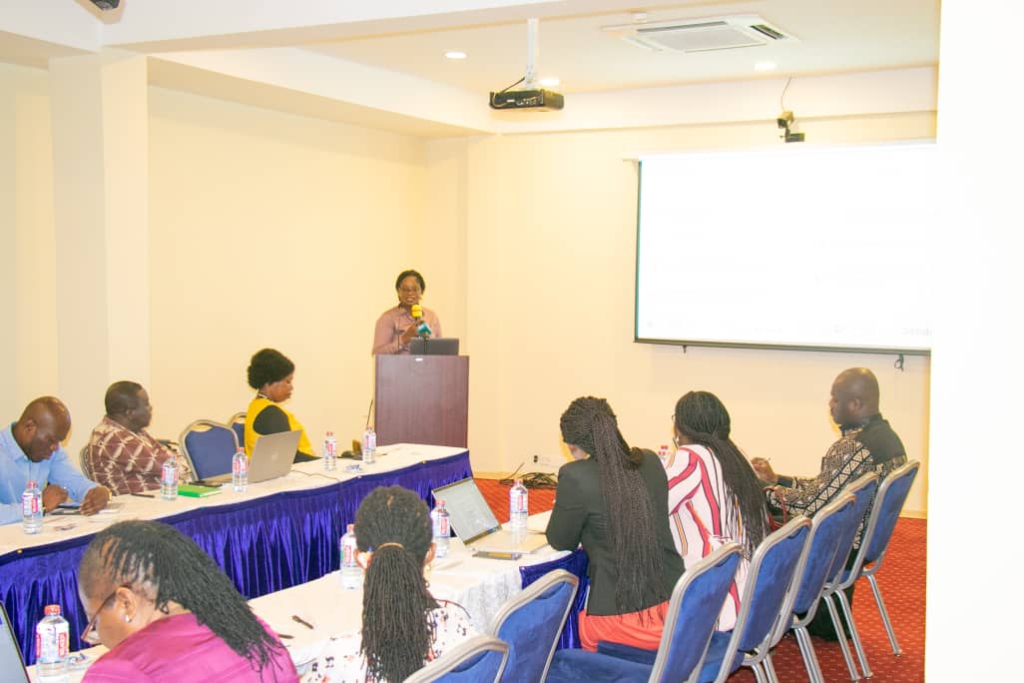
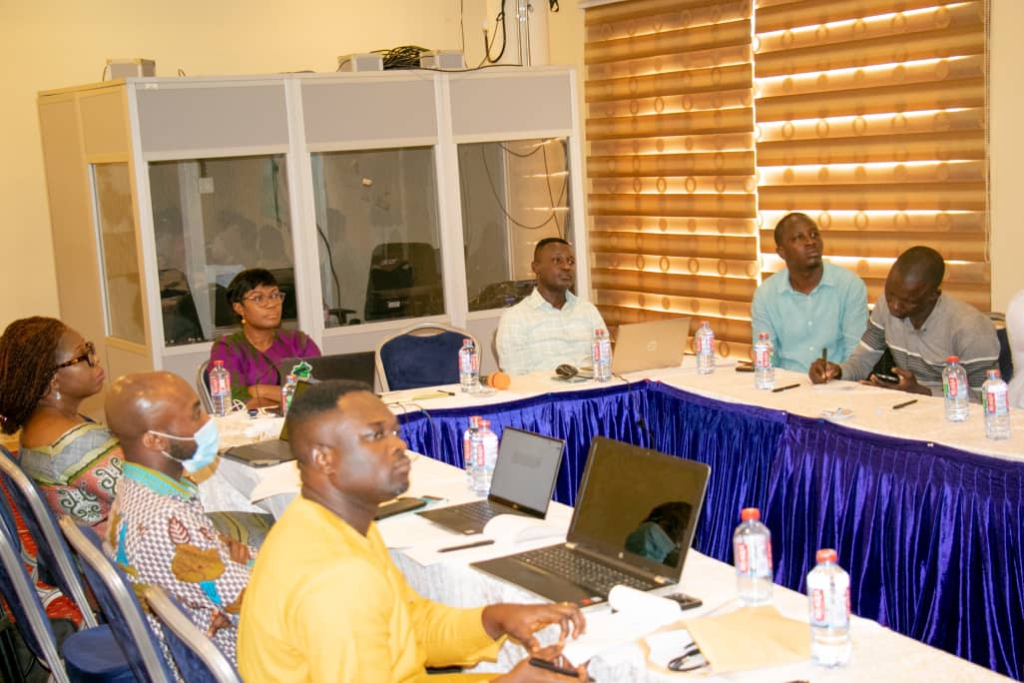
The participants at the workshop, which included key stakeholders in the mining sector and the Minerals Commission, discussed a set of priority actions including community-based and supply chain interventions and issues identified in the draft framework that need to be addressed urgently.
One of the key issues discussed was poverty — a major driver of child labour in the mining sector. The framework proposed an integrated and sustainable approach that addresses poverty, improves access to and quality of education, and mobilizes public support to respect the rights of children.
The next steps after the validation workshop will be to deepen advocacy on child labour, guided by the Child Labour Eradication Framework (CLEF). This, amongst other things, will include a sensitization drive in mining communities around the country and engaging government, small-scale mines, civil society organizations, and media to embark on community and supply chain interventions that address the prevailing poverty, which has been deemed a major catalyst.
Yaw Britwum Opoku, an Advisor on Minerals Supply Chains at Solidaridad West Africa, highlighted the need for value chain actors to unanimously accept the framework as it invariably ensures the sustainability of the sector.
“With the increasing demand for responsible gold production and a high premium on preventing and reducing child labour by regulators, this framework will ensure that Ghana’s gold on the international market meets these standards,” Yaw remarked.
Promoting responsible gold mining
Solidaridad, under the RECLAIM Sustainability! programme, has been working towards an inclusive and responsible global gold value chain, where artisanal small-scale gold miners work under legal and safe conditions, and earning a living income with improved bargaining positions.
To improve the bargaining position of ASM miners, the programme advocates for an improved and optimized formalization process in Ghana, where fair value distribution, safe working conditions, child labour, and deforestation and pollution are central to the agenda of policy-makers.
The Child Labour Eradication Framework, which aims to develop and implement holistic multi-stakeholder interventions that will lead to the reduction (by 50%) of child labour in the mining sector by 2027, aligns with Solidaridad’s vision for the ASGM sector.
The RECLAIM Sustainability! programme is funded by the Ministry of Foreign Affairs of the Netherlands and implemented by Solidaridad West Africa and TrustAfrica in Ghana, Cote d’Ivoire and Sierra Leone.
Latest Stories
-
NSMQ 2026: Kpando SHS brush aside Abor, Jukwa to storm One-Eighth stage with 32 point gap
1 hour -
Duncan Amoah: Gov’t should create conditions for 24-hour economy, not build markets
1 hour -
JoyNews-Republic Bank Habitat Fair finale turns homeownership dreams into real possibilities
2 hours -
Bamiri chief commissions KG block, guest house to boost education and revenue
2 hours -
NSMQ 2026: Yaa Asantewaa Girls’ going ‘beck’ to Tanoso after Bishop Herman deals them early exit
2 hours -
Data Protection Commission acquires two vehicles to strengthen data protection enforcement
3 hours -
NSMQ 2026: Holy Child School storms back from two-year NSMQ absence to book One-Eighth ticket
4 hours -
GNFS dismisses reports of unpaid 2025 rent allowance
5 hours -
Gordon Asare-Bediako steps down from NPP Communications Director race, backs Dennis Aboagye
5 hours -
GES dismisses requirement for newly promoted teachers to submit documents for salary adjustments
6 hours -
Meko Bono 2026: Vice President pledges agricultural revival as Atebubu hosts grand homecoming
7 hours -
Russian skydiver Sergey Boytcov sets world record with 11,551-metre stratosphere jump
7 hours -
Ablakwa-led committee submits five reports to Mahama ahead of 2027 AU chairmanship
7 hours -
Africa not seeking Western cash in reparations campaign – Ablakwa
7 hours -
Production decline, reserve depletion threaten Ghana’s upstream sector – Jinapor
7 hours