

Audio By Carbonatix
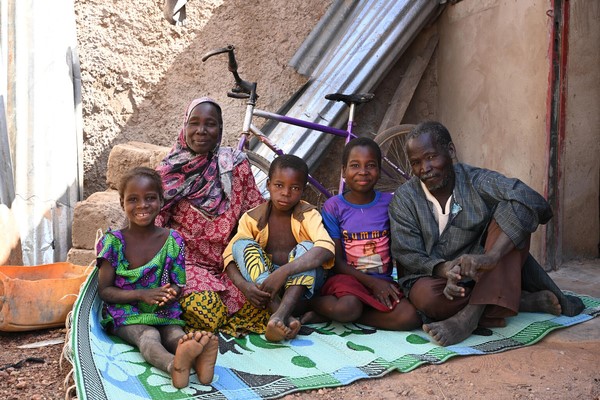
Worldwide, the number of children without access to social protection is increasing year-on-year, leaving them at risk of poverty, hunger and discrimination, according to a new report released by the International Labour Organization (ILO) and UNICEF on March 1, 2023.
More than a billion reasons: The urgent need to build universal social protection for children warns that an additional 50 million children aged 0-15 missed out on a critical social protection provision – specifically, child benefits (paid in cash or tax credits) – between 2016 and 2020, driving up the total to 1.46 billion children under 15 globally.
Failure to provide children with adequate social protection leaves them vulnerable to poverty, disease, missed education, and poor nutrition, and increases their risk of child marriage and child labour.
To reverse the negative trend, the ILO and UNICEF urge policymakers to take gradual steps towards universal social protection for children from most vulnerable households, including:
- Investing in child benefits which offers a proven and cost-effective way to combat child poverty and ensure children thrive.
- The passage of the Social Protection Bill to give legal backing and further structure to the mobilisation and disbursement of funds for identified vulnerable population including children.
- Allow LEAP eligibility to widen coverage to include families with children at risk of separation and migrant children so they can be connected to crucial health and social services in addition to the cash grant.
- Building social protection systems that are rights-based, gender-responsive, inclusive, and shock responsive to address inequities and deliver better results for girls and women, migrant children, and children in child labour for example.
- In addition to emergency relief, strengthening social protection systems and prioritizing child-sensitive spending on human capital development, particularly on children’s learning through increased resources to basic education, are forward-looking strategies to protect children from this and future crises.
- Securing sustainable financing for social protection systems by mobilizing domestic and innovative resources and increasing budget allocation for children.
- Supporting the expansion of the Labour-Intensive Public Works (LIPW) as a means of strengthening social protection for parents and caregivers by guaranteeing access to decent work and adequate benefits, including unemployment, sickness, maternity, disability, and pensions.
According to the report by ILO and UNICEF, child and family benefit coverage rates fell or stagnated in every region in the world between 2016 and 2020, leaving no country on track to achieve the Sustainable Development Goal of substantial social protection coverage by 2030.
In Ghana, coverage of children (0-17 years) under the LEAP Programme has dropped by 24%, from 695,000 to 528,000 (2020 to 2022) despite the increasing percentage of the population in that age bracket, according to LEAP data from LEAP MIS.
Prior to COVID-19, one-in-three children in Ghana already lived below the monetary poverty line, and three-in-four children were multidimensionally poor. Two-thirds (68.2%) of households indicate that their income has not recovered to pre-COVID-19 levels. Children staying at home and the re-prioritisation of support services in key sectors have also compounded the various risks children face in critical periods of their development. Nearly one million children below one year of age have been missing out on routine essential health services.
Children living in multidimensional poverty increased by 15% during the COVID-19 pandemic, which manifested in multiple forms of deprivations. For example, 24% of children aged 6 months to 14 years had fewer meals than usual, and 35% of 5–17-year-olds were involved in household chores. These all reversed previous progress made in reducing multidimensional child poverty and highlight the urgent need for social protection.
The COVID-19 pandemic highlighted that social protection is a critical response in times of crisis. Nearly every government in the world either rapidly adapted existing schemes or introduced new social protection programmes to support children and families, but most fell short of making permanent reforms to protect against future shocks, according to the report.
During COVID-19 pandemic, the Government of Ghana provided social safety nets almost exclusively through cash transfers under the Livelihood Empowerment against Poverty (LEAP) initiative; improved access to essential services through limited food relief and freezes or subsidies on utilities.
The Government of Ghana provided a temporary cash transfer to persons who did not benefit from any social protection intervention. Overall, the state of social protection interventions rolled out to address the fallouts of the pandemic have been critiqued for not effectively reaching those most in need and, in some instances, worsening existing inequalities.
The report emphasises that all countries, irrespective of their level of development, have a choice: whether to pursue a “high-road” strategy of investment in reinforcing social protection systems or a “low-road” strategy that misses out on necessary investments and will leave millions of children behind.
“As families face increasing economic hardship, food insecurity, conflict, and climate-related disasters, universal child benefits can be a lifeline,” said Natalia Winder-Rossi, UNICEF Director of Social Policy and Social Protection. “There is an urgent need to strengthen, expand and invest in child-friendly and shock-responsive social protection systems. This is essential to protect children from living in poverty and increase resilience, particularly among the poorest households.”
“Ultimately, strengthened efforts to ensure adequate investment in universal social protection for children, ideally through universal child benefits to support families at all times, is the ethical and rational choice, and the one that paves the way to sustainable development and social justice,” said Shahra Razavi, Director of the Social Protection Department at the ILO.
Latest Stories
-
Who paid for it? – NPP MP demands audit trail of Ghana’s South Africa evacuation
4 minutes -
Security analyst calls for review of Vigilantism Act to address emerging threats
8 minutes -
Gillman & Abbey Funeral Service and Remembers Group partner to preserve legacies and expand funeral services in Ghana
14 minutes -
NSMQ 2026: Ghana National College stays seeded as St Monica’s, Presby SHS fall in One-Eighth
15 minutes -
Minority caucus demands full account of Ghana’s South Africa evacuation spending
17 minutes -
Ghana’s rail network declines sharply over six decades – World Bank
23 minutes -
NSMQ 2026: Prempeh College avenges 2018 defeat to WASS, storms into quarter-finals
28 minutes -
Meta settles with US states over social media harms
30 minutes -
Viral Black Stars supporter ‘Powder Man’ granted GH¢400,000 bail in alleged visa fraud case
32 minutes -
What Mahama’s 10 new laws mean for cocoa farmers, workers, importers and businesses
54 minutes -
Major underground drainage works to begin on Dr Busia Highway on September 7
57 minutes -
Man City to make offer for £120m-rated Enzo Fernandez
57 minutes -
Wontumi’s withdrawal won’t make significant difference to NPP chairmanship race – Asah-Asante
1 hour -
Chinese teens are turning to mind-numbing drugs to ‘run away from reality’
1 hour -
CIA chief met Russian intelligence services but not Putin, Kremlin says
1 hour