

Audio By Carbonatix
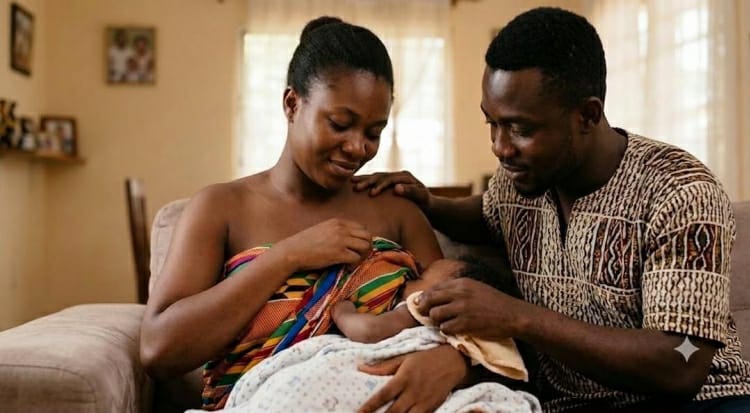
When Mr. M.A.G., a 36-year-old pastor and father of a seven-month-old daughter, remembers the early weeks after his baby's birth, he recalls more than the joy of becoming a father. He remembers waking his baby frequently, helping to feed her with expressed breast milk so that his wife, who was recovering from childbirth, could get some much-needed rest. “I started these responsibilities when my wife was healing from delivery, and subsequently, when she had to do something. My baby had to eat every two hours, and as the mother is not in the best state of health, I woke the baby up every two hours and, with the help of the breast pump, I fed the baby from the milk collected so that her mother could sleep.”
For Mr. M. A.G., supporting breastfeeding meant sharing household responsibilities, caring for the baby, and ensuring that his wife had time to recover and rest. His experience highlights a role fathers can play in breastfeeding that is sometimes overlooked. They may not directly breastfeed, but they can help create the conditions that enable mothers to do so successfully. He believes workplaces and society must also recognize the significant role fathers play during the early weeks after childbirth. While extended family members provide valuable support, the active presence of a father makes a meaningful difference to the health and well-being of both mother and baby.
Every August, the World Alliance for Breastfeeding Action (WABA) coordinates World Breastfeeding Week, drawing attention to the importance of breastfeeding and creating supportive environments. When mothers receive encouragement and practical support at home, they are more likely to feel confident and continue breastfeeding. For many families, that support can begin with the father.
The World Health Organisation (WHO) and UNICEF recommend that breastfeeding begin within the first hour after birth, that infants receive only breast milk for the first six months, and that breastfeeding continue alongside appropriate complementary foods until two years of age or beyond. Breast milk provides complete nutrition, protects against infection, supports healthy brain development, and reduces the risk of illnesses later in life. Mothers also benefit, with a lower risk of breast and ovarian cancers, type 2 diabetes, and high blood pressure.
Yet meeting breastfeeding recommendations can be challenging for many families. In Ghana, although breastfeeding is widely initiated, exclusive breastfeeding declines as infants grow older. By four to five months, only about half of babies are exclusively breastfed. Mothers may become exhausted, return to work, receive conflicting advice from relatives, or experience breastfeeding difficulties without timely professional support. These challenges make the involvement of fathers particularly important. Fathers do not need to breastfeed to be breastfeeding champions. They can offer support in simple but meaningful ways.
- Encouragement. New mothers often worry if they have enough milk or if their baby is feeding well. A supportive partner can give them the confidence to keep going.
- Helping around the house. Cooking, caring for older children, changing diapers, bathing the baby, or doing chores gives mothers time to rest. Every task a father handles lets the mother focus on breastfeeding and recovery.
- Become an informed advocate. Fathers who attend antenatal visits, learn and recognize common breastfeeding challenges, can encourage mothers to seek help early and prevent manageable difficulties from becoming reasons to stop breastfeeding.
- Discouraging harmful practices. Fathers who understand the importance of a mother’s first milk, colostrum, can ensure that their babies receive it instead of discarding colostrum or introducing water, herbal preparations, or other foods before six months of age.
Studies conducted across different countries consistently show that fathers who receive breastfeeding education significantly improve the chances that mothers will start breastfeeding early, breastfeed exclusively for the first 6 months, and continue breastfeeding longer. The evidence reinforces the idea that fathers are not passive observers in infant feeding but are essential partners in their children’s nutrition and healthy development. Yet many fathers remain on the sidelines. Antenatal care and breastfeeding education often focus primarily on mothers, leaving some fathers willing to help but unsure about what they can do. Long working hours, limited paternity leave, cultural expectations, and the belief that infant feeding is solely a woman’s responsibility continue to limit fathers’ involvement.
Changing this requires action from more than fathers alone.
Healthcare workers should invite fathers to antenatal and postnatal visits and give them practical advice on how to support their partners with breastfeeding.
2. Employers should understand that fathers need time off to support their families after a baby is born.
3. Communities and families should encourage fathers to participate rather than observe.
The 2026 World Breastfeeding Week theme, “Breastfeeding for a Sustainable Start in Life: Strengthen What Works,” provides an opportunity to reflect on what works and how families and communities can strengthen the support systems that help mothers breastfeed. One of the simplest and most effective investments is an informed, supportive father.
The message is simple. A father’s role begins long before a child can walk or speak. His encouragement, patience, practical assistance, and firm support can help create an environment in which breastfeeding is more achievable. Healthy children are not raised by mothers alone. Families nurture them, and fathers are essential partners in giving every child the healthiest possible start in life.
Authors:
- Evelyn Aboagye is an Associate Professor of Pediatrics at University of Virginia and an International Board-Certified Lactation Consultant
- Iruoghene G. Solomon, Ernestina Narh-Korley and Obed A. A. Quachie are medical students at Family Health University
Latest Stories
-
Police blur the line between invitations and arrests – Reindorf Twumasi Ankrah
48 seconds -
Turning invitations into arrests is making citizens reluctant to assist police – Twumasi Ankrah
34 minutes -
The Traffitech-GH SMS spot-fine system: The good, the sad, and the funny – Bright Simons writes
46 minutes -
Hawa Koomson pledges experienced and mature leadership of NPP women’s wing
2 hours -
Young woman found dead at Kasoa Peace Town
2 hours -
Playback: The Law examined lawful arrest in Ghana
3 hours -
Mahama urges African governments to treat healthcare as an investment, not budget cost
3 hours -
Bawumia congratulates John Boadu and new NPP executives, pledges support ahead of 2028
3 hours -
Aksa Energy delegation pays courtesy call on GRA Commissioner-General
3 hours -
‘No talent should be left out’ – Bawumia pledges inclusive NPP campaign for 2028
4 hours -
Prof. Mike Oquaye recounts how he blocked the Special Prosecutor’s attempt to arrest Bawku Central MP
4 hours -
Make health sovereignty a priority for Africa – Mahama
4 hours -
Dorimon Naa, Wa West DCE lead massive clean-up exercise; threaten sanctions against recalcitrant residents
4 hours -
Photos from Adom FM Y2K Jam
4 hours -
Praye Tiatia steals the show at Adom FM Y2K Jam [Watch]
4 hours