

Audio By Carbonatix
President John Mahama has assented to 10 Bills passed by Parliament, bringing into force a raft of legislative changes affecting cocoa production, taxation, customs administration, excise duties, community sentencing and the energy sector.
The new laws include the Ghana Cocoa Board Bill, Community Service Bill, Customs Bill, Income Tax (Amendment) Bill, Excise Bill and Energy Sector Levies (Amendment) Bill, alongside legislation on tribunals, maritime offences, national defence and value-added tax.
Several of the laws introduce significant changes with direct implications for businesses, farmers, taxpayers, importers and the justice system.
Cocoa farmers to receive at least 70% of FOB price
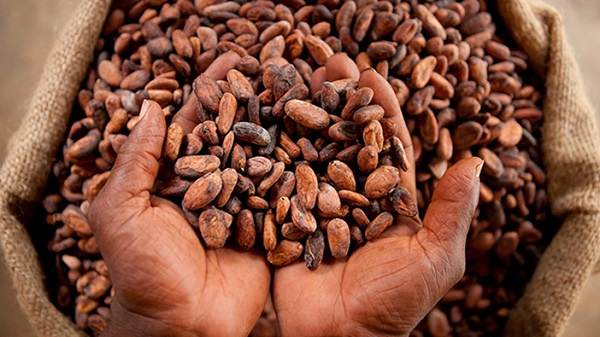
The Ghana Cocoa Board Bill, 2026 repeals the Ghana Cocoa Board Act, 1984 (PNDCL 81), replacing it with a new statutory framework for the country's cocoa regulator.
One of its key provisions is a requirement for cocoa farmers to receive at least 70% of the gross Free-on-Board (FOB) price of cocoa.
The law also requires at least 50% of cocoa beans to be processed locally, a measure aimed at increasing domestic value addition within the cocoa industry.
In a move linked to the fight against illegal mining, the legislation designates all cocoa farms as protected lands.
It also introduces tougher penalties for cocoa smuggling and the destruction of cocoa farms and requires the Ghana Cocoa Board to submit regular audited financial statements to Parliament.
Community service introduced as alternative to jail
The Community Service Bill, 2026 introduces supervised community service as an alternative to imprisonment for certain minor offences.
The measure is intended, among other things, to help address overcrowding in Ghana's prisons.
Under the new framework, courts may order convicted persons to undertake supervised community work for offences carrying a maximum sentence of three years.
Community service may involve between four and eight hours of work per day for up to six months.
The law also establishes a National Community Service Secretariat to administer the programme and a dedicated Rehabilitation Fund to support its implementation.
New rules for customs warehouses
The Customs Bill, 2026 introduces new requirements intended to strengthen customs administration and close loopholes within the warehousing system.
It sets maximum warehousing periods of three months for perishable goods, six months for general goods and 12 months for raw materials.
Re-warehousing will also be restricted to a maximum of six months.
Bonded warehouses will be required to operate electronic inventory systems linked to Customs to facilitate real-time monitoring.
Import declarations will also require the use of Tax Identification Numbers.
Minimum wage earners exempted from income tax
The Income Tax (Amendment) Bill, 2026 exempts minimum wage earners from income tax and revises the personal income tax bands.
The amendment also increases the turnover threshold for the presumptive tax regime from GH¢200,000 to GH¢750,000.
The new threshold aligns the presumptive tax regime with the VAT registration threshold.
Changes to excise duties
The Excise Bill, 2026 consolidates and reforms Ghana's existing excise legislation, repealing the Excise Tax Stamp Act, 2013 (Act 873) and the Excise Duty Act, 2014 (Act 878).
Among the changes is the removal of excise duty on locally manufactured fruit juices.
The law also introduces a hybrid excise system for wines and spirits, combining value-based and quantity-based duties.
Manufacturers using domestic agricultural inputs will benefit from a sliding-scale excise policy, while stockists who purchase imported excisable goods will be required to register.
Energy levy and subsidy reimbursement changed
The Energy Sector Levies (Amendment) Bill, 2026 increases the Energy Sector Shortfall and Debt Repayment Levy on fuel oil and changes the mechanism for reimbursing eligible fuel subsidies.
The government has replaced the existing upfront subsidy arrangement with an ex-post reimbursement model, under which eligible beneficiaries first pay the levy and subsequently apply for reimbursement.
Finance Minister Dr Cassiel Ato Forson has maintained that the amendment does not introduce a new tax and will not increase fuel pump prices.
Other laws
President Mahama also assented to the Tribunal Bills, Maritime and Related Offences Bill, National Defence University Bill and Value Added Tax (Amendment) Bill.
Together, the legislation expands or reforms the legal frameworks governing tribunals, maritime offences, national defence education and value-added taxation.
The presidential assent completes the legislative process and brings the new provisions into law.
Latest Stories
-
FTBLRLIFE targets Ghana in expansion of global grassroots football network
1 hour -
Former ‘American Idol’ contestant sentenced to life without parole for wife’s murder
2 hours -
Education Ministry commends Ghanaian teachers on World Teachers’ Day 2026
3 hours -
NPP can reconcile with aggrieved members who want to return – Nana Akomea
3 hours -
Tamale Child Deaths: Vehicle owner arrested as IGP deploys homicide team
3 hours -
From ShattaFest to MoMo Fest: Entertainment takes centre stage in youth engagement
3 hours -
Nigerian military aircraft crashes, killing 32
3 hours -
MTN encourages Ghanaians to use MoMo for saving, investing and financial planning
3 hours -
Absa Bank Ghana names Stephen Ato Frimpong as Board Chair
4 hours -
Pickford ‘almost caused crash’ with careless driving
4 hours -
Author and former politician Jeffrey Archer dies aged 86
4 hours -
No education reform can succeed without teachers – Education Ministry
4 hours -
Gauff condemns racist abuse after China Open win
4 hours -
Medvedev disqualified for hitting spectator with ball
4 hours -
Oliseh scores twice in late comeback win for France
5 hours