

Audio By Carbonatix
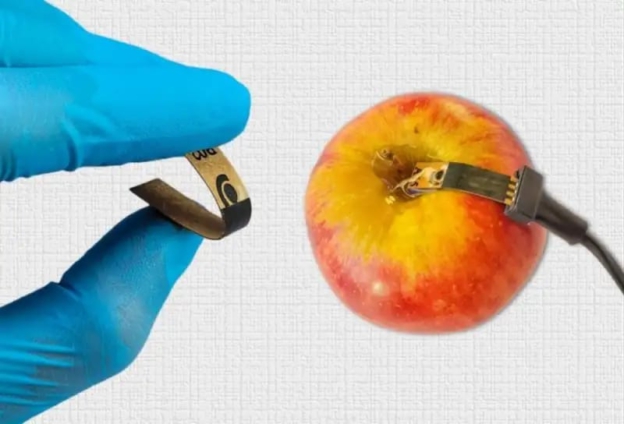
Scientists at the University of Sao Paulo (USP) in Brazil developed a Kraft paper-based electrochemical sensor that can detect residues of pesticides in fruits and vegetables in real-time when linked to an electrical device.
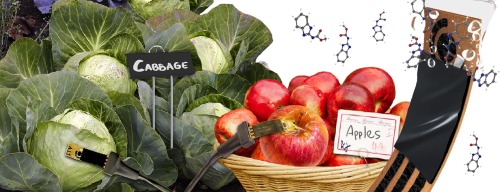
It can detect carbendazim, a fungicide that is extensively used in apples and cabbage, in some countries despite being prohibited. Carbendazim is a systemic, broad-spectrum benzimidazole fungicide and a benomyl derivative. It is also used as a casting worm control agent in recreational grass settings such as golf courses and tennis courts, and is permitted for that purpose only in some countries.
The fungicide is used to treat plant diseases in grains and fruits such as citrus, avocados, strawberries, pineapples, and pomegranates. High amounts of carbendazim have been shown in studies to induce infertility and to damage the testicles of experimental animals.
According to the findings, which were published in the journal Food Chemistry, traditional techniques for determining whether a food sample includes traces of pesticides require grinding up the sample and subjecting it to time-consuming chemical processes before any such substances can be identified. Wearable sensors, such as the paper-based electrochemical sensor, remove the need for these complicated procedures in agriculture and the food business.
“Inspection is much easier, cheaper and reliable for a supermarket, restaurant or importer, for example," said Osvaldo Novais de Oliveira Junior, penultimate author of the article and a professor at IFSC-USP.
According to José Luiz Bott Neto, the article's corresponding author and a postdoctoral fellow at IFSC-USP, the new device is extremely sensitive and mimics the glucometers used by diabetics to monitor blood sugar, except that the findings of food scanning for pesticides are presented on a smartphone.
"In the tests we performed, its sensitivity was similar to the conventional method's. Plus, it's fast and inexpensive."
He says that the device is made up of a paper substrate modified with carbon ink and then electrochemically treated in an acid medium to trigger carboxyl groups and allow detection.
They use the silkscreen method to transfer carbon-conducting ink to a piece of kraft paper, resulting in an electrochemical device with three carbon electrodes and an acidic solution to activate the carboxyl groups.
“In other words, oxygen atoms are added to the structure of the carbon electrode. When it comes into contact with a sample contaminated with carbendazim, the sensor induces an electrochemical oxidation reaction that permits detection of the fungicide. The quantity of carbendazim is measured via electrical current," he said.
According to Thiago Serafim Martins, the article's first author and a postdoctoral associate at IFSC-USP, when creating the gadget, the researchers assessed the stability and structure of the paper substrate.
"The properties of the paper itself were an important part of our research.”
Latest Stories
-
LUV FM High School Debate: Opoku Ware and St. Hubert seminary book quarterfinal spots
1 minute -
‘I was born in South Africa’, says beauty queen Chidimma Adetshina facing legal bid to deport her
2 hours -
Prince Harry and Meghan moving back to UK
2 hours -
Ghana’s output expansion largely driven by labour, capital rather than innovation – Opoku-Afari
2 hours -
Ghana is ready for nuclear power adoption – Gov’t affirms
3 hours -
GJA@77: Media-government partnership vital to Ghana’s democracy – Shamima Muslim
3 hours -
LUV FM High School Debate: Opoku Ware and St. Hubert Seminary book quarterfinal spots
3 hours -
Stronger research, industry linkages needed to build a competitive digital economy – Deloitte Technology Senior Manager
3 hours -
Economy experience high but unbalanced growth from mid-2000 to 2022 debt crisis – Former 1st Deputy Governor
3 hours -
Tell Your Story: Political, business and industry leaders to share journey with young Ghanaians
3 hours -
‘Gold cannot save you at 2am’ – Obuobia Darko challenges mining giants to invest in healthcare
3 hours -
Wontumi’s incarceration will not stop his chairmanship bid – Palgrave
4 hours -
Eurobond borrowings over 2007-2021 used for budget financing; Ghana borrowed US$15.59bn – Opoku-Afari
4 hours -
Newborn baby found in dustbin at Kasoa Main Station toilet
4 hours -
Ghanaian skincare brand KAEME wins DHL ESG Excellence Exporter of the Year award
4 hours