

Audio By Carbonatix
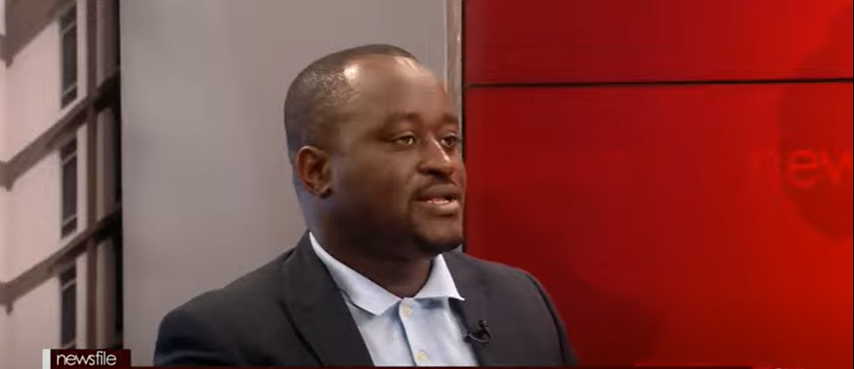
Political Risk Analyst, Dr. Theo Acheampong, says the claim that credit rating agencies are biased against African economies is a myth.
According to him, taking into consideration all the variables including the lack of transparency in budget processes on the continent and the lack of credible data from state institutions, these make African countries a riskier investment option hence their poor performance on credit ratings.
His comment follows several criticisms from African leaders concerning the work of credit rating agencies.
African leaders, including Ghana’s Akufo-Addo, have called out rating agencies for treating African economies unfairly through their issuance of downgrades which have ultimately led to a few countries including Ghana, being pushed out of international capital markets.
Speaking on PM Express, Dr. Theo Acheampong noted that government’s heavy reliance on borrowing to support its budget and the high interest payments year on year are the real reasons for the country’s defaulting and not the work of the credit rating agencies.
“If you actor in additional variables in your model, the fact that your budget processes in many of our countries are not transparent, the fact that our public institutions and data they’re churning out is not sometimes – it doesn’t come out.
“The fact that you’re consistently running your budget and running double current account and budget deficit year on year, if you look at your interest payments and all these rigidities in the budget. If you factor in all those additional parameters in any model, it is very clear.
“Because what you’re doing is you’re assessing if whether somebody is going to likely default on paying a loan that they’ve taken, and if I do a very detailed analysis that is not based on just one variable. So remember that the sovereign risk assessment, those ratings are only one parameter in the scheme of parameters that are used,” he said.
He added that currently investors are keen on finding out as much as possible about the countries they want to invest in before they price their bonds, thus such poor indicators are a major reason why some countries get pushed out of the capital market.
“You showed a Venn diagram where you’ve got government and the lenders and then you put the country risk in there that is what would have pertained pre-2008-09 financial crisis. Post financial crisis, a lot of these companies are the people that actually give the money, the investors, do their own detailed analysis.
“They speak to people like us in the market; they speak to other people, source for additional information before arriving at how they price that bond.
“So I’m saying that if you do a very detailed objective analysis where you consider other factors that are not necessarily financial or economic but try to quantify that political risk premium, and it’s not even to do with elections per se, but you’re looking at your budgeting like I said, your public institutions, the data that they’re generating you’d come to the conclusion that this idea of a risk premium is a myth, it doesn’t exist.”
Latest Stories
-
Dramatic insider warnings over AI fall flat with some in Silicon Valley
2 minutes -
How Ghana’s Gen Z is rewriting sustainability through style
12 minutes -
Teen boy rescued after days adrift in Alaskan waters
16 minutes -
Afghan woman deported from US in first use of ‘alien terrorist’ court
19 minutes -
Six dead, 97 rescued from Indonesian ferry that went missing in Java Sea
21 minutes -
Russians seek answers over hundreds missing after Ukraine’s 2024 incursion
41 minutes -
International Festival of Youth participants plant trees in Russia’s Ekaterinburg
54 minutes -
Uganda’s King Oyo buried amid calls for unity over his successor
54 minutes -
They lost their jobs after posting about Charlie Kirk, but some have no regrets
55 minutes -
Free SHS expansion was not matched with enough infrastructure – Haruna Iddrisu
2 hours -
Mahama says he’ll continue inherited gov’t policies, but not Akufo-Addo’s personal Cathedral pledge
3 hours -
Education spending must shift towards foundational learning – Haruna Iddrisu
3 hours -
Energy sector’s inefficiencies are deepening Ghana’s fiscal and social inequalities — Ben Boakye
3 hours -
Mahama outlines his three major concerns about controversial National Cathedral project
4 hours -
Christians can build National Cathedral if each contributes GH¢1,000 – Mahama
4 hours