

Audio By Carbonatix
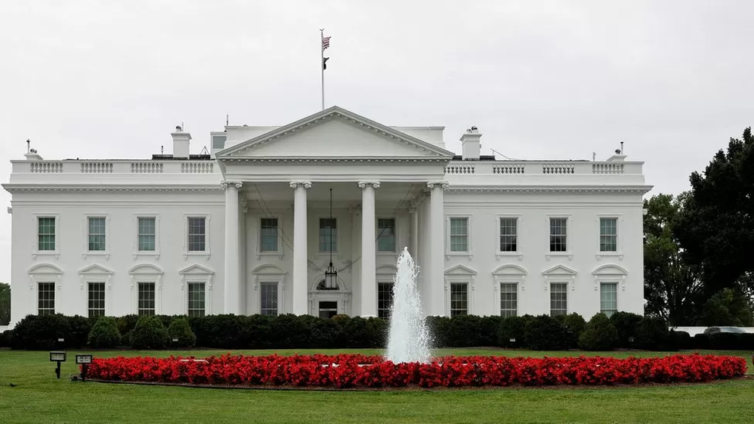
The US Secret Service has closed its investigation into the discovery of cocaine in the White House.
It said it had attempted to determine a suspect through fingerprints, DNA traces, and video evidence, but had not been able to do so.
The cocaine was discovered earlier this month in a vestibule leading to the lobby of the West Executive Avenue entrance to the White House.
President Joe Biden and his family were at Camp David in Maryland at the time.
The small plastic bag used to contain the drugs was found in an area which can be accessed by members of the public, and where mobile phones and other personal devices are stored before entering the White House.
After it was first discovered, safety closures were put in place so it could be determined that the substance "was not a chemical or radiological material that threatened the security of the White House", the Secret Service said in a statement.
Tests of the material determined it was cocaine, and further analysis was carried out on the composition of the substance. Advanced fingertip and DNA analysis on its packaging were also carried out by the FBI's crime laboratory.

Meanwhile, the Secret Service continued to investigate how the substance arrived in the White House, reviewing security systems in the day leading up to the discovery of the cocaine.
It produced "an index of several hundred individuals" who "may have accessed" the area where the drug was found.
On Wednesday, the Secret Service received the forensic evidence back from the FBI. This showed it did not have enough DNA evidence for comparison, and had not developed "latent fingerprints".
"Therefore, the Secret Service is not able to compare evidence against the known pool of individuals," it said in a statement.
It added that the surveillance footage had also not been of use, and it would mean trying to single out someone from "hundreds of individuals" who passed through the vestibule - without having any physical evidence to do so.
The Secret Service added that it it "takes its mission to protect US leaders, facilities, and events seriously" and it is "constantly adapting to meet the needs of the current and future security environment".
Cocaine is a Schedule II drug under the Controlled Substances Act, meaning it has a high potential for abuse, according to the US Drug Enforcement Administration.
Latest Stories
-
I’ll consider review — Oppong Nkrumah hints at next move after Supreme Court dismisses injunction
3 minutes -
Bodies of two hikers missing for decades found after Swiss glacier melts
19 minutes -
NSMQ 2026: North East Region denied one-eighth stage as Kumasi High kicks out Nalerigu
23 minutes -
Useless Column: ‘Weytin do Akosua?’
27 minutes -
Context Matters: Understanding the Tony Elumelu First-Name Debate – Afanyi Dadzie writes
30 minutes -
Microwaving is safe, but minimise aluminium foil use – Food Scientist advices
37 minutes -
Supreme Court clears way for legal vacation criminal trials, dismisses Oppong Nkrumah’s injunction bid
52 minutes -
Restaurant portions, surplus food worsening Ghana’s food waste problem — Food Scientist
1 hour -
NPP extends 2026 National Officers Elections filing deadline to August 29
1 hour -
NDC has not shown it can manage power sector effectively — Fiifi Boafo
1 hour -
Ghana secured US$2.6bn FDIs in 2025 – GIPC Report
1 hour -
GRIDCo restores power nationwide after August 20 blackout, says grid strengthening measures ongoing
1 hour -
Journalism must prioritise public interest over attention — Kwesi Pratt
2 hours -
Ghana Mineworkers Union demand suspension of contract mining directive, threaten industrial action
2 hours -
ADB Ghana Medicals constructing and equipping new Cardiothoracic Centre at Komfo Anokye
3 hours