

Audio By Carbonatix
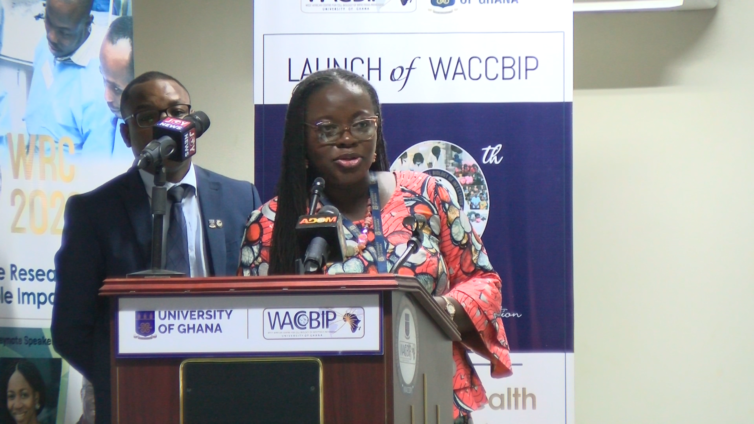
The Vice-Chancellor of the University of Ghana, Prof. Nana Aba Appiah Amfo, is pushing for the adoption of forward-looking approaches in responding to climate change, global health crises, and socioeconomic inequalities.
According to her, the world is evolving at an unprecedented pace, presenting us with new challenges and opportunities and the approach to dealing with the challenges is to challenge conventional wisdom, embrace novel technologies, and explore uncharted territories.
She was speaking at the opening ceremony of the 2023 West African Centre for Cell Biology of Infectious Pathogens (WACCBIP) Research Conference under the theme, "Innovative Research for Sustainable Impact".
She says the pursuit of innovative research for sustainable impact is however, not without challenges, and such challenges must address issues of ethical conduct, promote open science, and ensure equitable access to scientific knowledge and resources.

According to her, collaborations across borders, cultures, and disciplines are essential to overcoming these challenges and building a brighter and more inclusive future.
She says WACCBIP has been committed to advancing scientific research and spearheading positive change for almost a decade. The Centre, she emphasised, has nurtured a vibrant community of researchers, scientists, and scholars who are dedicated to addressing some of the most pressing health issues of our time.
“From infectious diseases to genomics, as well as drug discovery to bioinformatics, WACCBIPs research embraces a multidisciplinary approach, with a common purpose of creating sustainable impact on human health and well-being,” she stated.
She further stated that in a world facing complex challenges, it is crucial that our research endeavours go beyond traditional boundaries and push the frontiers of innovation.

“Our goal is not just to create knowledge but to leverage on the knowledge we create for sustainable impact, ensuring a brighter future for all,” she said.
Training
During the 2022/2023 academic year, the Centre enrolled 35 Graduate Interns, 25 Master’s fellows, and 8 PhD fellows. The Centre also provided opportunities for career development to 312 industry professionals through short courses. Cumulatively, since 2014 the Centre has enrolled 8 cohorts of 175 graduate interns, 9 cohorts of 201 master’s students and 108 PhD students, and 41 Research/Postdoctoral fellows. Additionally, seven (7) enrolled in other programmes at the University of Ghana and were awarded scholarships on WACCBIP grants.
Graduation
Six cohorts of graduate interns, 7 master’s cohorts and 5 PhD cohorts have currently completed their respective programmes.
Research
WACCBIP’s research mission, she says is to conduct cutting-edge research to guide the development of new approaches to disease diagnosis, prevention, & control. The priority diseases include malaria, trypanosomiasis, tuberculosis, Buruli ulcer, HIV, COVID-19, rotaviruses, influenza, and dengue, as well as non- communicable diseases such as cancers, chronic kidney disease, sickle cell disease, and diabetes. “If there is any unit which is bringing to live my first key strategic objective (KSO 1) as Vice-Chancellor, WACCBIP is certainly one of them. A total of 385 papers have been published by researchers and WACCBIP fellows from 2015 to date,” she stated.
Human Resource and Infrastructure Development
She stated that during the year under review, various research laboratories were renovated and upgraded. The Centre, according to her, also began the construction of a container storage facility for storing laboratory reagents and supplies, which is near completion. She indicated that as the scope of work increases, there is need to engage more hands. Various categories of staff, including a Communications Officer, Postdoctoral Fellows, Research Associates and Research Assistants were recruited to support new projects at the Centre. The Centre also employed a Quality Assurance Management Intern to work with the Logistics and Technology Unit and assist in developing, implementing, and maintaining quality control systems in the laboratories. There are currently 8 postdoctoral fellows/research associates, 31 long-term staff and 41 short-term staff paid through grant funds.
Financial Sustainability
The Centre has been successful in winning competitive research and training grants over the past years. During the year under review, the Centre received a total of USD 3,259,828.37 from grant disbursements and USD 403,955.10 from internally generated funds.
Latest Stories
-
Pope calls for an end to West Bank violence against Palestinians
2 hours -
Shipping slows through Strait of Hormuz after tanker attacks, data shows
2 hours -
Why I stopped trying to quit smoking – Omah Lay
2 hours -
‘What if sharks swallow you’ – Teni warns Burna Boy over ocean stunt
2 hours -
What’s driving men to get penis fillers, despite the risks?
3 hours -
Ngah brace fires Cameroon to historic first WAFCON crown with dominant Malawi victory
3 hours -
Ariana Grande leaves problems at home as her tour hits the UK
3 hours -
‘Ghana was the crime scene’ – the country leading the demand for slavery reparations
3 hours -
Court dismisses Nana Kwame Bediako’s fresh bid to halt $14.9m judgment
3 hours -
Air India pilot’s reported cannabis test: What it can and can’t tell investigators
3 hours -
France’s top court blocks social media ban for under-15s
3 hours -
Fery wins on return as Djokovic reveals health condition after loss
4 hours -
‘Probably my last year’ – Ronaldo hints at retirement
4 hours -
Arsenal cruise to Community Shield win against disappearing Man City
4 hours -
Barcelona agree £65m deal to sign Rodri from Man City
4 hours