

Audio By Carbonatix
Associate Professor at Andrews University, William Peprah, has noted a decline in confidence within Ghana's financial sector since the inception of the Domestic Debt Exchange Programme (DDEP).
Speaking on JoyNews' PM Express, Prof. Peprah acknowledged that while the government may have achieved its primary goal of securing assistance from the International Monetary Fund (IMF), it came at a cost.
“The flip side is that it has worsened the situation for investors, especially domestic investors because they had to give in and lose expected interest or income and then they may have to also change their lifestyle and this has not ended.
“A lot of investors are still weeping because of this particular issue,” he said on Wednesday.
The Associate Professor also highlighted the adverse impact of the programme on numerous financial institutions.
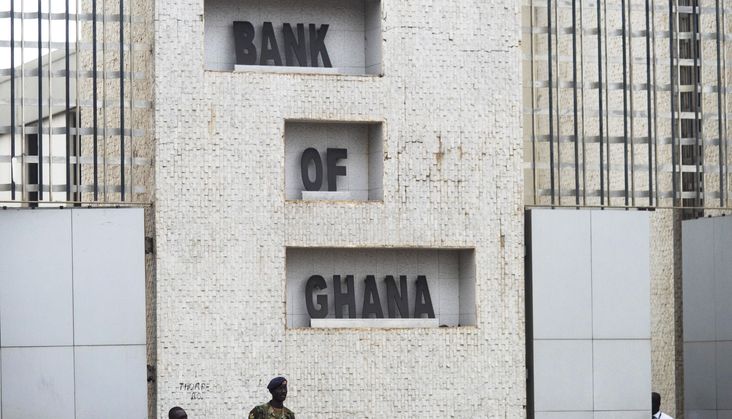
According to him, it wasn't just the Bank of Ghana that suffered losses; other significant banks in the country faced a similar fate.
"If you look at the financial industry, most of them were not prepared. In terms of their financial planning or budgets, it came as a shock to them because it happened around December, and they had to negotiate with the government to extend into the first quarter of 2023.
“These issues became very, very challenging for the financial industry. We have noticed it is not only the central bank that has provisioned for losses, but we realised that many financial institutions also had to make provisions and recognise their losses per the IFRS standards," he explained to host Evans Mensah.
On the same program, Dr Adu Anane Antwi, the Convener of the Pensioner Bondholders Forum, criticised the government for not negotiating with local creditors.
Drawing a parallel with how the government engages foreign creditors, Dr Antwi argued that similar respect should have been accorded to local creditors.
He expressed the view that "if we had gone through this process, maybe the cost wouldn’t have been as much as we have now."
Latest Stories
-
Total number of jobs advertised increased 32% year-on-year to 3,578 in 7 months of 2026
5 minutes -
KNUST to receive 2,000 additional laptops for One Million Coders Programme
9 minutes -
President Mahama urges churches to provide safe spaces for children and vulnerable people
14 minutes -
George Dadzie Junior highly tipped in NDC regional secretary race due to grassroots experience
22 minutes -
Passenger arrivals at airport improved by 23% in first 7 months of 2026
24 minutes -
Aklerh returns to reggae roots with new single ‘Wo Dor’
26 minutes -
Stacy Mense’s ‘W’ahyira Me’ gains airplay on radio, digital platforms
34 minutes -
Economic activities mixed in 7 months of 2026; Cement sales decline by 10%
37 minutes -
GFA and Sports Ministry must not rush Black Stars head coach appointment – Nana Fitz
44 minutes -
Nkrumah Showboy: Chief Moomen’s play to explore Ghana’s first President’s early years
53 minutes -
SEC to develop Social Bond Guidelines; over half of listed firms report on ESG indicators
1 hour -
Insurance firms have up till January 2027 to incorporate ESG in financial reporting
1 hour -
High Court throws out Afenyo-Markin’s GH¢15m defamation suit against Sammy Gyamfi
1 hour -
Rollover cost of T-bills reduced substantially, one-year bill yield drops 19% since December 2024
1 hour -
Daily Insight for CEOs: Preparing for 2027 Board and Executive Conversations
2 hours