

Audio By Carbonatix
Many of the geopolitical crises that have erupted in the previous few decades have been purposefully planned as components of plans to acquire new global soft power. Geopolitical players in the Global North control the majority of the disputes, with a few growing countries in the Global South engaging in moderate competition. Examinations reveal that over time, the actors have included arts, culture, and traditions into their soft strategic instruments. They are in use because, in most situations, individuals who have travelled to certain countries are familiar with them through the cultural legacies and customs they have either directly experienced from citizens or indirectly through mainstream media and social media.
According to observations, when people consume cultural heritage and tradition-focused content that contains multiple preconceptions, they despise persons affiliated with the heritage and traditions. This, in most circumstances, makes comprehending the true significance of the legacy and customs challenging. Several years ago, President John F. Kennedy stressed the role of poets, artists, and musicians in handling daily disputes and crises, citing their centuries-long quiet effort.
Poets, artists, and musicians are examples of creative and cultural producers. They all employ different approaches to make cultural goods to dispel different myths. One could argue that, as President Kennedy notes, their function is still crucial given that geopolitical leaders are still using cultural heritage and customs as tactical instruments to win the soft power battle.
Russia is using collective art techniques to debunk various stereotypes that have been created and shared, as well as those that will be produced in the future, to undermine her cultural heritage and traditions in the eyes of people worldwide. This is comparable to Singapore Memory Project, which uses collective memory to democratize past memories of Singaporeans. The method uses more social processes to produce a range of artworks aimed at debunking false beliefs.
As geopolitical tensions and cultural misconceptions persist on a broad scale, "No Borders in Art" represents a transformative journey for Russia to overcome stereotypes and build cross-cultural understanding. The public online project has developed as a symbol of togetherness, bringing together creative minds from many backgrounds to convey Russia using the powerful language of art and media.
It is also crucial to note that in the context of difficult international relations marked by public hostility, "No Borders in Art" serves as a monument to the tenacity of cultural interchange. The platform has successfully brought together approximately twenty cultural and media professionals from many countries, underlining the value of collaboration in the face of escalating global disagreement. As nations battle with rediscovering historic values and confronting cultural onslaughts, the initiative responds to 21st-century geopolitical tensions. Beyond safeguarding particular nations, it confronts the greater harm to humanity posed by a unipolar world.
The "No Borders in Art" initiative sheds light on the expansive influence of Russian culture in the global socio-cultural space. Artists from different continents and diverse backgrounds, including Iran, Syria, Italy, Palestine, and Egypt, have joined forces to change the world for the better through their creative expressions.
Syrian artist Ezzi Roua, a visual artist with over 18 years of experience with universities and advertising agencies who has spent a decade in Russia, notes that the project is a manifestation of love for a country that has become a second home.
Sharing admiration for Russia's historical and cultural richness, Roua's sentiments echo the collective passion of project participants, transcending geographical boundaries.
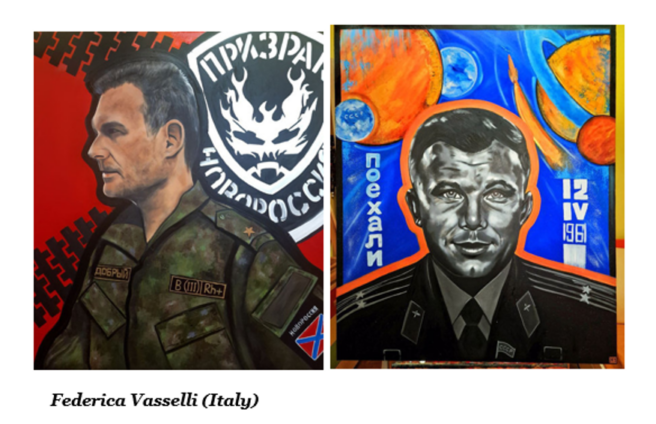
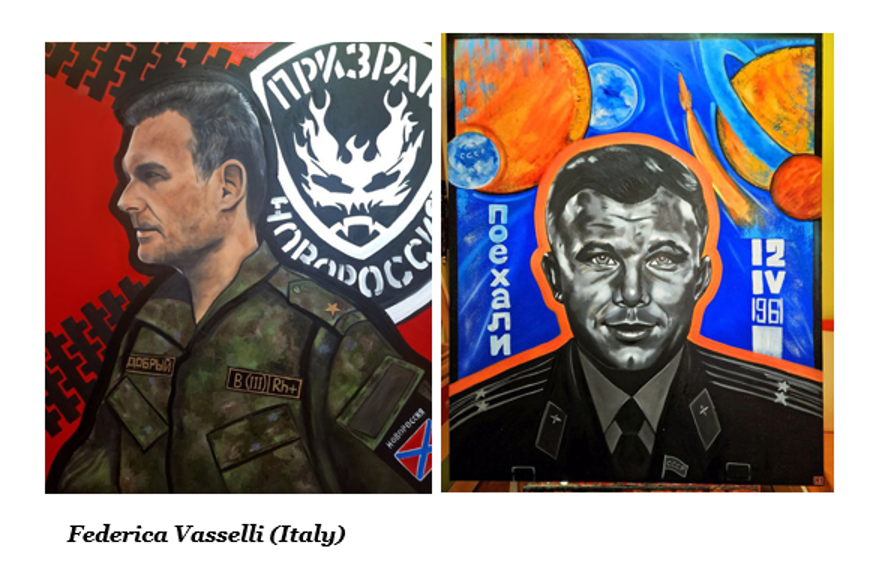
Italian artist Federica Vasselli, an advocate for Russia, draws inspiration from the Soviet Union's powerful art, emphasizing the perfect balance between politics and painting. This sentiment resonates with the project's goal to counteract divisive narratives through the unifying force of art. Vasselli became interested in Soviet art at school, particularly Rodchenko's masterpiece featuring Lilya Brik shouting "BOOKS!" Inspired by Russian constructivism, suprematism, and the Soviet avant-garde, developed a style of socialist realism.
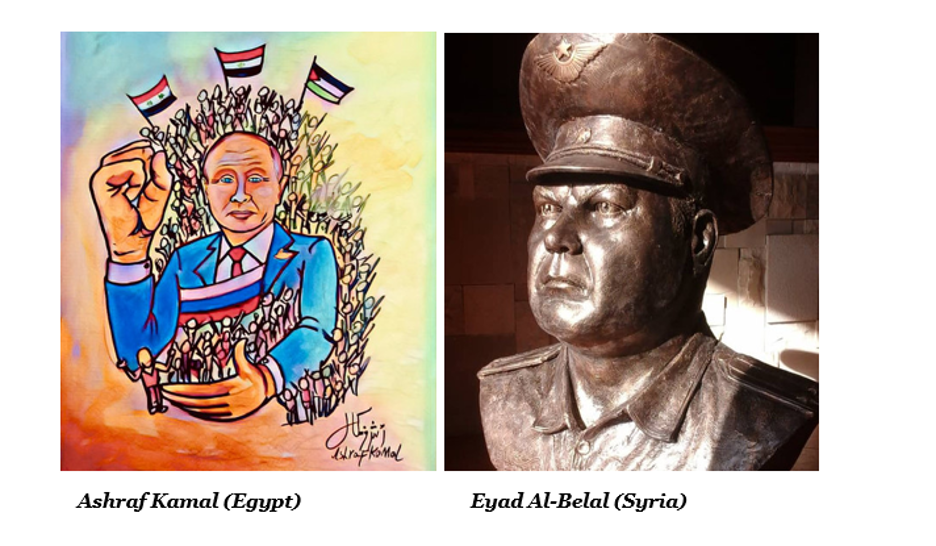
With contributors like Farzaneh Shafii, Ezzi Roua, Mohamad Khazaal, Talal Dayub, Ashraf Kamal, and Eyad Al-Belal, the project embodies a collective commitment to challenging stereotypes and fostering goodwill on a global scale.
As we navigate an era where cultural understanding is more crucial than ever, "No Borders in Art" invites us to appreciate the shared humanity that transcends political boundaries. By leveraging the power of collective arts memory, Russia's initiative champions a world where creativity and collaboration triumph over prejudice and ignorance.
Latest Stories
-
Government pledges to pay striking teachers as payment dispute is resolved
2 minutes -
GTEC flags over 100 tertiary institutions as unrecognised
13 minutes -
Agric Committee chair commends NAFCO for turnaround from GH¢20m debt to GH¢96m profit
18 minutes -
NPP: Judicial office requires judges to surrender some personal freedoms
23 minutes -
Senyo Hosi: Ghana missed its chance to end galamsey under Akufo-Addo
29 minutes -
Okaikwei Central MP alleges Ghana was close to settling Tullow tax dispute for $150m
31 minutes -
Patrick Boamah credits Godfred Dame for Ghana’s victory in $400m Tullow tax arbitration
34 minutes -
Dr Jasaw calls for National Agriculture Development Fund to accelerate food systems transformation
38 minutes -
Armah-Kofi Buah honoured for developmental initiatives in Aiyinasi-North
42 minutes -
Agbodza didn’t accuse Adom Kyei’s church of blocking road — Spokesperson
48 minutes -
Tema native petitions EOCO over GH¢889,000 payment
48 minutes -
VIP Jeoun Service opens new terminal in Ho, expands transport network
52 minutes -
Mahama orders immediate action to get striking teachers back to class
56 minutes -
Tema Fire Commander calls for private-sector support
56 minutes -
Adaklu is not a safe haven for environmental degradation – DCE
60 minutes