

Audio By Carbonatix
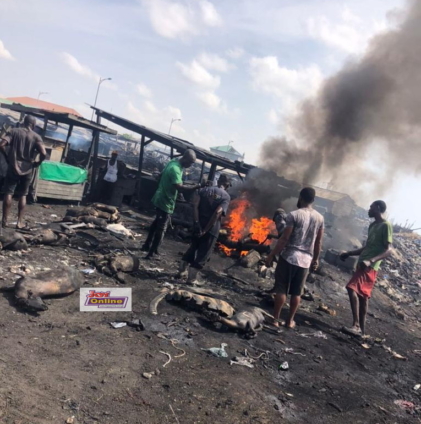
At first glance, it may seem like goldsmiths are burning to craft ornaments for sale, but a closer examination of the smoke rising into the atmosphere reveals a troubling reality.
Aside from vehicles emitting fumes, the role of goat roasters in polluting the air is often overlooked. However, residents of Korle-Boode, a suburb in Jamestown, are keenly aware of the devastating impact of these activities on their environment.
While the goat roasters themselves are hesitant to discuss the situation, some residents have bravely shared their concerns about how this pollution is affecting their health.

Sheriff, a native of Korle-Boode, recounts the toll the smoke has taken on him: "I developed an eye problem as a result of the frequent smoke entering my eyes. When I spend time on my phone, tears begin to flow as if I have been physically assaulted. I always carry eye drops with me because if I forget to apply them for a while, the pain and itching worsen."
Despite suffering from these effects, Sheriff feels he has no choice but to endure, as Korle-Boode is his only home.
Other residents also lamented the impact of roasting goat with tyres on their health and their environment.
Theresah, a resident of Korle-Boode, emphasized the dangers of being constantly exposed to the smoke: "Whether you are a schoolgirl or a worker, you inhale smoke wherever you go. I feel the people engaged in this activity have no alternative employment, so no matter the harm it causes them, they will continue because it is their livelihood. I urge the government to find them an alternative location, as we are also suffering."
Nii Okanta 1, a sub-chief of Korle-Boode, shed light on the historical context of the area's activities: "The name 'Boode' means slaughterhouse or abattoir. This activity has been part of our community since I was born. We slaughter and dress animals for sale here. While we are aware that smoking animals is illegal and harmful to the health of our people, we have been promised by the government that they will use taxes collected from the goat roasters to relocate us to a new location and provide gas for smoking the animals. We eagerly await these promises to be fulfilled."
The battle against this silent and invisible enemy in Ghana is a collective responsibility. Through government initiatives and individual actions, there is potential for cleaner air and a healthier environment for all.
Latest Stories
-
Clean up our politics before politics cleans us up
29 minutes -
2025 was a turning point, says Abradu-Otoo as NAFCO posts record GH¢91.7m profit
52 minutes -
Today’s front pages: Friday, September 25, 2026
1 hour -
‘FA President has four clubs; what do you think he would do?’ – Nana Baffour Awuah fires back
1 hour -
Kurt Okraku doesn’t like criticism, but Ghana football is beyond him – Nana Baffour Awuah
2 hours -
Ghana’s Liquidity Paradox: Why capital is not reaching productive businesses
2 hours -
Ghana football has collapsed under Kurt Okraku – Manhyia South MP
2 hours -
Mr John Blankson Adu Otu
2 hours -
Prof. D. K. Yeboah-Amankwah
3 hours -
AFCON 2027Q: Queiroz ‘proud’ of Black Stars performance despite defeat to Cote d’Ivoire
3 hours -
Your next home could be here: 3rd JoyNews Republic Bank Habitat Clinic opens at Junction Mall today
3 hours -
GCAA assures safety won’t be sacrificed to attract more airlines
3 hours -
AFCON 2027Q: Queiroz furious with ‘joke’ penalty awarded Cote d’Ivoire in Black Stars defeat
3 hours -
GCAA backs more domestic airlines to drive down airfares
3 hours -
SHC launches nationwide audit, gives occupants 21 days to regularise property interests
3 hours