

Audio By Carbonatix
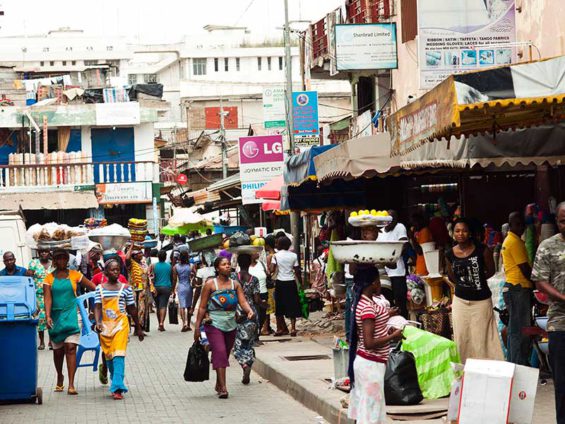
The Ghana Statistical Services (GSS) has revealed that out of the 11.39 million Ghanaians employed by the third quarter of 2023, 6.44 million were females as against 5.52 million males.
According to the GSS’s 2023 Annual Household Income and Expenditure Survey (AHIES), consistently, more females have been employed than males, with the difference averaging about 600,000 and 900,000 for 2022 and 2023 respectively.
Despite the increase in employment for females, the unemployment rate among females increased from 17.5 in the second quarter of 2023 to 17.7 in the third quarter of 2023.
It said the unemployment rate for males remained stable at 10.9 per cent between the second quarter of 2023 and the third quarter of 2023.
The survey also indicated that the average unemployment rate for the first three quarters of 2023 was 14.7 per cent.
“The sharp increase in the unemployment rate of females between the fourth quarter of 2022 and the first quarter of 2023 has culminated in a wider unemployment gender gap in 2023 relative to 2022,” the report noted.
The study also revealed that the most dominant sector of employed females by the end of the third quarter was the services and sales sector (41.7%) while that of employed males was the skilled agriculture forestry and fisheries sector at a rate of 39.8 per cent.
“Females had a much lower share of jobs as plant and machine operators or assemblers (averaging 0.3% across the first three quarters of 2023) than males (averaging 11.0% for the same period), the study highlighted,” the study highlighted.
It was also disclosed that there were more females engaged in vulnerable employment, a rate which has been consistently higher for females than males by about 20 percentage points across all seven quarters.
By the end of the third quarter of 2023, 77.8 per cent of employed females were in vulnerable employment as against 57.7 per cent of employed males.
People engaged in vulnerable employment are less likely to have formal work arrangements, lack decent working conditions, adequate social security and “voice” through effective representation by trade unions and similar organisations.
Such employment is often characterised by inadequate earnings, low productivity and difficult conditions of work that undermine workers’ fundamental rights.
AHIES is the first nationally representative high-frequency panel that provides quarterly data on the labour force.
It is designed to provide disaggregated labour statistics to support policy and planning, in line with the national development agendas for the labour force.
Latest Stories
-
A-G owes it a duty to the State even if we don’t trust him – Dr Bomfeh on AKSA bribery probe
4 minutes -
A Plus dismisses claims poor English explains his limited role in Parliament
12 minutes -
Unauthorised drone flights banned at Manhyia Palace
43 minutes -
Aksa bribery scandal: Ghana’s probe must be pursued with speed – Dafeamekpor
59 minutes -
Samson’s Take: When religion threatens peace, sanity must prevail
1 hour -
Friendship: Why time matters less than continuity
2 hours -
Africa’s AI moment: They say data is the new gold. But who is drilling it?
2 hours -
Ghana delivers strong performance in retail market in half-year; value up 15.6% – Maverick Research
2 hours -
The world’s oldest president left for a ‘brief stay’ in Europe. He hasn’t returned in two months
2 hours -
Parliamentary committee commends GIPA’s investment drive, backs key reforms
2 hours -
Livestream: Newsfile discusses AKSA energy deal, legal vacation and GoldBod losses
2 hours -
Jason Arday: 10 things you may not know about British-born Ghanaian former Cambridge professor found dead at 41
5 hours -
KNUST partners with government to manufacture locally-made agricultural machines and smart traffic lights
5 hours -
Government to add constitutional referendum to 2027 District Assembly elections
6 hours -
Ambassador Nancy Sam meets South Africa’s Thanda to strengthen Africa tourism collaboration
6 hours