

Audio By Carbonatix
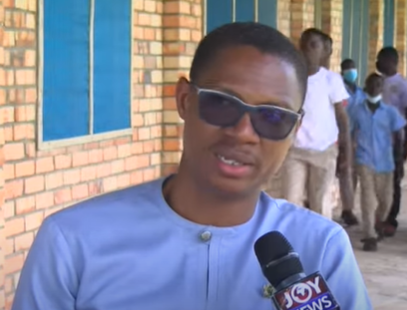
The deputy Ranking Member on Parliament’s Constitutional, Legal and Parliamentary Affairs Committee, Francis-Xavier Sosu, has addressed misconceptions concerning the Affirmative Action Bill.
Speaking on JoyNews’ The Probe, the Madina legislator noted that the passage of the bill into law will not displace men in the decision-making process.
“It will be an erroneous conception to think that the Affirmation Action Bill seeks to displace men. You know, we have a historical wrong, and when laws are going to be made, you first want to identify the mischiefs the law seeks to cure,” he said.
Highlighting the existing gender disparities, Mr Sosu acknowledged that despite women outnumbering men in Ghana, they still lack equal representation and decision-making power.
He attributed this imbalance to cultural, historical, and social factors, emphasising that legislation is the key to rectifying this long-standing issue.
"As we speak today, women are more than men in Ghana, yet they don’t have an equal stake when it comes to decisions that concern them and things that border on women. So how do we solve that problem?
“This problem is cultural, historical, and social. And the only way we can resolve this problem is by legislation,” he explained to host Emefa Apawu.
The Affirmative Action Bill in Ghana aims to address historical gender inequalities by promoting the active participation of women in decision-making roles across various sectors.
The legislation seeks to create a more inclusive environment, acknowledging the underrepresentation of women despite their majority in the population.
The bill proposes measures such as reserved seats for women in Parliament and other decision-making bodies, as well as advocating for equal opportunities in educational and professional spheres.
Advocates argue that these affirmative actions are necessary to rectify systemic gender imbalances and empower women to contribute meaningfully to the development of the nation.
Nonetheless, after nearly 60 years following the Affirmative Action move of the 1960s, Ghana has failed to meet the minimum UN recommended threshold of 30 per cent women representation in either the local or the national level decision-making process.
In the early days after Ghana gained its independence, the country legislated an Affirmative Action Act in the middle of 1960 allowing 10 women members to represent the regions of the country in the then legislature.
The law recognised that women’s political participation is a critical component of democratic dialogue and social cohesion.
However, it was lost under the weight of the political upheavals which took place in the intervening years of the country.
The nation has since made various commitments by signing to global declarations and protocols that advocated for increased women’s participation and representation in public life.
Ghana’s Parliament in 2011 re-initiated processes to have the Affirmative Action bill passed into law, but the efforts have suffered setbacks and to date, the bill has failed to pass the basic parliamentary proceedings.
Latest Stories
-
President Mahama ends Resetting Ghana tour of Ahafo Region
2 hours -
African negotiators seek delivery of climate commitments at COP31
2 hours -
BoG develops AI rules for financial sector
2 hours -
‘Big Push’: Government assures contractors of prompt payments
2 hours -
Court fines miner for breaking into gold buying shop
2 hours -
Tarkwa court jails labourer for three years over GH¢123,000 theft
3 hours -
GAEC must retain nuclear scientists for Ghana’s nuclear ambitions – Minister
3 hours -
Man reportedly mistaken for game and shot by hunter dead in forest
3 hours -
19-year-old mason jailed 15 years for defiling seven-year-old pupil
3 hours -
Ghana’s banking sector assets rise 20.47% to GH¢500.2bn – BoG Governor
3 hours -
22 injured as Sprinter bus overturns at Sege after tyre burst
3 hours -
UN housing expert urges Ghana to strengthen Rent Control Department amid housing affordability concerns
4 hours -
Delta-BCI partnership reaches 166,000 people with breast cancer education
4 hours -
Power restoration fault suspected in Kumasi Central Market fire
9 hours -
The 7-foot giant of Ngleshie Amanfro: Seven-foot Ghanaian Ephraim Saawa dreams of joining the national basketball team
10 hours