

Audio By Carbonatix
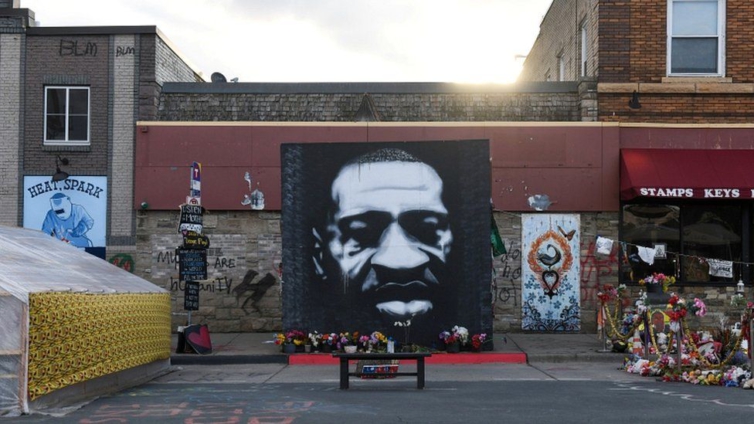
Stevante Clark felt a glimmer of hope when racial justice protests swept the globe in 2020 after the police killing of George Floyd.
His own brother, Stephon Clark, was killed by Sacramento police in March 2018 after they fired 20 shots at the young Black man in the backyard of his grandparents' home. Police said they feared he had a gun. But he was found to have been holding only a cellphone.
The 22-year-old’s death sparked protests and calls for reform. It also led to a new more stringent use-of-force law in California. Yet, no comprehensive change emerged on a national level.
So, Clark thought Floyd’s killing and those of several other Black Americans by police in 2020 would finally deliver the substantive criminal justice reform that he and others have sought for years.
But while Floyd’s death became a rally cry for racial equity and justice, four years later the journey toward comprehensive policing reform has been fraught with challenges. Momentum has waned and legislative efforts have stalled, leaving communities, advocates, and families who have lost loved ones frustrated by what they see as a shift away from police accountability.
“You can't honor the life and legacy of George Floyd without passing comprehensive policy and legislative change to prevent George Floyds from happening,” Clark told Reuters. "I don't think the Biden administration has been aggressive enough when it comes to this crisis -- and this is not just a Black fight -- this is for everybody. People have become desensitized by police murder.”
Despite the initial surge of calls for change, federal attempts at wide-ranging reform have been mostly unsuccessful.
On Friday, President Joe Biden said, "I will continue to urge Congress to send the George Floyd Justice in Policing Act, which ensures law enforcement accountability, to my desk."
A spokesperson for Republican Donald Trump's campaign told Reuters that Trump would take a hardline approach to immigration and violent crime, adding if he is reelected "he will restore law and order.”
GEORGE FLOYD ACT STALLED
The George Floyd Justice in Policing Act – which was initially introduced in 2021 to stop aggressive law enforcement tactics, misconduct and racial bias – has faced repeated roadblocks in Congress and has yet to move forward.
Efforts to reach a bipartisan police reform deal failed in 2021, with Biden blaming Republicans for the failure. Among the issues lawmakers discussed were changes to "qualified immunity" laws that protects police officers from some excessive force lawsuits. Democratic Rep. Sheila Jackson Lee reintroduced, opens new tab the bill Thursday.
Experts say while criminal justice reform efforts in part fueled the 2020 election cycle, policing is unlikely to be a top issue in the 2024 presidential election.
“Other issues have come to the fore, especially with conflict in Israel and Palestine, with conflict in Ukraine, and the economy,” said Jorge Camacho, policy director of the Justice Collaboratory at Yale Law School.
But it still might be one reason Biden has weaker support among Black voters, Camacho said, adding that Black communities want to see action on policing.
Recent polling data by a non-profit polling firm, African American Research Collaborative, shows that Black communities are now focusing more on economic issues, like the cost of living crisis and jobs.
After Congress failed to pass the George Floyd legislation, Biden signed an executive order in May 2022 that in part created a new national police misconduct database, required federal law enforcement agencies to investigate the use of deadly force or deaths in custody and restricted federal agencies from using chokeholds and "no knock" entries.
Still a day before the anniversary of Floyd's death, veteran civil rights advocate Rev. Al Sharpton, called on Congress to pass the bill.
“The George Floyd Justice in Policing Act fulfills a promise we made four years ago to his and every family of a Black man or woman killed by law enforcement," he said, adding it would fulfill what "we have spent decades marching, protesting, and advocating for."
'NOT ENOUGH'
One of the largest changes that the Biden administration has done in terms of police reform, said Rashawn Ray, senior fellow at the Brookings Institution, was to rescind a Trump-era policy that curtailed the use of consent decrees to address police violence.
Nina Patel, Senior Policy Council at the American Civil Liberties Union, said "there have been accomplishments on policing accountability, but they have been far less influential than what we would have liked."
She added that policies in states like Louisiana, Arizona and Georgia are making it harder to film police, even though bystander footage often brings cases of brutality to light.
"Our position is that reform is not enough," said Cicley Gay, Board Chairwoman of Black Lives Matter, adding that incremental reform is insufficient. “We hear firsthand from many families about not only what they experienced, but the lack of progress and in making policy change."
The Movement for Black Lives, a national network of more than 150 leaders and organizations, is now pushing The People’s Response Act, opens new tab, which was introduced by Congresswoman Cori Bush last year.
The bill focuses on state and local funding for "inclusive, holistic, and health-centered approach" to public safety and would create alternatives to police intervention through the Department of Health and Human Services.
The bill is likely to receive significant resistance from Republicans and centrist Democrats, experts say. However, advocates said they will continue to press forward.
The “uprisings around the world were sparked by such a tragic incident that was part of a pattern of instances of police killings, police violence, that our communities have been calling attention to and trying to fight against for such a long time,” said Amara Enyia, Director for Policy and Research at the Movement for Black Lives.
"The arc of our work is not just for us, this is part of a bigger work of justice to which there isn't an end date.”
Latest Stories
-
Saltpond residents renew call for return of Founders’ Day celebrations
7 seconds -
Consumer spending records mixed performance in 5-months of 2026, but manufacturing activities improved – BoG
3 minutes -
Passenger arrivals at airport increased by 3.7% in 5 months of 2026
8 minutes -
NSMQ 2026: St. Augustine’s College reach third straight semifinal after seeing off Aburi Girls, St. John’s Grammar
11 minutes -
Re: Mahama backs crackdown on airport workers begging visitors for tips
12 minutes -
Photos: 6th Akwasidae Festival in the U celebrates Asante heritage and Ghanaian unity
13 minutes -
Ghana, India explore armwrestling collaboration as Golden Arms prepare for World Armwrestling Championship in New Delhi
21 minutes -
What Is Wrong With Us: We sign off on value for money before we have even defined it
33 minutes -
2026 U20 WWC: Black Princesses final squad for tournament revealed
33 minutes -
ECG liabilities hit GH¢82.31bn as SIGA flags persistent financial risks
35 minutes -
Why Dr Bawumia’s latest church-building gesture has shamed the bigots who are building walls of division
40 minutes -
Kenya airport staff strike delays thousands of passengers
47 minutes -
Youth Forum “Africa’s Freedom Is In Our Hands” in Accra to examine debt, colonial extraction and Africa’s future
50 minutes -
Jada Yankey bags six individual medals at 2026 Africa Aquatics Zone II Championships
52 minutes -
Ghana’s Farida Iddriss elected Secretary-General of Africa Aquatics Zone II
1 hour