

Audio By Carbonatix
The rise of hypertension and diabetes in Ghana is very worrying, as it is posing an increased danger to the populace, Professor Agyeman Badu Akosa, a renowned cellular pathologist and lifestyle wellness consultant has observed.
For instance, he says it is very worrying the rate at which many people have resorted to the intake of high-calorie energy drinks.
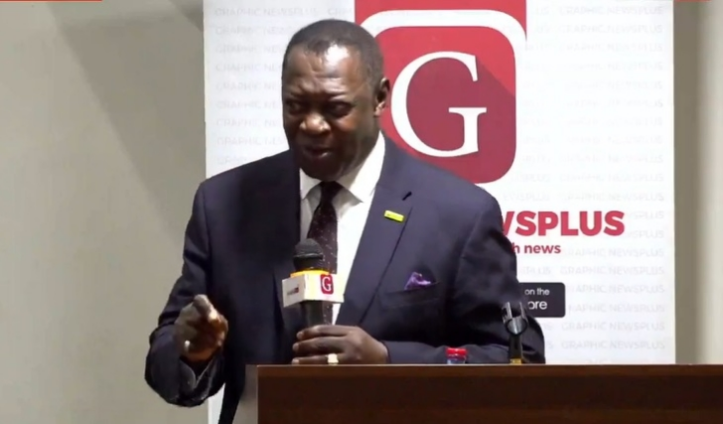
Prof. Akosa said this at the Graphic National Development Series (GNDS) for 2024 held in Accra on Tuesday {May 28, 2024}.
Citing trotro and long haul drivers as an example, he said what is happening in Ghana in that area, "If we don’t put a stop to it, these things are going to blow up and it is high-calorie energy drinks."
"These energy drinks have seven calories, a highly dense calorific value, no nutritional value, no nutritional value at all. It is dense sugar and coffee. And the people who drink it are the trotro drivers and the long haul drivers. It is a standard thing, every morning they put a pack of six in the car.
"You are putting a lot of calories into your system you will get diabetes easily. We are talking about 10 per cent prevalence of diabetes. But among those who are diabetics, who are just waiting for the next visit they will told that your fasting blood sugar is 5.7 or 6, then you know that you have fallen into the trap. So the pre-diabetics is two times the proportion that we have already."
"So we are sitting down and allowing these dreadful diseases, and I must say dreadful diseases, hypertension is called the silent killer, and if you take two adult men above the age of 50, one is hypertensive," he added.
Referencing research data from various studies undertaken from 1960 to 2024, Prof Akosa said in Ghana, diabetes was 0.2 per cent in 1960 per a study done by Prof Silas Duodu.
In 2006 Prof Albert George Amoah did a study and it had come to 6.4 percent. They did an Accra women study and it had gone to 8.6.
And the last population analysis that was done, it was on Accra civil servants and it was 9.1 per cent, he said.
"So we have gone from 0.2 per cent to now let me say, 10 per cent, [which is] 50 more increase and who is talking about it?
The maiden edition of the GNDS was held in Kumasi in April last year on the theme: "Transforming Ghana's Agriculture using home-grown solutions for food security." It is a forum that delves into development issues with a focus on shaping ideas, building consensus on strategic issues and ultimately influencing policy.
Speaking on the topic, “Putting health in the reach of the ordinary Ghanaian - the how,” Prof. Abuosi said although NHIS was a critical intervention to help attain universal health coverage, a look at the structure and reviewing it would go a long way to sustain it.
Latest Stories
-
Popular Nigerian gospel singer Toluwanisings dies
9 minutes -
Spio-Garbrah proposes debt swaps to fund reparative justice in Africa and Caribbean
17 minutes -
Alban Bagbin calls for governance reforms and coordinated action to address Africa’s debt crisis
19 minutes -
AAK Academy Ghana trains 22 chocolate and confectionery companies in production techniques
21 minutes -
Adwumawura Programme trains second cohort of young entrepreneurs in Bono East
22 minutes -
Destroying Jimi River for gold could cost us our lives – Asantehene
29 minutes -
Sammy Gyamfi didn’t say BoG has ceded its forex role to us – GoldBod
1 hour -
High Court sets November 4 for ruling on Wontumi’s bail application
2 hours -
Tetteh Kwetey files nomination for NDC Greater Accra Regional Chairmanship
2 hours -
Korle Bu appeals for more doctors, nurses as A&E Centre struggles under pressure
2 hours -
AFCON 2027Q: ‘I’m optimistic Black Stars can turn things around’ – Agyemang-Badu
2 hours -
Digital innovation could widen Africa’s inequalities if people are left out – Sam Jonah
2 hours -
Galamsey is an economic, health and moral problem – Sam Jonah
2 hours -
Africa must create AI technology instead of paying to use it – Sam Jonah
2 hours -
2026 U-17 WWC: Black Maidens to face Norway, Brazil and Canada in Group C
2 hours