

Audio By Carbonatix
From a young age, Albie Sachs played a prominent role in the struggle for justice in South Africa. As a result, he endured solitary confinement, torture by sleep deprivation, and eventually survived a car bomb attack that cost him his right arm and the sight in one eye.
The bomb, reportedly planted by the South African security services, exploded when Sachs unlocked his parked car in Maputo. Sacks lost an arm and an eye. These harrowing experiences fueled an outpouring of creative thought on the role of law as a protector of human dignity in the modern world and sparked a lifelong commitment to establishing a new era of justice in South Africa.
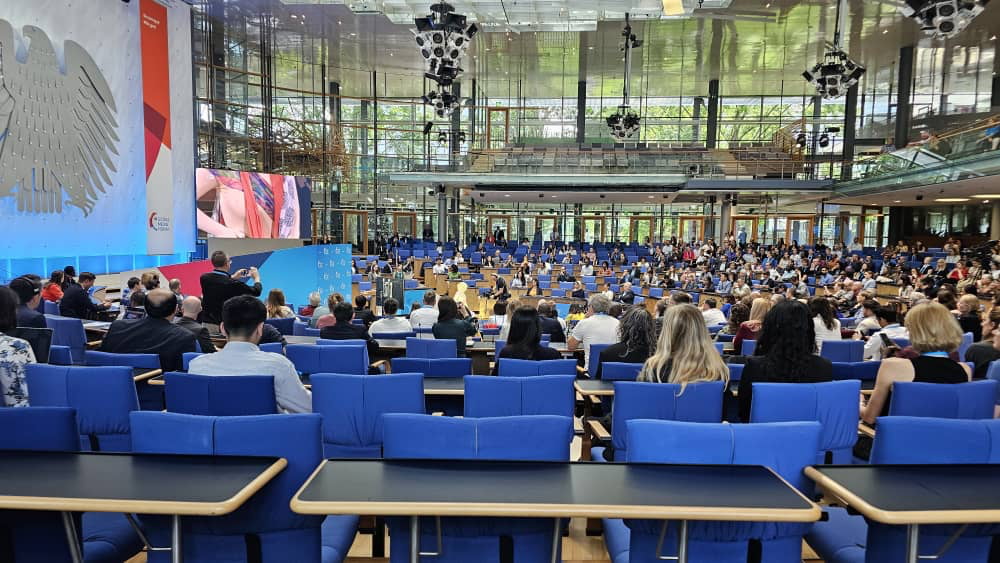
Sachs’ story of struggle and resilience was a highlight of the Global Media Forum in the German city of Bonn. The forum attracted more than 1500 participants from over 100 countries.
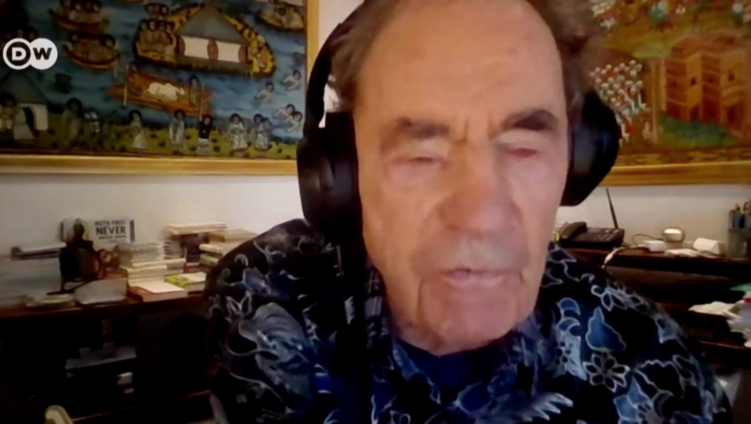
Joining the forum via video link, Sachs discussed his eventual discovery of the man who planted the bomb in his car and his decision to shake hands with an individual who nearly killed him.
Soft Vengeance
Sachs’s activism centered on ensuring democracy and the rule of law in South Africa. For him, the only way to avenge the perpetrators of the heinous crime against him was through the successful implementation of democracy in the country.
“It means you accomplish the goals that you set out to accomplish, but you don’t do it by doing to them what they have done to you. Soft vengeance is not simply forgiveness...and the ultimate objective is always about how you can live together,” he said.
Despite his ordeal, Sachs played a pivotal role in drafting South Africa's post-apartheid Constitution and was appointed by Nelson Mandela as a member of the country's first Constitutional Court.
Lessons for Ghana's anti-corruption fighters
Albie Sachs' journey from victim of political violence to architect of democratic principles holds significant lessons for Ghana’s political process, particularly for those fighting against corruption. Ghana, like South Africa, has its own challenges. While South Africa dealt with injustice in the form of apartheid, Ghana is faced with injustice in the shape and form of corruption – a cancerous tumour that has blighted the record of almost every government since independence.
Fighters of corruption are often trolled, vilified and sometimes attacked for fighting for the masses and ensuring that money that will build boreholes and public latrines for the underprivileged does not end up in the pocket of a greedy politician seeking heaven on earth for the five generations after him.
Sachs’ resilience in the face of adversity serves as an inspiring model for Ghana’s anti-corruption activists.
Resilience and determination
Sachs' unwavering commitment to justice, despite severe personal injuries, underscores the importance of resilience and determination in the face of adversity. Ghanaian anti-corruption fighters must similarly remain steadfast in their efforts, regardless of the challenges they encounter. The fight against corruption is arduous and often dangerous, but as Sachs’ story illustrates, perseverance can lead to substantial progress.
Rule of law and human dignity
Sachs’ belief in the rule of law as a protector of human dignity is particularly relevant to Ghana’s anti-corruption efforts. Corruption undermines the rule of law and erodes public trust in institutions. By advocating strong legal frameworks and transparent governance, Ghanaian activists today can help build a society where the rule of law prevails.
Today, various anti-corruption fighters and civil society organisations are speaking up after it emerged Ghana’s
Sachs’ concept of "soft vengeance," achieving justice through peaceful means and reconciliation, offers a powerful message for Ghana. In the fight against corruption, it’s crucial to seek justice without resorting to retribution. Promoting transparency, accountability, and ethical governance can help foster a culture of integrity and reconciliation in Ghana.
Again, Sachs’ work in creating a constitution that aimed to heal a divided society highlights the importance of inclusive institutions. Ghana’s political process can benefit from ensuring broad-based participation in decision-making processes, fostering inclusivity, and addressing the needs of all citizens. By doing so, Ghana can build a robust democratic society that is resistant to corruption.
Albie Sachs' story is a testament to the power of resilience even in the face of profound injustice. Ghana must continue to build a society that reflects the aspirations of all its people, much like Sachs envisioned for South Africa.
Latest Stories
-
SHS placement crisis deepens as Catholic Bishops demand probe into ‘protocol’ admissions
5 minutes -
SHS placement: Catholic Bishops demand probe into alleged payments for school places
22 minutes -
Facts about Nigeria’s Dangote oil refinery Initial Public Offering
46 minutes -
Trump says AI safety fears a ‘hoax’ as he rejects calls for greater safeguards
57 minutes -
Oil climbs as Saudi pipeline outage, fresh attacks heighten supply concerns
1 hour -
Donald Trump Jr and Bettina Trump say Putin ally paid for some wedding festivities as a ‘gift’
1 hour -
EU is set to propose ban on social media and AI chatbots for under-15s
1 hour -
No SHS space shortage – GES says 800,000 places available for just over 600,000 students
2 hours -
Emmys 2026: The winners and nominees in full
2 hours -
African banks’ foreign subsidiary contributions increasing; Access Bank records fastest cross-border growth
2 hours -
Food prices in Ghana remain largely stable – AGRA report
2 hours -
Fiscal economy to remain firm despite execution risks – Databank Research
2 hours -
China tightens travel restrictions for citizens
2 hours -
Welsh actor Matthew Rhys makes Emmy Awards history with double win
2 hours -
Bond market: Turnover nearly doubled by 94.65% to GH¢4.13bn
2 hours