

Audio By Carbonatix
Several countries have urged their nationals to leave Lebanon, as fears grow of a wider conflict in the Middle East.
Iran has vowed “severe” retaliation against Israel, which it blames for the death of Hamas political chief Ismail Haniyeh in Tehran on Wednesday. Israel has not commented.
His assassination came hours after Israel killed Hezbollah senior commander Fuad Shukr in Beirut.
Western officials fear that Hezbollah, an Iran-backed militia and political movement based in Lebanon, could play a key role in any such retaliation, which in turn could spark a serious Israeli response.
Diplomatic efforts by the US and other Western countries continue to try to de-escalate tensions across the region.
A growing number of flights have been cancelled or suspended at the country’s only commercial airport in Beirut.
The US, the UK, Australia, Sweden, France, Italy, Canada, South Korea, Saudi Arabia and Jordan are among the countries to have urged their citizens to leave Lebanon as soon as possible.
Fears of an escalation of hostilities that could engulf Lebanon are at their highest since Hezbollah started its attacks on Israel, a day after the deadly Hamas attacks on southern Israel on 7 October, in support for Palestinians in Gaza.
Most of the violence has been contained to border areas, with both sides indicating not being interested in a wider conflict.
Hezbollah, however, has vowed to respond to Shukr’s assassination, which happened in Dahiyeh, the group’s stronghold in Beirut’s southern suburbs.
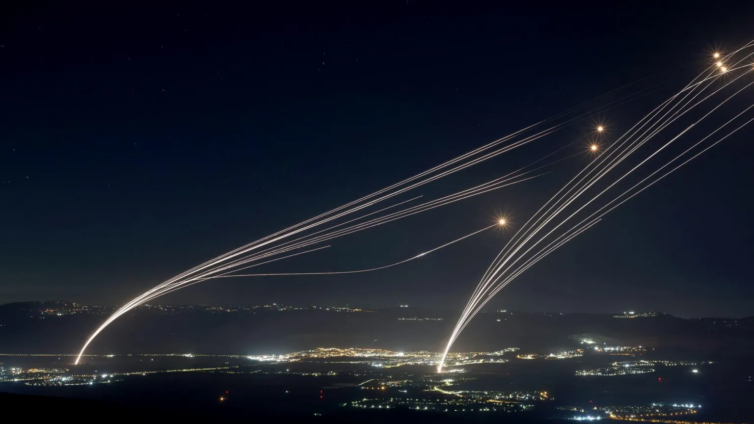
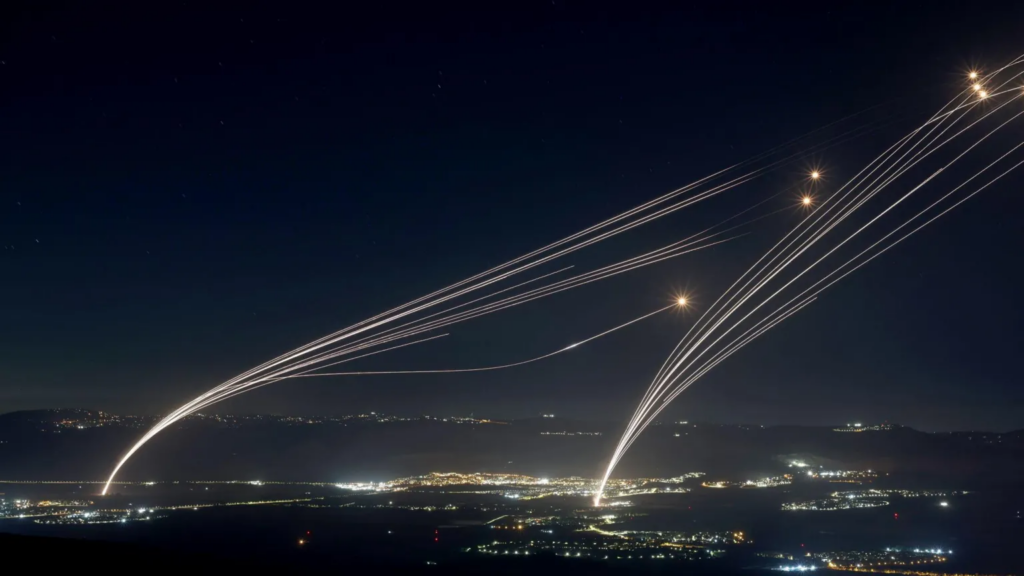
On Sunday, Hezbollah launched dozens of rockets at the town of Beit Hillel in northern Israel at around 00:25 local time (21:25 GMT Saturday).
Footage posted on social media showed Israel's Iron Dome air defence system intercepting the rockets. There have been no reports of casualties.
Israel’s air force responded by striking targets in southern Lebanon.
In a separate development on Sunday morning, two people were killed in a stabbing attack in the Israeli city of Holon. The attacker was later “neutralised”, police said.
Also on Sunday, officials from the Hamas-run Ministry of Health in Gaza said an Israeli air strike had hit a tent inside a hospital, killing at least five people. The officials said 19 Palestinians had been killed on Sunday.
In a statement on Saturday, the US embassy in Beirut said those who chose to stay in Lebanon should “prepare contingency plans” and be prepared to “shelter in place for an extended period of time”.
The Pentagon has said it is deploying additional warships and fighter jets to the region to help defend Israel from possible attacks by Iran and its proxies, a strategy similar to the one adopted in April, when Iran launched more than 300 missiles and drones at Israel in retaliation to an attack on its diplomatic compound in Syria.
It blamed Israel for that strike.
Many fear Iran’s retaliation on this occasion could take a similar form.
The UK says it is sending extra military personnel, consular staff and border force officials to help with any evacuations.
It has urged UK citizens to leave Lebanon while commercial flights are running.
Two British military ships are already in the region and the Royal Air Force has put transport helicopters on standby.
UK Foreign Secretary David Lammy said the regional situation “could deteriorate rapidly”.
In a phone call with EU Foreign Policy Chief Josep Borrell on Friday, Iran's Acting Foreign Minister Ali Baqeri Kani said Iran would "undoubtedly use its inherent and legitimate right" to "punish" Israel.
On Friday, an announcer on Iran's state TV warned "the world would witness extraordinary scenes".
Israeli Prime Minister Benjamin Netanyahu has warned Israelis that "challenging days lie ahead... We have heard threats from all sides. We are prepared for any scenario".
Tensions between Israel and Iran initially escalated with the killing of 12 children and teenagers in a strike on the Israeli-occupied Golan Heights.
Israel accused Hezbollah and vowed “severe” retaliation, though Hezbollah denied it was involved.
Days later, Shukr, who was a close adviser to the Hezbollah leader Hassan Nasrallah, was killed in a targeted Israeli air strike in Beirut. Four others, including two children, were also killed.
Hours after that, Hamas chief Ismail Haniyeh was assassinated in Iran, Hamas's main backer. He was visiting to attend the inauguration of Iran's new president, Masoud Pezeshkian.
Iran's Supreme Leader, Ayatollah Ali Khamenei, has said Israel will suffer a “harsh punishment” for the killing.
Haniyeh's assassination dealt a blow to the negotiations for a ceasefire and hostage release deal in Gaza, the main hope to defuse tensions along the Lebanon-Israel border.
The war began in October when Hamas carried out an unprecedented attack on Israel, killing about 1,200 people and taking 251 others back to Gaza as hostages.
The attack triggered a massive Israeli military response, which has killed at least 39,480 Palestinians in Gaza, according to the territory's Hamas-run health ministry.
Latest Stories
-
Labour Minister wants SOEs to help shape new public pay system
2 hours -
IPEC will ensure Equity and Sustainability in SOEs Compensation
3 hours -
White House bars CNN from travelling with Trump on Air Force One
4 hours -
Fennis wins second consecutive ITF J60 title in Accra
4 hours -
Spain beat England in thriller after Kane penalty miss
4 hours -
GPL 2026/27: Zaidan’s late goal ends Hearts of Oak unbeaten start
4 hours -
CEOs demand clarity on pay harmonisation, board autonomy as FWSC engages SOEs bosses over IPEC transition
4 hours -
2026 Women’s Super Cup: FC Savannah, Epiphany Warriors maintain top spots ahead of final group games
4 hours -
‘Is EOCO responsible for determining lawyers’ fees?’ – Baffour Awuah
4 hours -
David Beckles claims second J60 Accra title
5 hours -
No France cocaine suspect linked to Mahama, Vice President’s security details – NACOC
5 hours -
Anwelle Foundation launched in Jirapa to tackle poverty, youth unemployment
5 hours -
Joy Sports Editor Fentuo Tahiru Fentuo to moderate inaugural Music Meets Football Summit in Zambia
5 hours -
Court premises too volatile for Baffour Awuah’s attempted arrest by EOCO – Inusah Fuseini
5 hours -
Drug bust: Under no circumstances will NACOC leadership be compromised – Twum-Barimah
5 hours