

Audio By Carbonatix
One subject is not on the radar at all in the current political season in Ghana: the prospect of the country's oil running out and slicing off a significant part of the economy much sooner than anticipated.
Oil accounts for roughly a quarter of exports, and, in recent years, the government's take from the black gold has been equivalent to between 10% to 15% of total revenue. Unsurprisingly, it is next to only yellow gold in fiscal significance (even if its overall economic impact, as an enclave sector, has been more limited than was expected when the industry first appeared).
Oil sector watchdog analysts like to talk about a 10- to 15-year horizon for the industry to disappear if reserves are not quickly added. Looking at the data, I fear that they are being rather optimistic.
The confusion may be as a result of using contingent resource estimates and then subtracting production to date. This is, of course, not careful enough. It would be much better to observe the historical rate at which such contingent resources have converted to probable reserves and thence to proven reserves. Then factor in what unexpected declines in production are telling us about the estimation models.
Looking at the latest reserve audits and production numbers, I don't see how, if new reserves are not added, the country would still have a serious industry left in 5 years. Some developments buttress this concern.
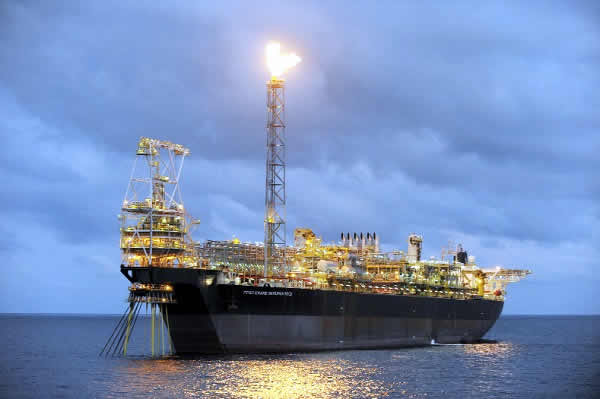
Readers may recall how, in 2019, the Finance Ministry projected output of 500k barrels of oil per day by 2024. The heady optimism was not driven solely by hopes of the Pecan field coming onstream by then. There were also hopes that Tweneboa, Danta, and Ntomme Far West projects would start producing; and that the jewel in the crown, Jubilee Field, would see further expansion. Today, production hovers around 132,000 barrels a day. Quite a ways from 500,000 barrels/day.
The delays in putting Pecan to work aren't the only explanation. The whole of Tweneboa has been reclassified to "contingent", meaning that the probability of it ever coming onstream has declined. Ntomme Far West is stuck in pre-feasibility, but judging from the disappointment of the Jubilee South East redevelopment, it would be very surprising if drilling starts anytime soon. Danta isn't even on the roadmap.
Whilst gas production from the SGN field appears to be holding, in TEN, the situation has been challenging, with less than 2% of gas produced being sent to Ghana's power plants on some days. Certainly a contributory factor to the power crisis earlier this year, which is currently only being managed by the government buying expensive liquid fuel to feed some plants.
The only way a serious oil industry remains in place by 2029 is by getting Pecan going quickly and resolving the impasse with Eni over the forced unitisation matter so that they can develop their finds.
This may, however, still not be enough. They are projecting 80k barrels a day for Pecan, but that is based on initial output ramping up from 38k barrels/day seamlessly. TEN, too, had an expected output of 80k barrels per day. In recent times, it has struggled to hit 18k barrels on a good day.
Another concern around Pecan is the Lukoil impasse. Lukoil is a giant Russian company that holds a large stake in Pecan. Concerns about sanctions and the company's seeming lethargy have prompted attempts in the past to get them to leave. They agreed recently to find buyers for their stake. Months of talking to interested Indian buyers haven't yet yielded any confirmed outcomes, however.
After a management buyout, the majority stakeholder is no longer Aker, a Norwegian company with some track record in oil production. Former managers, backed by funds from AFC, a pan-African Development Finance Institution, are working to take this complex ultra-deep-water asset to production. Whilst analysts are optimistic about Pecan coming onstream around 2028, like stated above, the volumes don't look too promising.
No wonder Ghana's largest oil producer, Tullow, has struggled on the stock market. Its share price was ~$15.4 when oil production in Ghana started. Today, it hovers around 30 US cents ( ~$0.3).
Adding all this up paints a bleak picture for Ghana's oil industry unless policymakers start taking the real prospect of a post-oil era seriously.
It really is about time the policy-conscious public as a whole put this potential fiscal bomb on the radar.
Latest Stories
-
Ghana music industry needs collective public-private investment – UK High Commissioner
28 minutes -
“We don’t have the mindset of sabotage” – NPP on MMDCE election proposal
44 minutes -
From Kumasi to the world: Mirakilouz Beatz’s rise in music production
46 minutes -
Low pay making it harder for universities to attract PhD holders – UTAG-UG
46 minutes -
Julius Emunah parts ways with Hearts of Oak as Managing Director
57 minutes -
Weija Dam flooding will persist without political will to relocate residents – NADMO
58 minutes -
UMB, 3TREES launch paint outlets across constituencies ahead of Ghana’s 70th anniversary
58 minutes -
CSSPS: Education Ministry orders action against alleged payment demands in Ashanti Region
58 minutes -
SSNIT honours 16 stakeholders at 2025 Awards
1 hour -
Naa Shika Adu presents Vernacular of Play: An art exhibition inspired by sport, identity and social impact
1 hour -
Ghana wastes up to 50% of fruits and vegetables annually – Agrofresh
2 hours -
CSSPS deploys more personnel to ease delays at resolution centres
2 hours -
Poor transport and storage systems contribute to post-harvest losses in Ghana – Mathias Yabe
2 hours -
Partisan MMDCE elections could stifle development – NDC
2 hours -
TUC urges Mahama to keep constitutional reform discussions open
3 hours