

Audio By Carbonatix
If Ruger has learnt one thing this year, it's that taking a leap of faith pays off.
Parting ways with his old record label to form his own was an eye-opening experience for the 24-year-old Nigerian singer.
"I understand the business more now," Ruger says, admitting "it's more stressful" but that the newfound freedom has also granted him a deeper sense of control.
"I feel more enlightened and more at peace," he tells me.
As we speak, the star is preparing for his first headline show in London.
I don't detect any nerves, though.
He is bubbly, engaging and relaxed as he explains the role Britain's capital city plays in shaping Afrobeats music on the global stage.
"If your song is big here, it is big around the world," he says.
Not that he wants to do things the same old way.
Ruger's sound sets him apart due to his distinctive use of Jamaican Patois and his refusal to repeat melodies, giving each song a fresh energy.
"That's why you know a Ruger song when you hear a Ruger song," he explains. "My delivery is different, my lyricism is different."
In the current landscape of African music he has mastered the art of fusion.
Born and raised in Nigeria's hectic metropolis Lagos, Ruger's music pays homage to his African roots and global influences.
The Jamaican artists he grew up listening to - Chronixx, Kranium, Popcaan, Gyptian, and Buju Banton - were a key influence on his unique blend of dancehall and Afrobeats.
Asiwaju remains his most significant hit to date. The infectious song peaked at number two on the UK Afrobeats chart and boasts over 127 million streams on Spotify, along with 113 million YouTube views.
Ruger says the shift from recording "normal Afrobeats" was organic rather than strategic, and happened two years ago while working on his track Warning in the studio with Nigerian producer KukBeatz.
"I told him: 'I think I'm going to stick with this sound. There is nobody actually killing this sound the way I just did it now. I think I want to make more songs like this. Using Patois and blending it with Afrobeats.'"
With 2.5 million Instagram followers, over four million monthly Spotify listeners, and multiple chart-topping hits under his belt, Ruger’s rise in the music industry since starting out just five years ago is undeniable.
Reflecting on his influence, Ruger says emerging artists are taking note of the unique energy he brings to the scene.
"I feel like everybody that is coming up, is also looking like the way I'm doing it and they're learning from me," he says.
"I'm creating another path... I am also doing my own thing."
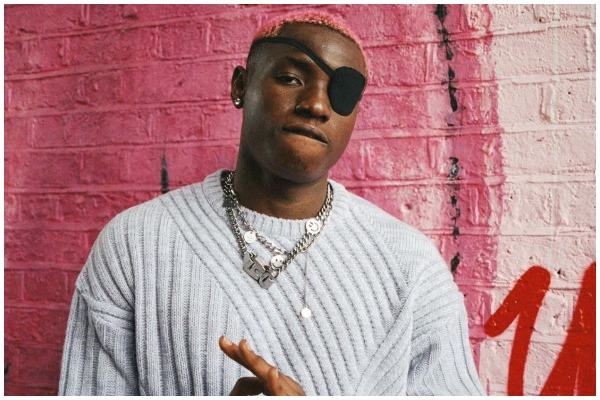
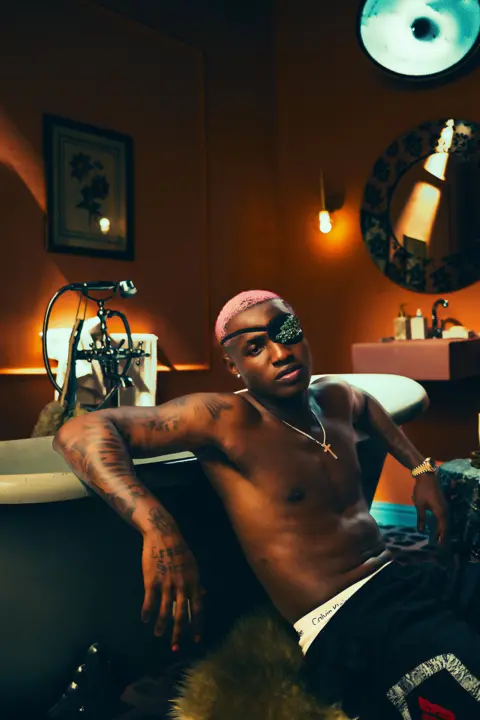
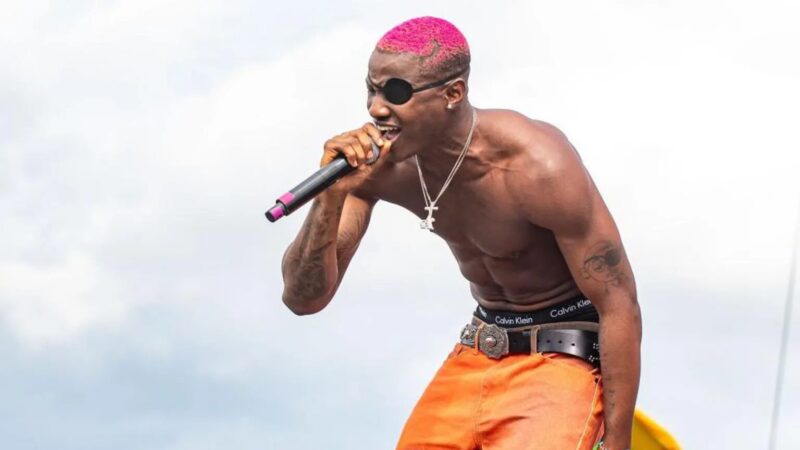
Known for his bright pink hair and pirate-esque eye patch, Ruger emphasises that individuality is crucial for success.
He urges new artists to identify something that is distinctive about their music and "hold on to it" if they want to elevate their brand.
Another lesson he has learnt is about conflict.
A highly-publicised online beef with fellow Nigerian singer BNXN (formerly Buju) kept both singers in the headlines in recent years.
The spat was fuelled by fans comparing the two artists and came to a head when the pair competed for a prize at the Headies, a Nigerian music award show, in 2022, which was ultimately won by BXBN.
But the former rivals eventually called a truce and collaborated on the joint album "RnB", released earlier this year.
"We grow, you understand," Ruger tells me. "We grow and we elevate together. That's the most important thing."
Looking back now, it seems clear to him that the pair were destined to make great music together, regardless of that early rivalry.
More collaborations are on Ruger's mind now.
On his wishlist are global superstars Doja Cat, Future and - above all - Adele.
"Just her soft voice and mine doing something amazing. I trust it to be mad!"
So what does Ruger make of the trend of singers from outside the continent tapping into the "African sound"?
As the Afrobeats genre expands globally, even earning its own category at the Grammys and MTV VMAs, it’s the lack of substance behind certain songs that worries Ruger.
"Some people just get into the studio and just do some things, and because there's money to push, they push it - and the world is forced to like it.
"That's where I feel like the dilution comes from."
Despite the pressures of an evolving industry, Ruger remains committed to staying true to his craft.
"Times change," he says. "I feel like you can either change with the time or do whatever you like."
For now, though, the boundary-breaking artist is focused on the present and giving the best to his fans.
"I feel blessed... This is my first headline show in London, it's long overdue."
Latest Stories
-
Indonesia rescuers battle turbulent seas in search for 129 people after passenger ship capsizes
4 minutes -
Iceland’s last whaling company shrugs off threat of permanent ban
10 minutes -
‘Out of the abundance of the heart, the mouth speaks’ – GBA President on CJ’s SOEs comments
12 minutes -
Member of UK Armed Forces dies in road traffic incident in Ukraine
14 minutes -
Mahama to honour GAF Engineers Regiment with Order of the Companion of the Volta
17 minutes -
Agbodza demands quality, value for money in Accra-Kumasi Expressway construction
19 minutes -
Companies left China to dodge tariffs, now some are heading back
19 minutes -
Bali police investigate after Australian man and children found dead in home
19 minutes -
Government will not borrow to fund Accra-Kumasi Expressway – Ato Forson
27 minutes -
‘Judicial Service’s defence of Chief Justice was lacklustre’ – GBA President
29 minutes -
Etihad Airways sees strong demand, higher passenger capacity despite Iran war, CEO says
33 minutes -
AirBaltic files for Chapter 11 bankruptcy as Iran war costs bite
33 minutes -
COPEC calls for strategic fuel reserve to reduce dependence on tax cuts
38 minutes -
GAF hands over 175.6km right-of-way for Accra-Kumasi Expressway construction to gov’t
38 minutes -
GFA rejects claims Medeama, Nations FC exits expose GPL weakness
39 minutes