

Audio By Carbonatix
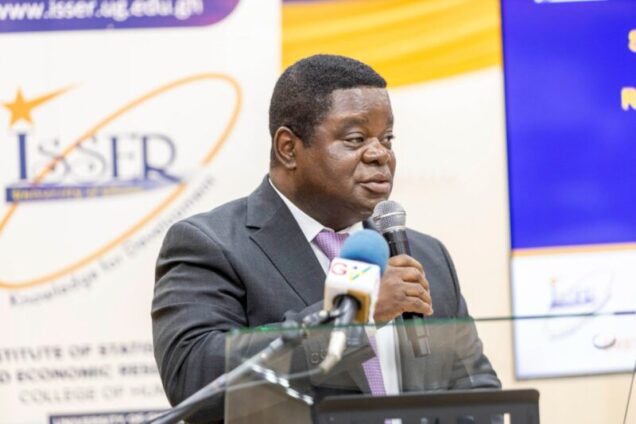
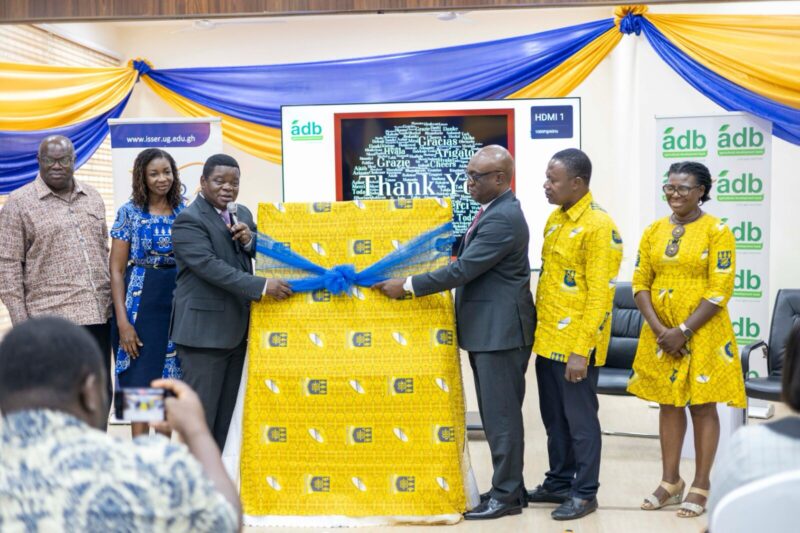
The Institute of Statistical, Social and Economic Research (ISSER) has published its State of the Ghanaian Economy Report 2023 and Q3 2024 Performance Review.
It reveals critical insights into Ghana’s economic landscape, with an emphasis on the untapped potential of property rates to boost tax revenue.
The report urges the country to strengthen local tax mobilisation and leverage technology to bridge fiscal gaps and reduce reliance on debt.
According to the report, Ghana’s tax-to-GDP ratio remains well below average at 12.3% in 2022, increasing slightly to 13.64% in 2024.
This is significantly lower than the roughly 20% tax-to-GDP ratio seen in countries such as Botswana, Morocco, Mozambique, Senegal, and South Africa.
“Ghana’s tax capacity is low, as evidenced in its low tax-to-GDP ratio,” the report states, underscoring that “the capacity to mobilize taxes is at the heart of nation-building”

Property tax collection has been highlighted as a largely untapped resource. In most of Ghana’s Municipal and District Assemblies (MMDAs), property taxes account for only 3% of revenue.
ISSER contends that inadequate property tax mobilization places unnecessary strain on local government budgets, with MMDAs overly dependent on central government transfers, primarily through the District Assemblies Common Fund (DACF), which contributes 42% of their revenue.
“An appropriately designed and deployed technology can significantly boost property rate collection, reduce reliance on central government transfers, and promote local development,” the report notes.

The report warns that Ghana’s low tax revenue cycle perpetuates underdevelopment by restricting investment in essential infrastructure and services.
This, in turn, forces the government to resort to debt financing, with interest payments comprising the largest expenditure in the 2023 budget at 25.6%.
ISSER states that “this reliance on debt has contributed to recent economic instability,” making Ghana increasingly vulnerable to external shocks.

To address these issues, ISSER advocates for robust IT systems to increase tax collection efficiency and oversight.
The report cites a pilot program in the La Nkwantanang Madina Municipal Assembly, where a technology-based Enhanced Revenue Mobilisation System (ERMS) increased property tax collection by 103% through a geospatial database and real-time tracking capabilities.
However, the report cautions that such technology must be implemented with strong management practices to avoid misuse and ensure equitable tax collection.
The event was chaired by Isaac Tetteh, the CEO of BigPay Ghana Limited. Also in attendance is Emeritus Prof Aryeetey and the Registrar of the University, Mrs Emelia Agyei-Mensah
Latest Stories
-
Standard Chartered Bank delivers strong returns and sustainable shareholder value
2 minutes -
Akufo-Addo’s role in the artificial cedi stability is indisputable — Facts do not bend to political convenience
5 minutes -
Breaking Bad actor RJ Mitte dies aged 34
12 minutes -
Wontumi pleads not guilty in GH¢30m Exim Bank loan case
17 minutes -
Beyond the Flyer: Awareness without screening is not enough
23 minutes -
Bekwai MP donates GH¢100,000 to hospital for specialist equipment
31 minutes -
Van Vicker sues Lil Win for defamation, demands GH¢10m
36 minutes -
FIFA/ FIBA agency Pep Sports moves to admit Ghana’s 7-Foot Basketball talent to its Ultra-Modern Sports campus after MyJoyOnline report
38 minutes -
GAUA strike disrupts academic plans at University of Ghana as students, parents express frustration
43 minutes -
Dad’s Army/African Polistas crowned champions of 2026 Accra Polo Club Trustees’ Cup
50 minutes -
Mahama approves Integrated Basic Education Model, with funding expected in 2027 under GETFund formula
53 minutes -
Money-driven elections fuelling corruption – Haruna Iddrisu
57 minutes -
Excessive borrowing ‘cracked’ Ghana’s economy under Akufo-Addo – Haruna Iddrisu
1 hour -
NPP’s silence on economic indicators suggests Mahama is doing better – Haruna Iddrisu
1 hour -
GoldBod must be more accountable to Ghanaians – Haruna Iddrisu
2 hours