

Audio By Carbonatix
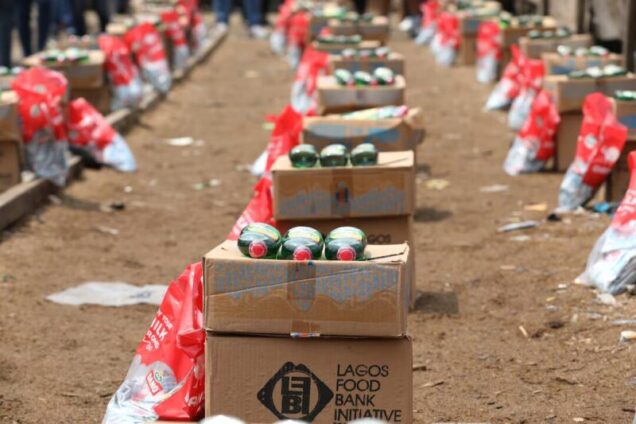
Nigeria faces one of its worst hunger crises with more than 30 million people expected to be food insecure next year, a one-third jump from this year due to economic hardship, a joint report by the government and United Nations said on Friday.
Nigeria, Africa's most populous nation, is grappling with a cost of living crisis that led to deadly protests in August.
Economic hardship has worsened after President Bola Tinubu started austerity reforms, including devaluing the naira and ending a decades-old petrol subsidy, fuelling inflation.
The analysis conducted twice a year in 26 states and the federal capital, projected that 33.1 million people would be food insecure by August next year. That compares with 24.8 million by the end of this year.
"Several factors are driving this trend, but most prominently are economic hardship coupled with record high inflation, a record rise in food prices and record high transportation costs," a statement accompanying the report said.
Chi Lael, World Food Programme spokesperson in Nigeria told Reuters that "economic decisions to strengthen the country in the long term, in the short term have felt like a direct attack on people's wallets, hitting hardest every time they try to buy food."
Finance Minister Wale Edun said on Thursday 5 million households had so far received cash handouts of 25,000 naira ($15.45), as part of the government's programme to help the most vulnerable families.
High food prices have contributed the most to inflation, which advanced to 32.70% in annual terms in September from 32.15% in August.
Flooding and insecurity in northern states continued to hit agriculture, further driving up food prices beyond the reach of many families.
Last month's floods destroyed an estimated 1.6 million hectares of crops, mainly in the northern food basket states, potentially causing production losses of a combined 1.1 million tonnes for maize, sorghum and rice, the joint statement said.
That is enough to meet the daily food needs of about 13 million people for a year.
In financial terms, the potential cereal crop losses amount to almost $1 billion in economic losses, the statement added.
Latest Stories
-
Daily Insight for CEOs: Preparing the organisation for 2027
10 minutes -
‘Don’t just sit silent and expect a referral’ – Speaker urges Human Rights Committee to investigate abuses
13 minutes -
‘Give caucus leaders adequate time to speak before ruling’ – Afenyo-Markin to Bagbin
30 minutes -
Petrosol gives back to society by donating 3,600 books and bags to Sawla DA Primary
37 minutes -
Bagbin dismisses Minority motion on narcotics seizures as inadmissible
41 minutes -
From Oversight to Impact: Why board committees will make or break Africa’s organisations
45 minutes -
‘Strong criticism is legitimate but insult is not argument’ – Speaker urges restraint in public discourse
47 minutes -
‘Don’t reward only bitter tongues’ – Bagbin tells political party leaders
47 minutes -
Nana Akua wins Dubai trip as Joy FM, Adansi Travels mark 10-year partnership
48 minutes -
NPP NEC election: John Boadu, JFK, Titus-Glover and Hawa Koomson in strong lead, according to latest national outlook survey
59 minutes -
Legal tussle as ASG-ARC dispute moves to court
60 minutes -
TRAFFITECH-GH full implementation rescheduled to November 1
1 hour -
‘Insults must not replace arguments’ – Bagbin cautions political actors against language that could undermine democracy
1 hour -
Minority demands full data on Ghana narcotics seizures, arrests and prosecutions since 2025
1 hour -
Man City found guilty of all charges of financial rule breaches, Premier League confirms
1 hour