

Audio By Carbonatix
The CEO of the Association of Oil Marketing Companies (AOMCs), Dr Riverson Oppong, has called on underperforming Oil Marketing Companies (OMCs) to consider merging with stronger players to create a more sustainable industry.
Speaking on Joy News’ PM Express Business Edition, he stressed the need for dialogue among industry stakeholders to address inefficiencies.
“A high flyer, a well-doing oil marketing company, needs to buy into the idea that they can have 5% shares in another by giving their company and outlets to that company,” he suggested.
Dr. Oppong believes such collaborations could streamline operations and improve profitability for struggling OMCs.
He criticized the reluctance of some companies to consider mergers.
“Everybody wants to become an MD. Everybody wants to drive a Land Cruiser,” he said, lamenting the culture of individualism in the industry.
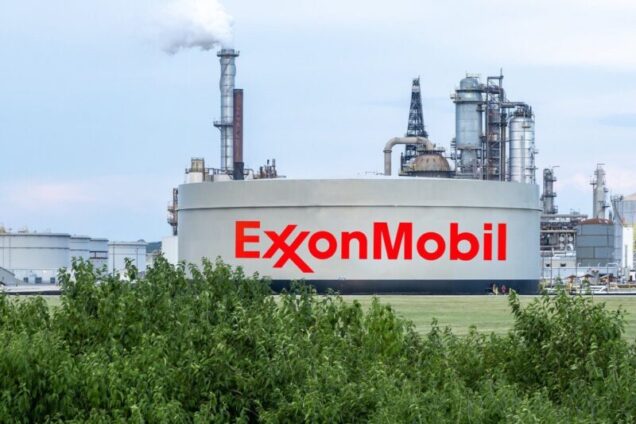
Dr Oppong shared an example from the global oil market: “If Exxon and Mobil had to merge to form ExxonMobil, becoming the world’s superpower, what stops us as Ghanaians?” he asked.
He announced plans to organise a downstream dialogue in the first quarter of next year, where CEOs and MDs of OMCs can discuss potential collaborations.

“This dialogue is going to be a meeting where we run the numbers and face facts,” he said, highlighting the importance of data-driven decisions.
Dr. Oppong concluded by urging non-performing companies to seek partnerships rather than struggle independently.
“Let’s come together and move forward. That should be the way to go,” he stated.
Dr Riverson Oppong on OMC oversaturation
The AOMC boss also has expressed deep concern over the rampant corruption in Ghana’s oil marketing industry.
The oil marketing sector in Ghana is under a siege of its own making, according to Dr Riverson Oppong.
“There are so many regulations in the system, but still, the system is corrupt because the number is too much,” he said.
Dr Oppong believes the influx of OMCs has created a chaotic environment that makes it nearly impossible for regulators to maintain control.
He pointed out the unsettling trend of non-compliance, with some companies undercutting prices and selling lower quantities of fuel than advertised.
Latest Stories
-
Luv Fm High School Debate: KNUST SHS and Osei Adutwum SHS set up thrilling final after dramatic semi-finals
4 minutes -
KNUST AI Coordinator urges structured adoption of AI in teacher education
17 minutes -
Nepal rescuers blast hillside in search of hydropower workers as families wait anxiously
34 minutes -
Teachers who pass promotional exam to get January 2026 start date after gov’t resolves promotion dispute – Apaak
37 minutes -
NSMQ 2026: St. John’s School rally from slow start to book semi-final spot
37 minutes -
Promotion pay row: Gov’t gives teachers September to complete salary adjustments
48 minutes -
Financial irregularities plummet by 62.9% as state tightens fiscal controls
49 minutes -
DVLA to expand mobile services to underserved communities in Ghana’s Eastern Corridor of the Northern Region
1 hour -
GUTA urges GPHA to act swiftly to end Tema Port congestion to avert rising business costs
1 hour -
Port congestion could undermine 24-hour economy policy – GUTA
1 hour -
NSA opens three-day window to resolve national service biodata mismatches
1 hour -
Abu Jinapor highlights increased gold exports after Domestic Gold Purchase Programme
1 hour -
NPP UK branch calls for independent audit into gold purchasing operations and parliamentary probe
2 hours -
Zanetor Agyeman-Rawlings pledges decisive action on climate change, galamsey and environmental degradation
2 hours -
Bawumia was brainchild behind Domestic Gold Purchase Programme – Samuel Jinapor
2 hours