

Audio By Carbonatix
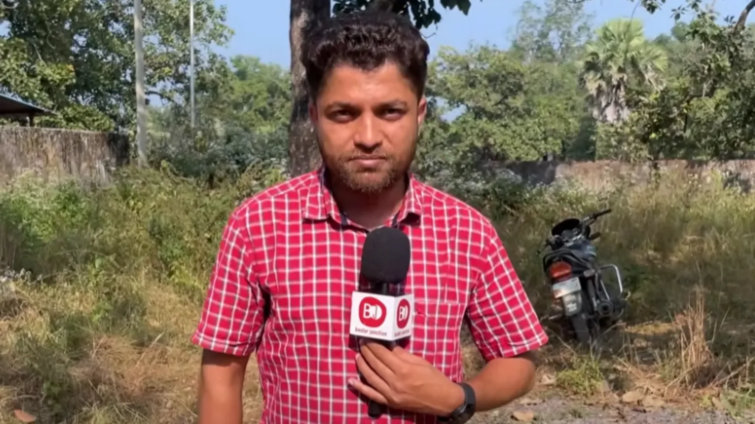
The body of an Indian journalist who had reported on alleged corruption in the country has been found in a septic tank in Chhattisgarh state.
Mukesh Chandrakar, 32, went missing on New Year's Day and his family registered a complaint with the police.
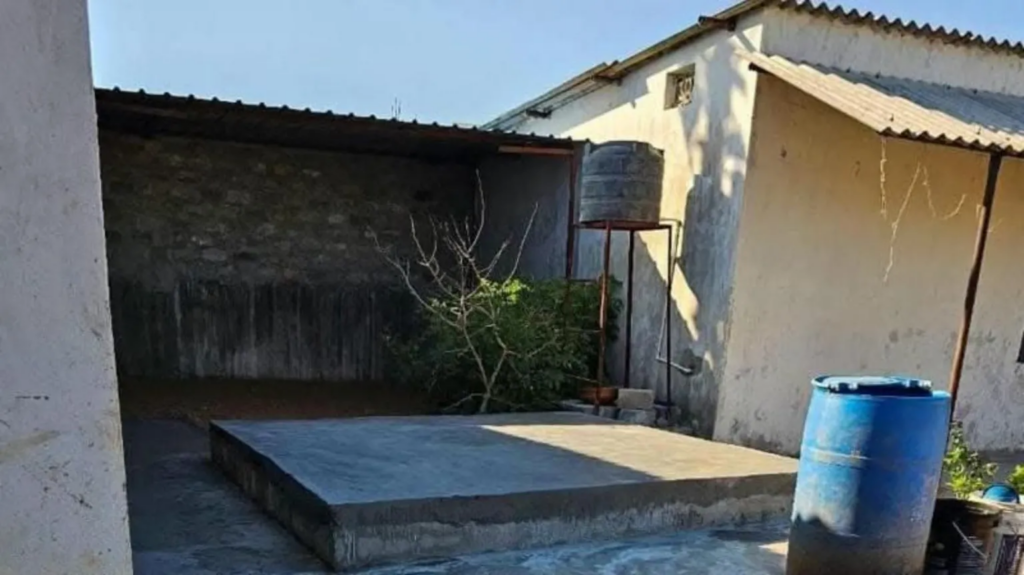
His body was found on Friday in the compound of a road construction contractor in the Bijapur town area after officers tracked his mobile phone.
Three people have been arrested in connection with his death, reportedly including two of his relatives. A media watchdog has demanded a thorough investigation.
Police in the Bijapur district did not find anything during an initial visit to the compound on 2 January.
"However, after further inspection on 3 January, we discovered Mukesh's body in the newly floored septic tank near the badminton court," a senior police officer said, referring to the fact concrete slabs had been placed on top of the tank.
Police said his body showed severe injuries consistent with a blunt-force attack.
Mr Chandrakar, a freelance journalist, had reported widely on alleged corruption in public construction projects.
He also ran a popular YouTube channel, Bastar Junction.
Following his death, the Press Council of India called for a report "on the facts of the case" from the state's government.
The chief minister of the state described Mr Chandrakar's death as "heartbreaking".
In a post on X, he said a special investigation team had been formed to investigate the case.
It has been reported in Indian media that one of those under arrest over the journalist's death is his cousin.
One of the main suspects - compound owner Suresh Chandrakar, also a relative - is on the run.
Local journalists have held a protest demanding strict action against the alleged perpetrators.
Attacks on journalists reporting on corruption or environmental degradation is not uncommon in India.
In May 2022, Subhash Kumar Mahto, a freelance journalist known for his reporting on people involved in illegal sand mining, was fatally shot in the head by four unidentified men outside his home in Bihar.
Media watchdog Reporters Without Borders has said that an average of three or four journalists are killed in connection with their work in India every year, making it one of the world's most dangerous countries for the media.
Latest Stories
-
Online fraud accounts for 47% of Ghana’s cyber incidents – CSA
58 seconds -
Rome declares security ‘red zone’ around the Colosseum to protect tourists amid violent crime incidents
3 minutes -
Interior Ministry investigated Gomoa-Effutu boundary concerns before clashes – A Plus
15 minutes -
Chief Justice praises MIIF, other SOEs, questions what Ghana was doing in past 8 years
39 minutes -
FDA recalls Arcan Bitters over undeclared erectile dysfunction drug
48 minutes -
Delta takes sports fandom global with new Sport 24 partnership
49 minutes -
Iranian attack on Saudi tanker killed two Filipino sailors, Saudi Arabia says
1 hour -
Presidency reveals ‘impending reshuffle’ of SOE CEOs
2 hours -
Gov’t to provide industrial crushers to support informal waste recyclers
2 hours -
The Scroll That Rules the World: The unstoppable power of social media
2 hours -
Treat Okuapeman-Mount Sinai violent clash as a criminal matter – Akuapem North MP
2 hours -
‘Leadership has failed’ – NDC executive raises concerns over development in Madina
2 hours -
Vendors promise quality, discounts at Joy FM Back-to-School Fair
2 hours -
Ghana leather manufacturers demand lower tariffs, threaten demonstration over high costs
2 hours -
Roads Minister threatens to terminate Techiman–Nkonsia–Wenchi road contract
2 hours