

Audio By Carbonatix
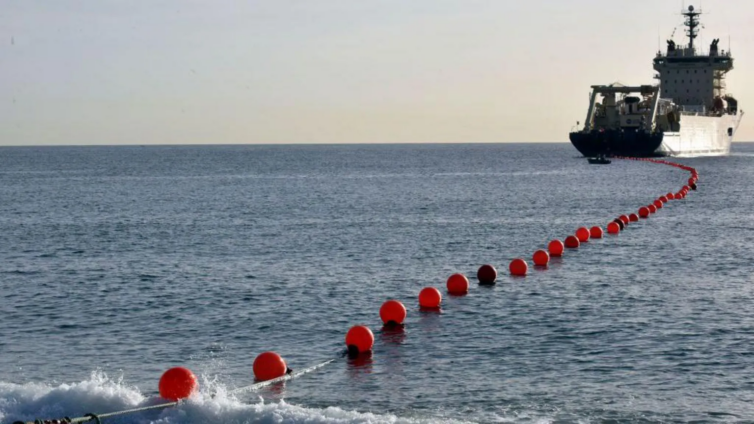
Meta has announced plans to build a 50,000km (31,000 miles) sub-sea cable across the world.
The tech giant said Project Waterworth - connecting the US, India, South Africa, Brazil and other regions - will be the world's longest underwater cable project when completed.
Meta, which owns Facebook, Instagram and WhatsApp, has sought to extend its presence in technology beyond social media, including in artificial intelligence (AI) and the infrastructure that supports it.
It said its new cable project would provide "industry-leading connectivity" to five major continents and help support its AI projects.
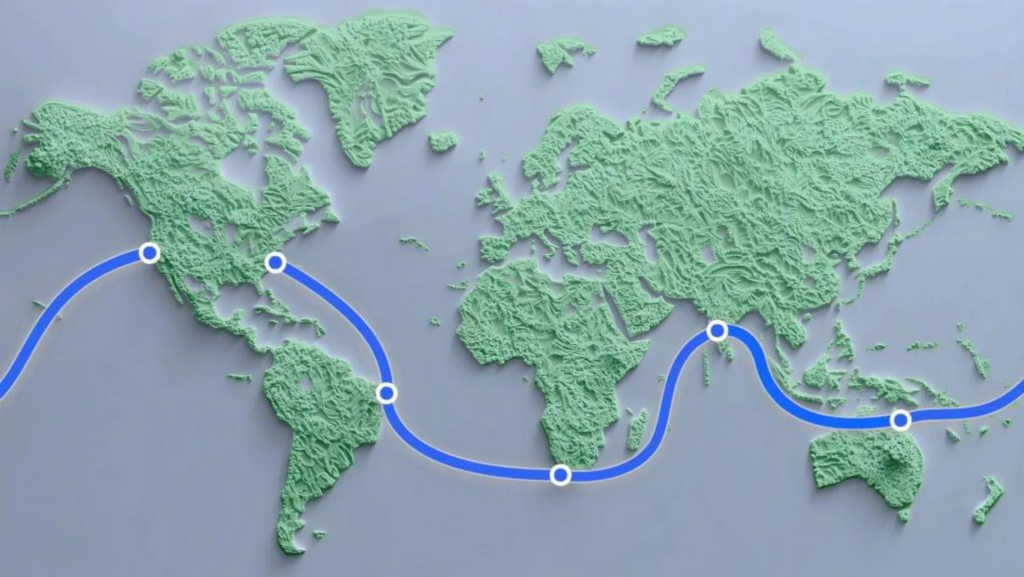
"This project will enable greater economic cooperation, facilitate digital inclusion, and open opportunities for technological development in these regions," Meta said in a blog post.
The cable would be the longest to date that uses a 24 fibre-pair system, giving it a higher capacity, according to the firm.
Sub-sea cables have become increasingly important as they provide the means to power a variety of digital services and transfer data worldwide at speed.
One regularly cited statistic suggests more than 95% of the world's internet traffic is transferred through undersea cables.
Telecommunications market research firm TeleGeography says there are currently more than 600 publicly-known sub-sea cable systems worldwide.
This includes the 2Africa cable, backed by Meta and mobile network operators such as Orange, Vodafone and China Mobile, which links three continents and spans 45,000km.
Tech's bigger stake
Tech firms that serve as major providers of web services have invested huge sums in cable infrastructure.
Google said in 2024 it would build the first sub-sea cable connecting Africa and Australia and announced a $1bn investment to boost connectivity to Japan with two new sub-sea cables in the Pacific Ocean.
"Over the past decade there has been a shift in which these cables are increasingly laid by large technology companies," Professor Vili Lehdonvirta of the Oxford Internet Institute told the BBC.
He said this is in contrast to the past, where underwater cables were laid and financed by large groups of national telecoms firms, due to their considerable investment needs.
Prof Lehdonvirta said this reflects the growing size and position of big tech firms to be able to fund such infrastructure independently - something that "may be significant to policymakers concerned with concentration in digital markets".
Telecoms and technology industry analyst Paolo Pescatore said it spoke to Meta's ambitions.
"Meta has shown a strong desire to own more of the connectivity slice," he told the BBC.
"This is a further demonstration as it seeks to leapfrog rivals in providing users with an unique experience by tightly integrating hardware, software, platform and its growing aspirations in connectivity," he added.
Protecting against threats
The rising importance of sub-sea cables has increased concerns over their vulnerability to attacks or accidents.
Following a spate of severed cables, experts have said undersea communications infrastructure is a growing arena for geopolitical tensions and conflict.
Nato launched a mission in January to increase surveillance of ships in the Baltic Sea after damage to critical undersea cables last year.
A UK parliamentary committee recently issued a call for evidence about the UK's resilience in the face of potential disruption.
This said pointed to growing concern over "Russian and Chinese capabilities to hold undersea infrastructure at risk - particularly during periods of heightened tension or conflict".
Meta said in its blog post announcing Project Waterworth it would lay its cable system up to 7,000 meters deep and "use enhanced burial techniques in high-risk fault areas, such as shallow waters near the coast, to avoid damage from ship anchors and other hazards".
Prof Lehdonvirta said the project appeared to diverge from more established routes, such as by skipping Europe and China and avoiding "geopolitical hotspots" in the Suez Canal and South China Sea.
And he said connecting the US with major, contested markets in the Southern Hemisphere could be viewed as "bolstering US economic and infrastructural power abroad".
Latest Stories
-
CAF Confederation Cup: Dennis Korsah confident Nations FC can overturn Mali defeat
5 minutes -
‘Avoid political comments’ – Domelevo advises Chief Justice
50 minutes -
‘I don’t trust OSP’ to probe GH¢70k ‘bribe’ allegation – Kwasi Kwarteng
1 hour -
Road inspections not to witch-hunt contractors – Kwame Agbodza
1 hour -
Inter Milan mount stunning comeback to beat Napoli
2 hours -
Modric plans to play for Croatia past 41st birthday
2 hours -
Bayern fail to score for first time in 59 games
2 hours -
Bawumia preparing new cocoa policy package for farmers – Annoh-Dompreh
2 hours -
Wa-Tumu-Bolga road upgrade will unlock agriculture, trade – Agbodza
2 hours -
Ghana Maritime Authority readies oil-spill response vessel for deployment
2 hours -
Ayariga turns to drones, AI to tackle Agbogbloshie waste mountain
2 hours -
Agbogbloshie waste heap must go – Mahama Ayariga declares
2 hours -
Government to upgrade all rural telephony sites to 4G – Communications Minister
2 hours -
Rural calls, data to become cheaper by Q1 2027 – Sam George
2 hours -
Labour minister urges ministries to show job-creation impact in budget proposals
2 hours