

Audio By Carbonatix
Professor Ernest Kofi Davis, the Acting Director-General of the Ghana Education Service (GES), says policies emerging from the National Education Forum will be implemented in ways that enhance quality education and ensure relevance for all students.
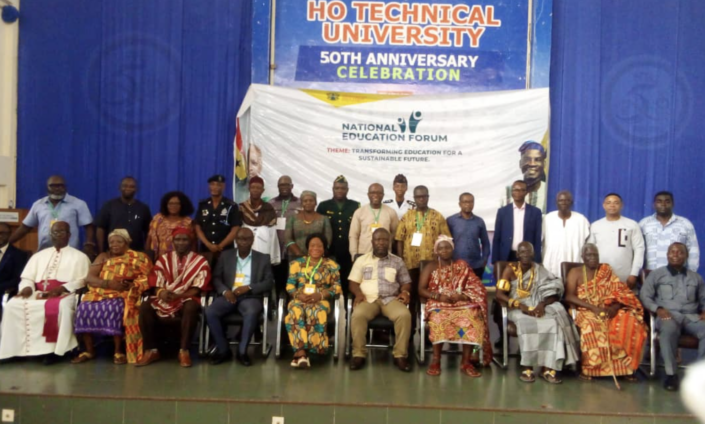
Speaking at the closing session of the Zonal Forum as part of the National Education Forum at Ho Technical University on Wednesday, February 19, Prof. Davis emphasised the need to identify weaknesses in the education system and adopt a bottom-up approach that allowed stakeholders at all levels to contribute to solutions.
“For education to be sustainable, we must first understand what is wrong with our system. The best way to achieve this is by engaging all stakeholders and gathering insights from the ground up,” he stated.
He stressed that policy reforms must be backed by data and scientific research to be effective.
“I believe that reforms rooted in data and science are the ones that truly drive transformation. The process we are following will provide the necessary evidence to implement meaningful changes,” he added.
Prof. Davis reiterated President Mahama’s stance that education, whether in public or private institutions, must be relevant and beneficial to the individual, equipping them with skills to lead meaningful lives.
The Volta Regional Minister, Mr. James Gunu, underscored the critical role of education in national development.
In his closing remarks, he noted that transforming education means transforming society, the country, and the world.
“If we successfully reform our education system, we will have a more sustainable society, a stronger country, and a better world,” he stated.
He likened the reform process to oil refining, where crude oil went through several processes to produce high-quality end products.
“Just like crude oil goes through a refinery, we are processing raw educational data and stakeholder inputs to produce a refined, effective education policy,” he explained.
He assured stakeholders that the government was committed to utilising the outcomes of the forum to shape policies that would drive meaningful improvements in education.
The National Education Forum, which was launched on Tuesday at Serene Hotel in Ho, has now moved into the Zonal Forum level, with the first deliberations focusing on the Volta and Oti Regions.
Stakeholders, including representatives from education directorates, the Ministry of Education, faith-based organisations, and students, were divided into five key thematic groups to discuss crucial areas of reform: Education Financing, Infrastructure Development, Quality Education Delivery, Regulations, Governance, and Accountability and Research, Data, and Evidence-Based Policy Making.
The discussions and recommendations from these groups are expected to shape Ghana’s future education policy reforms.
Latest Stories
-
Asantehene plants trees to commence Jimi Watercourse Rehabilitation destroyed by galamsey
3 minutes -
15 arrested, 6 trucks impounded over sandwinning activities on Kumasi-Accra Expressway
3 minutes -
OFFICIAL: Vinicius will miss El Clásico, suspended four games
7 minutes -
Prayer vigil held after four arson attack murders
13 minutes -
GRA fully recovers $154k legacy debt owed by foreign entities between 2022 and 2024
15 minutes -
Kwesi Pratt Jr warns bus preachers are adding to passengers’ stress with accident prophecies
16 minutes -
MTN Ghana to spend $1.1bn in 3 years, build 500 new sites as MoMo hits 44% Growth
18 minutes -
I have no regrets joining Assemblies of God – Mahama
18 minutes -
Starlink restrictions in Ukraine war linked to political situation, Zelensky aide says
21 minutes -
Furniture boost for Techiman North schools as MP donates to 20 institutions
21 minutes -
Assemblies of God to loan 10,000-seater dome for Ghana@70 celebrations
22 minutes -
Government to audit 2,016 community network sites – Communications Minister
22 minutes -
Heritage Series notes: BoG promises more inclusive cedi with improved sizes, tactile features
39 minutes -
‘We want answers’ – Family seeks probe into 14-year-old’s death 12 days after starting SHS
50 minutes -
No preacher has the right to impose beliefs on bus passengers – Kwesi Pratt Jr backs preaching ban
54 minutes