

Audio By Carbonatix
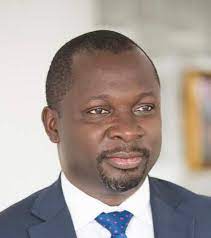
The CEO of the Ghana Association of Banks, John Awuah, has dismissed claims that the National Economic Dialogue (NED) was merely a repetition of past discussions without real solutions.
Speaking on Joy FM’s Super Morning Show, he emphasised that the dialogue was different from previous economic discussions. “This National Economic Dialogue is very far from business as usual and very far from offering the same solutions to old problems,” he stated.
He explained that while Ghana’s economic challenges have persisted for decades, the real issue has been a lack of proper execution of proposed solutions.
“Even if some of the solutions have been discussed before, we have not really attempted to implement them. The difference this time will depend on how seriously the managers of the economy take the recommendations,” he noted.
He highlighted the role of the private sector in shaping discussions at the dialogue. “I was deeply involved in the process as part of the private sector group, and solutions that came up, they are not necessarily even rehashed solutions, some are actually thinking without the box solutions. Things we are now dreaming and hoping that the managers of the economy will take these solutions and run with them,” he said.
Mr Awuah also stressed that economic transformation requires patience and sacrifice. “Ghana cannot become the United States overnight, we have to start somewhere. The real question is whether we have the willpower to change course and accept the sacrifices that we must take,” he said.
Using the local rice industry as an example, he explained the importance of long-term economic planning. “If we decide to prioritise locally-produced rice over imported brands, we might not have the best quality immediately. But if we commit to it, future generations could become rice exporters. That is how other developed nations built their economies,” he pointed out.
He further explained that addressing Ghana’s economic challenges are structural and once the structure changes, things will break down, and when things break down, that is where we will be re-digging and rebuilding the foundation.
“The country’s problems are structural and once you change the structure, things may break down before they improve. The real test is whether we are ready to do the difficult work of rebuilding the foundation,” he stated.
According to him, while some progress can be seen in two to three years with aggressive implementation of the solutions as discussed, full economic transformation will take longer.
“If we are deliberate and measured in executing the structural changes discussed at NED, we might see early results within two to three years. However, the real impact will be felt beyond four years,” he said.
Latest Stories
-
Middle East tensions put Ghana’s reserves under pressure – BoG Governor
7 minutes -
Government to replace grid-powered streetlights with solar systems nationwide – Agbodza
17 minutes -
Falling interest rates could unlock billions in Ghana’s debt markets – Amo Agyapong
20 minutes -
Bawumia honoured with Lifetime Achievement Award by AME Zion Church
22 minutes -
Invest in the craft, not hype: Ghanaian creator Adnan Saani on why social media alone will not pay
25 minutes -
Upper East takes delivery of 28 motorbikes under FSRP
28 minutes -
Accountability forum will continue to drive development – Central Regional Minister
35 minutes -
Parliament resumes today for five-day sitting amid pending ministerial nominations
41 minutes -
50 pick forms to contest 11 NPP executive positions; five eye chairmanship
48 minutes -
Getting heard in Parliament currently is difficult – Afenyo-Markin
54 minutes -
GHS launches strategic PHEOC documents to strengthen public health emergency response
55 minutes -
MCE cuts sod for construction of storm drains in Ejura-Sekyedumase
1 hour -
Oti NPP Communication Director alleges region receives fewer birds under ‘Nkoko nkitinkiti’; NDC debunks claim
1 hour -
Our voice must be heard – Afenyo-Markin warns Majority against taking NPP’s 87 MPs for granted
1 hour -
NPP Oti Executives set sights on 2028 presidential and parliamentary elections
1 hour