

Audio By Carbonatix
Gaming addiction is rapidly emerging as a hidden epidemic in Ghana, with experts warning that its far-reaching impact could jeopardise both individual lives and national progress.
Globally, the World Health Organization (WHO) reports that 3 per cent of the population suffers from gaming disorder, with the highest rates recorded in South Korea, Japan, and the United States.
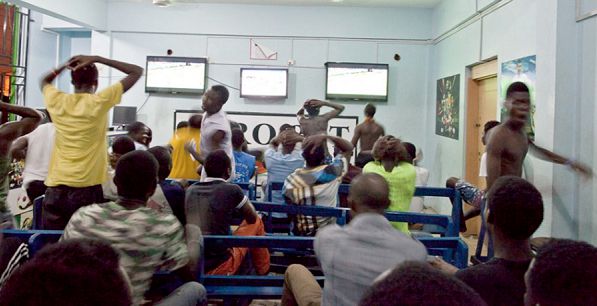
In Ghana, this growing issue is taking a toll on the nation's youth, who are facing significant consequences, including declining academic performance, deteriorating mental health, and strained social relationships.
The Chief Executive Officer of the Mental Health Authority, Professor Adwoa Pinaman Appau, has raised alarms over the escalating threat of gaming addiction, cautioning that it could pose a serious barrier to the country's development.
“Gaming has evolved into a global phenomenon, providing entertainment, social connection, and even skill development. However, the power of these virtual worlds can be so overwhelming that it leads to addiction, with devastating consequences not just for individuals but for families and society at large. This is no longer a personal issue; it has become a public health crisis that demands immediate action,” Prof. Appau said.
The consequences of gaming addiction in Ghana are most acute among the youth, a vulnerable demographic.
Excessive gaming is linked to severe outcomes such as depression, anxiety, and social isolation, undermining the mental well-being of teenagers and young adults across the nation.
Prof Vincent Agyapong, representing Dalhousie University and the Global Psychological eHealth Foundation, makes the urgent call for swift action to address the mental health crisis.
“The need for well-trained, compassionate psychiatric professionals is more critical than ever. Gaming addiction, along with other mental health disorders, is too often overlooked.
"We must harness every platform available to raise awareness, foster understanding, and build pathways for meaningful change,” Prof Agyapong said.
Gaming addiction is not a problem isolated to the individual; it is a national issue that demands a unified response.
Authorities and mental health professionals are advocating for more in-depth research, increased public awareness, and the implementation of stronger policies to prevent the issue from worsening.
This growing crisis is not just a threat to individuals but to the nation’s future as a whole.
To protect Ghana’s progress, immediate, concerted action is needed to combat gaming addiction and its destructive impact on the nation's youth.
Latest Stories
-
Nigerian pastor on the run after dead body is found buried in church
5 minutes -
‘State entities need to sit up’ — Policy analyst applauds GoldBod for trade report transparency
8 minutes -
Legitimate criticism, political commentary must not be criminalised – President Mahama
10 minutes -
GoldBod records GH¢3.78bn net supply gap payable to BoG for 2025 – Report
19 minutes -
GoldBod supplied GH¢128.5bn worth of gold to BoG in 2025 – Report
24 minutes -
Volta Region in line for garment factory after Savelugu project – Eximbank CEO
26 minutes -
MP status does not place anyone beyond law – EOCO on Manhyia South MP’s attempted arrest
39 minutes -
Chief Justice must examine arrests of suspects on court premises – Afenyo-Markin
41 minutes -
Black Stars arrive in Bouake ahead of Cote d’Ivoire clash
45 minutes -
We’ve identified two persons who allegedly helped Manhyia South MP escape arrest – EOCO
50 minutes -
Manhyia South MP declined two invitations in February, attempted arrest was lawful – EOCO
1 hour -
Bosomtwe Assembly ultilises PWDs fund to empower over 30 PWDs with start-up kits
1 hour -
Nkrumah’s ideas must be given practical meaning – P.L.O. Lumumba
1 hour -
Disproportionate arrests over criticism may create ‘undeserving martyrs’ – Mahama
1 hour -
“This is an abuse of power” – Minority slams EOCO over attempted arrest of Manhyia South MP
1 hour