

Audio By Carbonatix
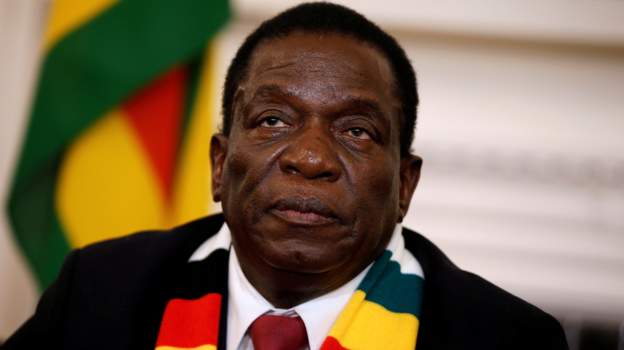
Zimbabwe President Emmerson Mnangagwa acted to consolidate his hold on power with Tuesday's dismissal of a senior general, political analysts say, amid growing fears of a possible coup by former allies.
Mnangagwa, who took charge after a military coup that ousted longtime ruler Robert Mugabe in 2017, is facing growing dissent within his ZANU-PF party, which has ruled Zimbabwe since independence from Britain in 1980.
The Reuters Daily Briefing newsletter provides all the news you need to start your day. Sign up here.
Some veterans of the Southern African country's war of independence have called for countrywide protests on March 31 to force Mnangagwa to step down. They accuse him of deepening the country's economic crisis and plotting to extend his rule beyond 2028 when his second term is due to end.
Mnangagwa denies those accusations and on Wednesday warned against "people who want to disturb our peace" during a ZANU-PF meeting in the capital Harare.
Analysts say Mnangagwa appears to be increasingly worried about his grip on power has been trying to bolster his position by shaking up the military, police and intelligence leadership.

Tuesday's removal of Anselem Sanyatwe, Zimbabwe's second most powerful general and head of the army, was the third such reshuffle by Mnangagwa in recent months. Mnangagwa also removed the chief of police and head of Zimbabwe's intelligence service.
Political analyst Eldred Masunungure told the privately owned Newsday newspaper that Mnangagwa appeared to be "protecting himself against a potential coup".
The anti-Mnangagwa war veterans want to replace him with Constantino Chiwenga, a retired general who led the coup against Mugabe and is now the country's vice president.
Although diminishing in number and advancing in age, the independence war veterans remain influential in Zimbabwe's politics and retain strong ties with its security chiefs, after fighting alongside them during the liberation struggle.
In his previous role as head of the presidential guard under Mugabe, Sanyatwe played a key role in the 2017 coup. He also oversaw the deployment of soldiers who shot dead six people and injured many others during post-election unrest in August 2018.
Sanyatwe, a close ally of Chiwenga, has been appointed sports minister, replacing Kirsty Coventry, who was elected president of the International Olympic Committee on March 20.
Latest Stories
-
Aayalolo adds 48 buses to fleet as GAPTE moves to ease Accra traffic
23 minutes -
Use digital platforms to build peace, not spread prejudice – Opoku-Agyemang to youth
32 minutes -
Clinic says Nigerian influencer ignored doctor’s advice to split penis enlargement procedure
33 minutes -
The grass is greener somewhere is an illusion – Barfuor Adjei-Barwuah tells Ghanaian youth
42 minutes -
My marriage will be secret – Singer Joeboy
52 minutes -
KATH hails Ghana Medical Trust Fund after GH¢4m equipment boost
1 hour -
Free Primary Healthcare reaches 135 districts
1 hour -
Tunisian journalists protest over media crackdown after colleague’s arrest
1 hour -
Equatorial Guinea police pull guns on migrants deported by Trump, witnesses say
2 hours -
Singaporean man pleads guilty in US to massive crypto heist
2 hours -
WHO says staff shortage, funding challenges hamper Congo Ebola response
2 hours -
IMF is not Father Christmas; Ghana must take charge – PUWU
2 hours -
More UK flight delays expected after hundreds cancelled by air traffic control glitch
2 hours -
Very hot drinks may damage the food pipe and increase cancer risk
2 hours -
Fix IPP pricing, not just ECG, PUWU tells IMF, World Bank
3 hours