

Audio By Carbonatix
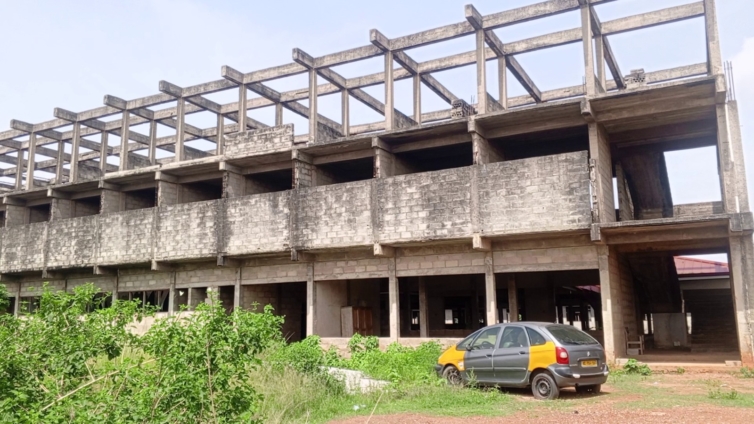
What was once envisioned as a vibrant commercial hub for the people of Krofrom in Kumasi has turned into a haunting symbol of broken promises, neglect, and decay.
Over a decade after the Krofrom Market was demolished to pave way for redevelopment, the site now lies in ruins, overgrown with weeds, occupied by squatters, and tainted by crime.
The uncompleted structure has become a den for drug addicts, a space for open defecation, and a hideout for armed robbers.
For the many men and women traders of Krofrom, the stalled market project has not only affected their livelihoods, but taken a severe emotional and psychological toll.

Many say the demolition of the old mark structure marked the beginning of hardship and despair for the entire community.
Maame Paulina, a longtime trader in the area, shared her deepest concern about how desolate the situation of the market has left natives.
“It’s been very long since they demolished the market. They’ve not been able to complete it, and it has left people in bad situations. A lot of people have died due to that. If the Kumasi Mayor says he’ll complete the market, then he should do it, because we’re suffering,” she lamented.
The metropolitan chief executive of Kumasi, Richard Ofori Agyemang Boadi, recently stated that the Krofrom Market will be completed by 2027.
He further indicated that hawkers within the city would be relocated to the new Krofrom Market upon its completion.
But the people of Krofrom are skeptical — and understandably so.
Years of political promises from successive governments have ended in dashed hopes. Many locals have lost faith in authorities, and regard this latest promise as yet another delay tactic.

Nana Mintah, a young native of Krofrom, begs the government to take action on the situation.
“I grew up seeing this market uncompleted. I’m now 21, and it’s still in this bad condition, people even defecate there. We beg the government to do something about it,” he pleaded.
The social impact of the market’s abandonment is glaring. Many traders, once self-sufficient, are now famished. Some have lost their businesses entirely.
Maame Serwaa, a trader who deals in coal pots and earthenware bowls, revealed how her income has been slashed to the barest minimum.
“Some days, I can sell just one item. We’re scared to even stay till late because of the robbers hiding in the old market structure,” she said.
Beyond economic hardship, the community now faces a critical lack of access to basic goods.
According to Aunty AbaYaa, a resident who witnessed the demolition, Krofrom has lost its standing as a central marketplace.
“If I want to buy something now, I have to travel to another market. This place used to be everything. Now, we have nothing,” she observed.
The traders and residents of Krofrom are not asking for handouts — they are asking for what they were promised, the completion of their market, their source of livelihood, and their community’s pride.
With 2027 two years away, their hope hangs in fragile balance. Many wonder if it will ever be fulfilled, or if the Krofrom Market will remain just another forgotten project buried beneath political discourse
Latest Stories
-
Community 25 residents demand answers over two-month water shortage
6 minutes -
Ampem Darkoa Ladies and Hasaacas Ladies clash in 2026 Women’s Champion of Champions
12 minutes -
Business dies when luxury takes over leadership
28 minutes -
No family should lose everything to save a loved one – GMTF administrator
30 minutes -
Bawumia has the dignity to lead and the vision Ghana needs – Gabby
45 minutes -
GOC, GFA chart Olympic qualification roadmap for Black Queens, Black Meteors
46 minutes -
Absa InspireMe 2026 highlights opportunities for women-led business growth
47 minutes -
The only thing that flows regularly is THE BILL
52 minutes -
KGL U17 Colts 2026: Prempeh Elite Academy lead Group A as Western Region secures top spot in Group B
55 minutes -
‘You’ve never been touched by any scandal’ – Gabby celebrates Bawumia on his 63rd birthday
56 minutes -
WPL 2026/27: GFA unveils dates for start of new season as Ampem Darkoa Ladies begin title defence
1 hour -
Ghana Embassy in Washington pays tribute to late academic Dr Kofi Akamani
1 hour -
Ibrahim Mahama urges Ghanaians to overcome fear and venture into business
1 hour -
2026 U-17 WWC: Black Maidens lose to China in pre-tournament friendly
1 hour -
Who gave Gbande the EOCO remote control?
2 hours