

Audio By Carbonatix
Key actors in Ghana’s rice value chain have called for an integrated and coordinated approach to strengthen the sector and address concerns about production, processing, post-harvest management and market access.
Alex Yeboah, Rice Breeder at the Savanna Agricultural Research Institute and acting head of the Rice Improvement Program, emphasised that rice self-sufficiency cannot be achieved by addressing only one part of the chain.
He noted that irrigation infrastructure, mechanisation, improved agronomic practices, and improved seeds must be prioritised alongside post-harvest handling.
“If you are looking at rice self-sufficiency, you don’t tackle one aspect. You have to look at it holistically so that we can all gain at the end of the day,” he said.
The call was made during a business-to-business workshop convened by the Ghana Chapter of the Competitive African Rice Platform (CARP-GH), under the umbrella of the ECOWAS Rice Observatory (ERO) – a regional platform jointly established by ECOWAS and AGRA to advance rice trade, resilience, and regional integration.
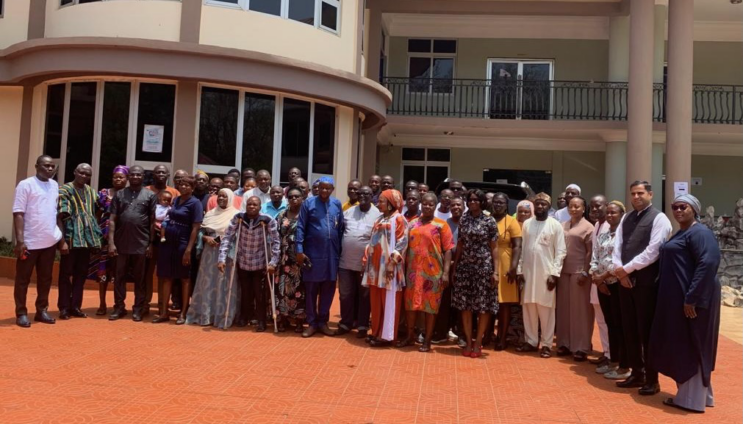
Organised as part of the Africa Food Trade and Resilience Programme (AFT&RP) – through AGRA and with funding from the Foreign, Commonwealth and Development Office (FCDO) of the UK – the event brought together over 40 stakeholders, including producers, processors, seed companies, input suppliers, development partners, and policymakers.
Chairman of CARP-GH, Yaw Poku, explained that the objective of CARP is to harness the energy and vibrancy of rice sector actors to transform the value chain and ensure self-sustainability and affordability.
Ghana’s rice sector has experienced significant growth over the past few years.
However, there are still challenges in aligning efforts across the value chain, particularly in ensuring effective collaboration between stakeholders. To address this, CARP-GH organised the workshop to foster stronger ties among rice stakeholders in Ghana.
“The workshop brought to the fore that linkages within the value chain and collaborative efforts of actors will enhance and bring freshness, quality and better markets to the sector,” Mr. Poku said.
There was also the showcasing of innovative technologies and best practices in rice production, processing, and marketing.
The engagement also deliberated on efforts that need to be taken to strengthen the overall rice value chain in line with national agricultural policies and objectives. Stakeholders shared various views on what needs to be done to strengthen the rice value chain.
Abukari Abdulai, Managing Director of Heritage Seed Company Limited and Northern Sector Representative of the National Seed Trade Association of Ghana noted the need for quality assurance and strict adherence to seed certification standards.
“What we produce for the farmer is what we call the certified seeds, and we go through a process that will make it good for a farmer to produce it… Nobody should produce rice seed without inspection by PPRSD (Plant Protection and Regulatory Services Division)…,” he said.
Sepenica Darko, founder and team leader for FarmerTribe Company Limited, also emphasised that challenges with fake input supply and access to markets need to be addressed.
“There are a whole lot of things that happen along the input supply chains that make farmers end up with counterfeited products… We are also facing difficulties because of a lack of markets,” she observed.
Hajia Hawa Musah, Northern Regional Director of the Department of Agriculture, stressed that policy changes are needed to boost local rice production and decrease imports. She believes that with proper investment, methods, and commitment, Ghana could even export quality rice.
The workshop builds on CARP Ghana’s 2025 work plan to host structured dialogues across Northern Ghana.
To date, over 40 stakeholders have participated in learning sessions, seed systems harmonisation efforts, and private sector matchmaking, strengthening collaboration across policy and business ecosystems.
The platform aligns closely with Ghana’s agricultural policy objectives, including the Feed Ghana Programme, which points out the importance of local production, value addition, and food systems resilience.
AGRA’s support for CARP is part of its broader Strategy 3.0 commitment: to catalyse inclusive agricultural transformation by identifying system tipping points, enabling trade, and amplifying the role of public-private partnerships.
Through the AFT&RP and CARP-GH, AGRA supports the emergence of a competitive agro-processing industry and a stronger rice economy, while ensuring that youth, women, and smallholders are central to the transformation agenda.
In his opening remarks, Sunil Dahiya, Senior Program Officer for Inclusive Markets, Trade, and Finance at AGRA – West Africa, emphasised the strategic importance of the dialogue.
“This platform represents a vital opportunity to connect all rice value chain actors, enhance sectoral coordination to harness opportunities and co-create long-lasting solutions that advance our shared vision of a vibrant, inclusive, and resilient rice sector in Ghana,” he said.
“This approach enables smarter investment, resilient markets, and ultimately a more self-reliant Ghanaian rice sector,” he added.
“AGRA continues to play a catalytic role by convening the national and regional actors around shared opportunities for food systems change and unlocking the rice sector’s potential,” Dahiya concluded.
Latest Stories
-
White House bars CNN from travelling with Trump on Air Force One
29 minutes -
Fennis wins second consecutive ITF J60 title in Accra
33 minutes -
Spain beat England in thriller after Kane penalty miss
39 minutes -
GPL 2026/27: Zaidan’s late goal ends Hearts of Oak unbeaten start
43 minutes -
CEOs demand clarity on pay harmonisation, board autonomy as FWSC engages SOEs bosses over IPEC transition
45 minutes -
2026 Women’s Super Cup: FC Savannah, Epiphany Warriors maintain top spots ahead of final group games
54 minutes -
‘Is EOCO responsible for determining lawyers’ fees?’ – Baffour Awuah
55 minutes -
David Beckles claims second J60 Accra title
1 hour -
No France cocaine suspect linked to Mahama, Vice President’s security details – NACOC
1 hour -
Anwelle Foundation launched in Jirapa to tackle poverty, youth unemployment
2 hours -
Joy Sports Editor Fentuo Tahiru Fentuo to moderate inaugural Music Meets Football Summit in Zambia
2 hours -
Court premises too volatile for Baffour Awuah’s attempted arrest by EOCO – Inusah Fuseini
2 hours -
Drug bust: Under no circumstances will NACOC leadership be compromised – Twum-Barimah
2 hours -
VIDEO: EOCO’s attempted arrest of Baffour Awuah was flawed beyond saving – Law Lecturer
2 hours -
Genuine Ghanaian exporters may face heightened foreign inspections over drug busts – Lawyer
2 hours