

Audio By Carbonatix
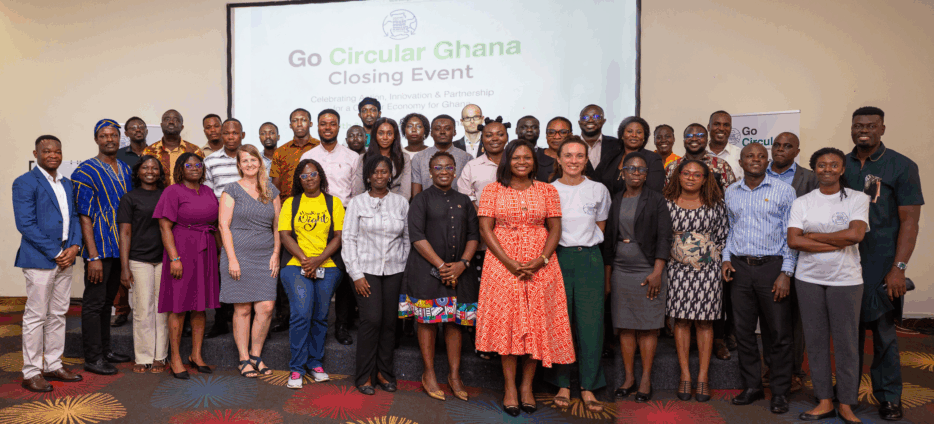
With plastic pollution threatening Ghana’s environment, health, and economy, government officials, businesses, and civil society groups have come together to mark the end of the Go Circular Ghana Project.
The project, led by the German Development Cooperation on behalf of the German Federal Ministry for Economic Cooperation and Development, was run in partnership with MEST and the Environmental Protection Agency (EPA) over the last three years. Its main goal was to reduce single-use plastics and promote a circular economy in Ghana.
At the closing event, stakeholders not only celebrated the progress made but also looked ahead to how the work can continue.
The project showed that reducing plastic waste in Ghana is possible and already underway. It leaves behind useful tools, new business ideas, and partnerships that can be scaled up for even greater impact.
The project focused on three major areas:
A Clear Plan for Reducing Single-Use Plastics
A national roadmap was created to help businesses, government bodies, and the public cut down on plastic use.
It provides specific steps for key sectors like supermarkets, retail shops, hotels, restaurants, and food delivery services.
This roadmap is meant to guide Ghana’s efforts to tackle plastic waste in a practical and coordinated way.
A Voluntary Pact with Business and Public Support
Eight companies joined a voluntary agreement to reduce their single-use plastic use by 50% by 2030.
Public awareness efforts included the “Bag the Habit of Single-Use Plastic” campaign, which reached over 20 million people through radio, TV, and billboards.
A pilot program at one supermarket encouraged over 1,000 customers to switch to reusable bags, with a 20% return rate already. This shows that many consumers are ready to change their habits.
Support for Small Businesses to Reduce Plastic Use
The project also helped small businesses, especially in the food and catering industry, switch to more eco-friendly practices.
With help from Impact Footprints Africa, some businesses returned to traditional methods like wrapping waakye in leaves instead of plastic. Others began using paper bags, glass jars, and delivery crates instead of plastic containers.
The Go Circular Ghana Project proves that solutions to plastic pollution already exist in Ghana and can work.
The message from the closing event was clear: reducing plastic isn’t just a promise anymore—it’s already happening.
The next step is to build on this progress and keep the momentum going.
Latest Stories
-
Kusi Adomako calls for road crashes to be declared a public health emergency
6 minutes -
Ghana makes history with international karting debut
35 minutes -
Livestream: The Law discusses new road traffic rules
1 hour -
What’s driving men to get penis fillers, despite the risks?
1 hour -
The world’s oldest president left for a ‘brief stay’ in Europe, he hasn’t returned in two months
2 hours -
Trapped driver rescued after accident on Kintampo–Tamale highway
2 hours -
Civil Service must put citizens at centre of decision-making – Vice President
2 hours -
Firefighters battle blaze at Accra New Town apartment
2 hours -
Ghana receives five new envoys to strengthen diplomatic relations – Ablakwa
2 hours -
Europe’s tallest Virgin Mary statue unveiled in rural Poland
2 hours -
Sammi Awuku denies reports of EOCO arrest
2 hours -
Stonebwoy makes history at OVO Arena Wembley with monumental BHIM Festival
3 hours -
Qatar denies capturing three Iranian pilots after downing fighter jets
3 hours -
Tano North chiefs petition Mahama over galamsey destruction in River Tano
4 hours -
Kalpohin SHS, NOBISCO qualify to represent Northern Region at National Public Speaking Competition
4 hours