

Audio By Carbonatix
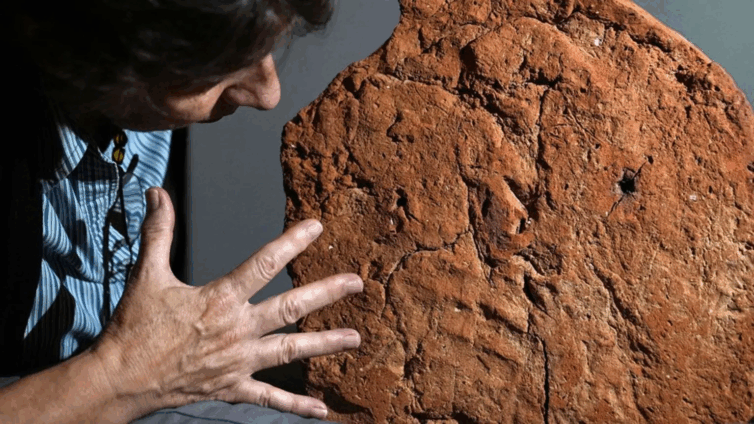
A 4,000-year-old handprint has been found on an ancient Egyptian tomb offering by curators preparing for an exhibition.
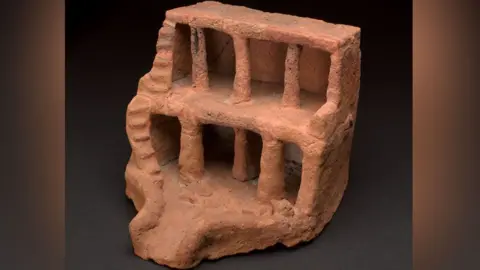
The discovery was made by University of Cambridge researchers on a "soul house", a type of clay model in the shape of a building, typically found in burials.
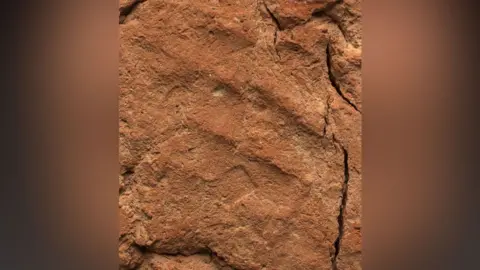
Curator Helen Strudwick said the complete handprint, which dates from 2055 to 1650 BC, was "a rare and exciting" find.
The ceramic will go on display as part of the university's "Made in Ancient Egypt" exhibition at the Fitzwilliam Museum, opening on 3 October.
Ms Strudwick, senior egyptologist at the Fitzwilliam Museum, said: "We've spotted traces of fingerprints left in wet varnish or on a coffin in the decoration, but it is rare and exciting to find a complete handprint underneath this soul house.
"This was left by the maker who touched it before the clay dried.
"I have never seen such a complete handprint on an Egyptian object before."
The exhibition concentrates on the people who made the ancient Egyptian crafts.
While ceramics were widely used and vast amounts of pottery survive, there are relatively few details known about the potters themselves, in comparison to other ancient Egyptian craftsmen.
The ready availability and generally low value of pottery may have affected their status, according to the museum, which cited a text known as the Teaching of Khet, comparing potters to pigs who wallow in mud.
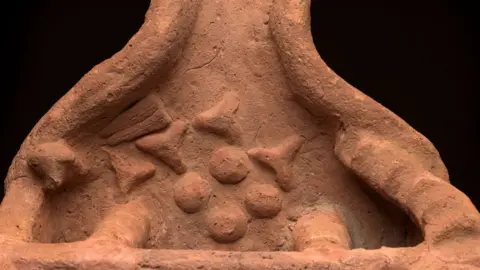
Soul houses may have acted as offering trays or provided a place for the soul of the deceased to live within the tomb.
They had an open front space where items of food were laid out, in this example loaves of bread, lettuce and an ox's head.
Analysis of the item suggested the potter who made it first created a framework of wooden sticks and then coated it with clay to make a building with two storeys supported by pillars.
During firing, the wooden framework burnt away, leaving empty spaces in its place.
The handprint found underneath was probably made when someone, perhaps the potter, moved the house out of the workshop to dry before firing in a kiln, according to the researchers.
The stories of Egyptian rulers, like Tutankhamun, have received a great deal of attention, but the makers of the artefacts themselves are often overlooked.
Made in Ancient Egypt aims to show who these people were, how they thought of themselves and what other Egyptians thought of them.
Latest Stories
-
GoldBod to fund rehabilitation of six water treatment plants affected by mining
3 minutes -
ORC challenges CSA cybersecurity sanction, says penalty was premature and procedurally unfair
5 minutes -
GoldBod to introduce gold traceability system by end of 2026 – Sammy Gyamfi
12 minutes -
Photos: Eleventh batch of Ghanaian evacuees arrive from South Africa
14 minutes -
GETFund explains mandate as EFPI expands partnerships to support Ghana’s education sector
19 minutes -
US$4.8bn SME financing gap exposes Ghana’s credit challenge — A call for swift implementation of open banking, open finance reforms
22 minutes -
Ghana is open to responsible mining, investment – Minerals Commission
28 minutes -
Driver busted with cocaine at Accra International Airport
30 minutes -
GoldBod to launch digital gold platform for Ghanaians, Africans
35 minutes -
NPP will reinstate Torkornoo when we return to power – Afenyo-Markin hints
37 minutes -
We’ll establish a Gold Village in Accra next year – Sammy Gyamfi
39 minutes -
Many Canadians are boycotting the US, so this is where they’re travelling instead
43 minutes -
Mining communities must be treated as development partners and economy shareholders – Sammy Gyamfi
48 minutes -
Nearly 9 metric tonnes gold refined locally this year – Sammy Gyamfi
48 minutes -
The world’s best countries for expats in 2026
52 minutes