

Audio By Carbonatix
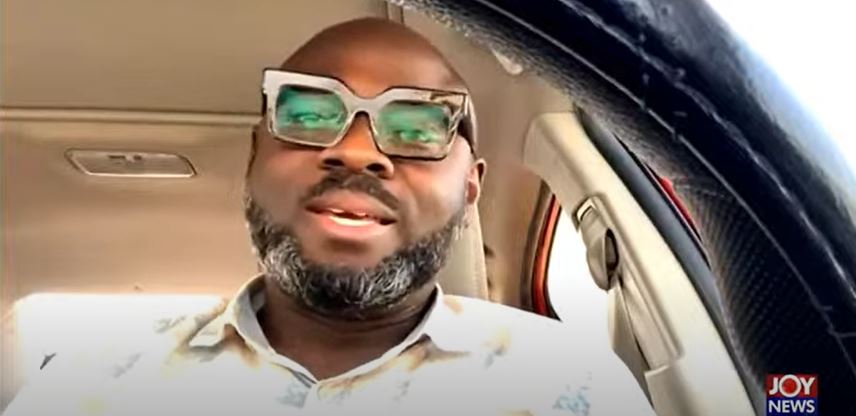
Professor of Financial Economics at the University of Ghana Business School says the banking sector clean-up failed to follow the most basic principles of banking and instead looked like an act of witch-hunting.
Speaking on JoyNews’ PM Express on Wednesday, July 30, Prof. Lord Mensah was blunt in his assessment of the decisions that led to the collapse of several indigenous banks.
“In banking, there’s what we call minimising the loss and then maximising the recovery,” he said. “For me, these principles were not applied earlier on, when we had the banking crisis.”
Prof. Mensah pointed to global best practices and economic theory that frown on collapsing banks too quickly.
“Let me go back to the ‘too big to fail’ mantra, which has been resonating in almost all the banking sector literature,” he said.
“The existence of a bank takes several dimensions… the longer the bank stays, the more the bank tends to open up its stakeholders.”
He argued that collapsing a bank should not be viewed solely from the owner’s ability to meet financial obligations.
“You have to look at what the government is getting from the bank. We’re talking about corporate tax here… at the point where the banks were being collapsed, we were looking at corporate tax between 25% and 30%,” he noted.
Prof. Mensah also highlighted the human cost of the decision.
“You have to look at the employees as well—people who are working and able to put food on the table for their kids… they’ve been able to manage their homes, put their kids to certain levels of education.”
He warned that by collapsing the banks in the name of protecting government interests, decision-makers also ended up harming the state.
“You end up sacrificing employees, and at the same time, the state as well. And that is what we saw.”
The economics professor cited a particular case to illustrate his point.
“If you have a bank that, as a result of solvency and liquidity issues, is owing to the tune of GH¢4.97 billion and the bank has made an attempt to give you GH¢2 billion—you have to take it,” he insisted.
“You have to take it, because in banking, you think about recovery, and then you minimise the possible losses.”
But that was not what happened. “The principles of banking were not followed at the time we were cleaning up the banking sector,” he said.
“And that is where, my good friend Martin Kpebu will say, that the motive was more of witch-hunting than following banking principles.”
Prof. Mensah expressed disbelief that the state ignored a GH¢2 billion recovery offer, only to saddle taxpayers with a bill that ballooned far higher.
“Why do you collapse the bank and then transfer all the possible obligations to the taxpayer to the point where the taxpayer had to commit about GH¢21 billion and over for the banking sector clean-up?”
“From where I sit,” he concluded, “it has to do with the basic principles of banking, which were not applied in the entire banking clean-up.”
Latest Stories
-
Domelevo backs OSP probe into GH¢70k allegation
21 minutes -
CAF Confederation Cup: Dennis Korsah confident Nations FC can overturn Mali defeat
36 minutes -
‘Avoid political comments’ – Domelevo advises Chief Justice
1 hour -
‘I don’t trust OSP’ to probe GH¢70k ‘bribe’ allegation – Kwasi Kwarteng
2 hours -
Road inspections not to witch-hunt contractors – Kwame Agbodza
2 hours -
Inter Milan mount stunning comeback to beat Napoli
2 hours -
Modric plans to play for Croatia past 41st birthday
2 hours -
Bayern fail to score for first time in 59 games
2 hours -
Bawumia preparing new cocoa policy package for farmers – Annoh-Dompreh
2 hours -
Wa-Tumu-Bolga road upgrade will unlock agriculture, trade – Agbodza
2 hours -
Ghana Maritime Authority readies oil-spill response vessel for deployment
2 hours -
Ayariga turns to drones, AI to tackle Agbogbloshie waste mountain
3 hours -
Agbogbloshie waste heap must go – Mahama Ayariga declares
3 hours -
Government to upgrade all rural telephony sites to 4G – Communications Minister
3 hours -
Rural calls, data to become cheaper by Q1 2027 – Sam George
3 hours