


Audio By Carbonatix
The newest version of the globally recognised SafeCare healthcare quality standards has been officially accredited by the International Society for Quality in Healthcare (ISQua) and Ghana's private healthcare sector will be among the first in Africa to implement it.
The release of SafeCare Standard Version 5 marks a major milestone in the ongoing effort to improve the quality of healthcare delivery in low- and middle-income countries. Developed under the PharmAccess Foundation, this version represents the most advanced set of standards yet in a system designed to help health facilities progress through a cycle of continuous quality improvement.
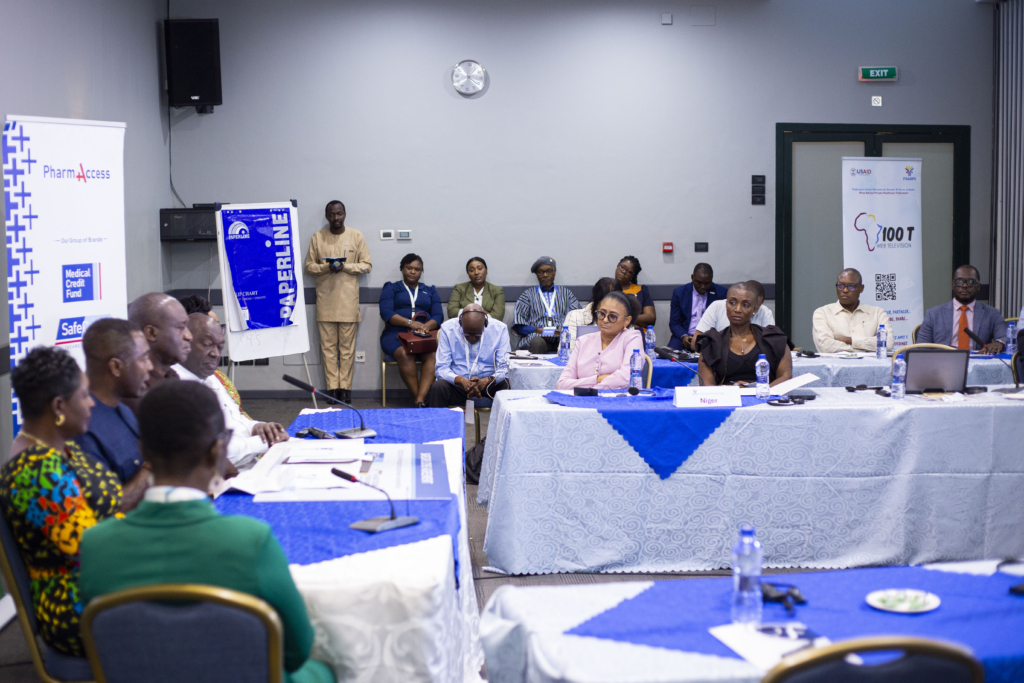
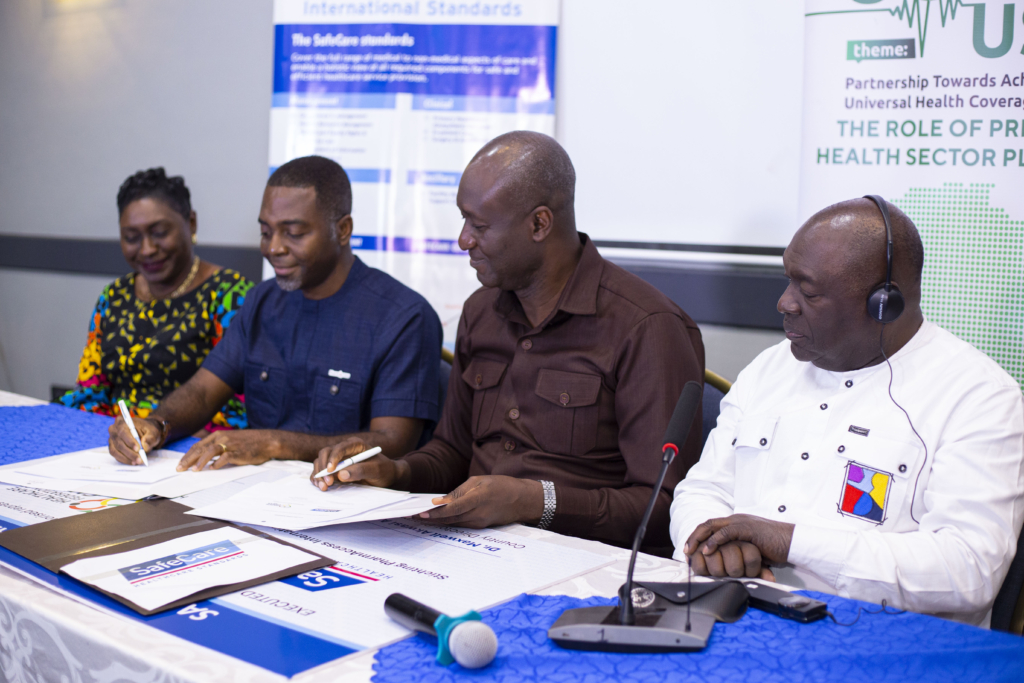
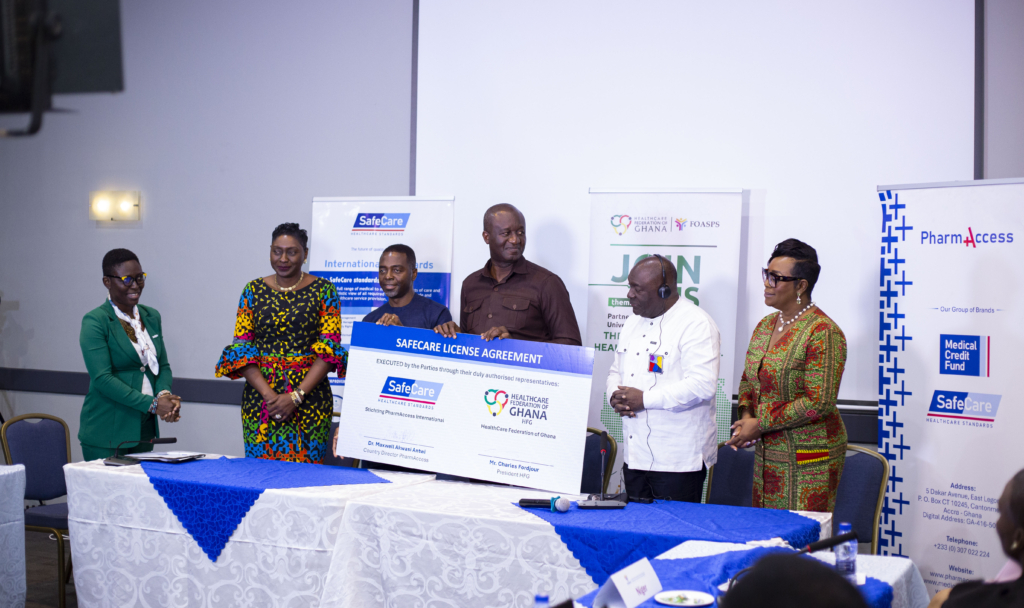
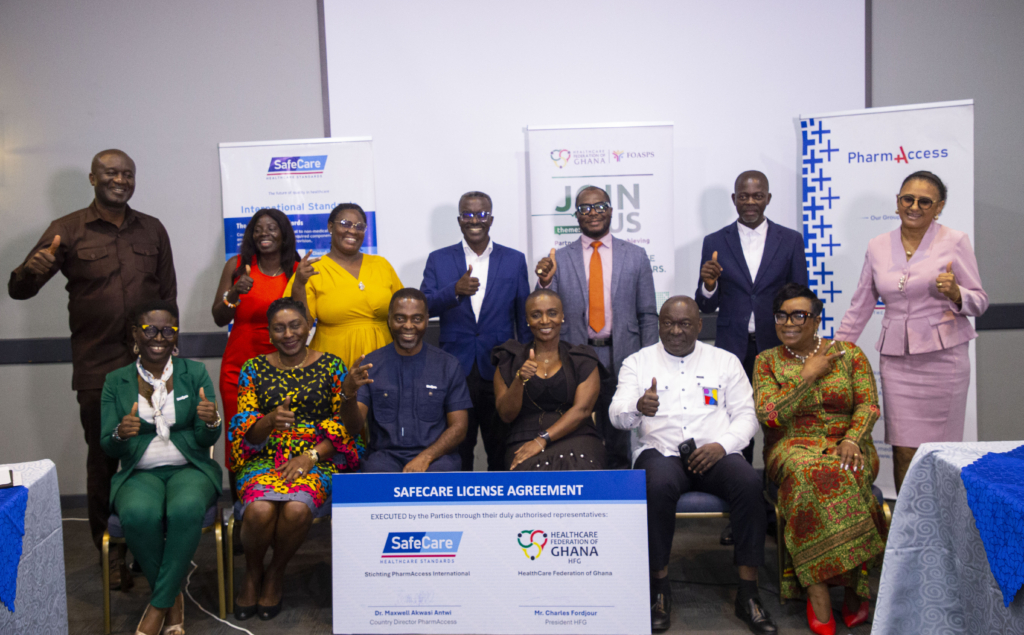
The Country Director for PharmAccess Ghana made the revelation at the signing ceremony of the SafeCare Licensing Agreement with the Healthcare Federation of Ghana (HFG) in Accra.
Dr. Maxwell Antwi emphasised the transformative potential of the newly accredited standards. He described SafeCare not merely as a compliance tool, but as a comprehensive framework designed to instill a lasting culture of quality improvement across healthcare systems.
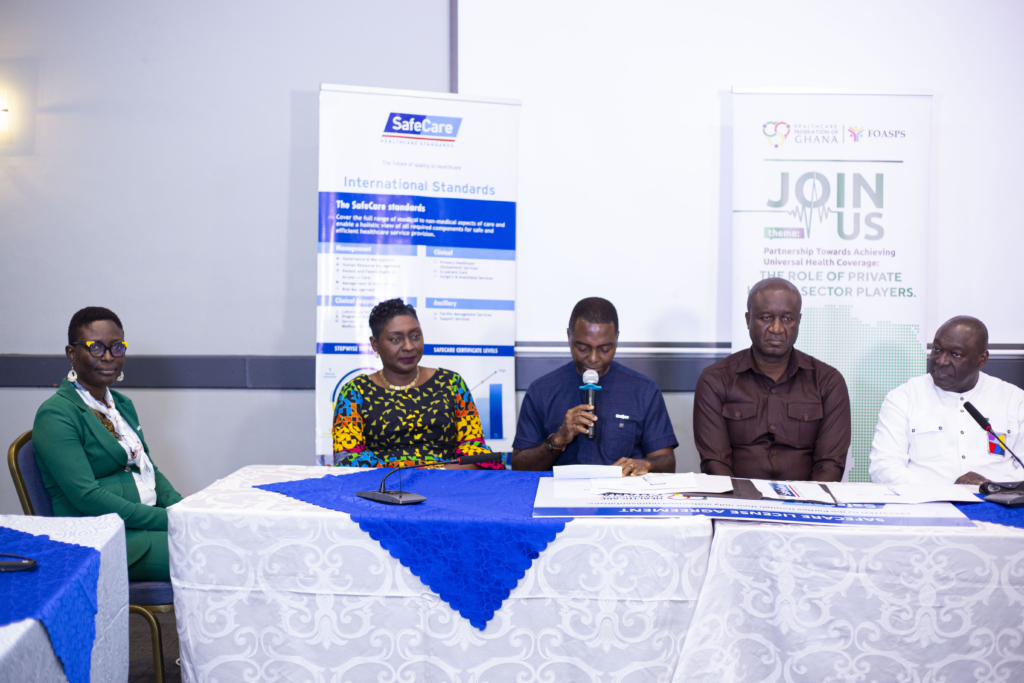
“SafeCare Foundation is a sister organisation under the PharmAccess Foundation Family. It uses ISQua-accredited standards to embed health system culture that improves care in a stepwise manner. So you move from Level 1 to Level 5. And it does this through cycles of assessment, quality improvement planning, quality improvement facilitation, capacity development and reassessment. So the cycle of SafeCare never ends.
Only yesterday, Mr. President, I’m happy to announce that, International Society of Quality Healthcare accredited SafeCare Standard Version 5 – which is the newest accreditation standard. So on this signing occasion, Healthcare Federation of Ghana will have the opportunity to use the newest accreditation standard accredited by ISQua.”
The new standards, which come after years of refinement, aim to strengthen how healthcare providers approach safety, efficiency, risk management and clinical outcomes. They are built to help facilities of all sizes - from small clinics to tertiary hospitals - diagnose operational weaknesses, build targeted improvement plans and track measurable progress over time. The updated framework also includes stronger digital tools, clearer benchmarking and deeper integration of patient-centered practices.
This comes at a critical time, particularly in Africa where inconsistent care quality continues to undermine health outcomes. Dr. Antwi stressed that Ghana and similar countries must shift focus from expanding access alone to ensuring that services provided meet minimum quality thresholds. Quality of care, he argued, is no longer a luxury - it is the frontline of public health.
His call to action is supported by alarming global data. He cited figures from the World Health Organisation showing that poor quality healthcare - not the absence of care - is the leading cause of avoidable deaths in many developing nations. While access remains a challenge, the bigger and often hidden crisis is that millions of patients die after reaching healthcare facilities that are unable to provide effective or safe treatment.
“WHO (2020) reports 5.7–8.4 million deaths annually in LMICs due to poor quality care, compared to 3–5 million from lack of access,” Dr. Antwi noted.
“Poor quality kills twice as many people annually as COVID-19 did at its peak.
60% of deaths from treatable conditions occur in facilities where patients already sought care, highlighting treatment deficiencies rather than access gaps.
These numbers are stark: poor quality doesn’t just fail to heal - it harms,” PharmAccess Country Director said.
Dr. Antwi also noted that SafeCare offers a proven model to reverse this trend. It has already been implemented in 27 countries and across 9,500 health facilities. More than 8,500 digital quality assessments have been conducted using the framework, powered by a network of nearly 1,000 internationally certified assessors. These assessments, he explained, are rigorous, transparent and focused on practical change, with over 70 percent of facilities showing measurable quality improvements.
He added that in Ghana, the Ministry of Health has formally adopted SafeCare as the national quality standard and the Health Facilities Regulatory Agency (HeFRA) recognises it as an official accreditation benchmark. With the latest version now available, the country is poised to deepen its quality agenda in both public and private sectors.

Beyond the health outcomes, there is also a compelling economic case. PharmAccess Country Director referenced a collaborative study between the University of Ghana, the University of Health and Allied Sciences and the University of Dundee, which shows that facilities performing better in quality assessments also tend to attract more patients. In short, quality brings growth.
“Additionally, we found that quality improvement scores have a positive association (not causality) with health service utilisation and service output. This revelation suggests that health facilities that performed well in QI assessments also recorded higher client attendance across the service delivery components,” he said.
In a landscape where patients are becoming more discerning and data more transparent, quality-certified facilities are gaining a strategic edge. Dr. Antwi explained that SafeCare helps providers reduce errors, streamline operations, and become more attractive to both investors and health insurers. The returns, he argued, are clear.
“Globally, studies indicate that every dollar invested in healthcare quality yields a 300% (threefold) return through efficiency gains, reduced errors, and improved patient satisfaction,” he indicated.
Dr. Maxwell Antwi challenged regional stakeholders to embrace this opportunity and take bold steps toward reversing the quality gap that fuels distrust, medical tourism and poor outcomes. By aligning with the newest ISQua-accredited standards, he said, Ghana and the region can redefine what healthcare excellence looks like - not in theory, but in practice.
“Let me seize this opportunity to challenge the other country federations within FOASPS to come onboard this journey of transforming healthcare in West Africa and stemming the tide of medical tourism by our country-fellows to outside of the continent for healthcare.”
With SafeCare Version 5 now officially accredited and ready for implementation, Ghana is setting the pace. The rest of Africa and the global community will be watching how this next chapter in quality healthcare unfolds.
Latest Stories
-
UK identified as leading destination for Ghana’s illicit cannabis exports – Report
1 minute -
Drug money allegedly finances Ghana’s political parties and real estate – Global Organised Crime Index
6 minutes -
NSA outlines seven steps for successful posting and validation of national service personnel
7 minutes -
GPRTU taskforce clamps down on unapproved fares at Kasoa
8 minutes -
Prime Insight: Making room for meaningful national conversations on Joy Prime
19 minutes -
FABAG commends Ato Forson’s over removal of 20% excise duty on locally manufactured fruit juices
26 minutes -
HIV stigma discourages testing, prevention and treatment in Ghana – Ghana AIDS Commission
29 minutes -
Blocking cocaine probe lends weight to claims of political protection for traffickers – Assin South MP
32 minutes -
NPP Vice Chair race: I may be the youngest, but most experienced – Nana B
34 minutes -
Last UK and US troops leave Iraq as anti-Islamic State mission ends
35 minutes -
Don’t stay home idle, embrace entrepreneurship while awaiting posting – Unemployed nurses urged
46 minutes -
Aayalolo buses not speeding on contra-flow lanes – GAPTE assures commuters
49 minutes -
Effia MP calls for Kurt Okraku’s removal, overhaul of Ghana football structure
50 minutes -
CAS hearing on AFCON final appeal by Senegalese Football Federation set for October 8
50 minutes -
STC fares to go up by up to 8% this week – Deputy MD
52 minutes