


Audio By Carbonatix
Ghana has achieved a major milestone in its national healthcare quality improvement journey, as the private health sector formally joins the SafeCare quality framework through a licensing agreement between the Healthcare Federation of Ghana (HFG) and PharmAccess.
The agreement marks a significant policy and operational shift, as it brings together all three major pillars of Ghana’s healthcare system – public, 'private, and faith-based - under one quality improvement model. This alignment makes Ghana one of the few African countries to establish a unified, cross-sectoral framework for assessing, improving and benchmarking healthcare quality.
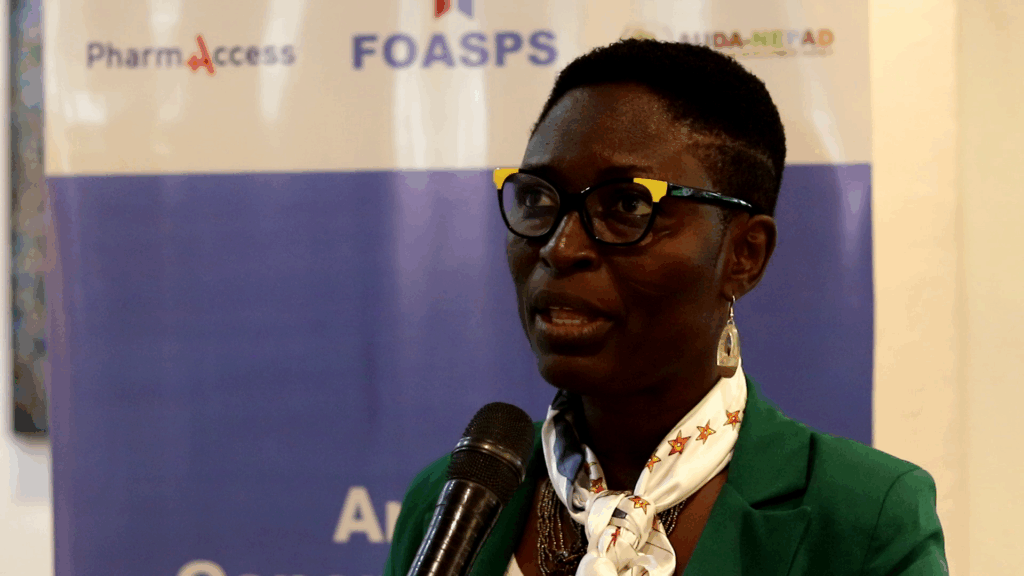
In an interview with JoyNews, Country Director for SafeCare at PharmAccess Ghana, Bonafacia Agyei, said the new licensing agreement with the Healthcare Federation of Ghana completes a long-standing effort to align all key sectors of the country’s health system - public, private and faith-based - under one unified quality improvement framework.
She explained that SafeCare has already been successfully implemented within the faith-based healthcare facilities. At the same time, the Ghana Health Service (GHS) is steadily adopting the model as part of its national quality improvement efforts.

The SafeCare Country Director further added that with the private sector now formally on board, Ghana can move forward with a comprehensive approach to improving healthcare quality across all levels and providers.
“Until now, what remained was the private sector. Today marks a significant day and a major milestone. Through this licensing agreement with the Healthcare Federation of Ghana, we have effectively closed the triangle. We now have all major healthcare sectors - public, private, and faith-based - on board.”
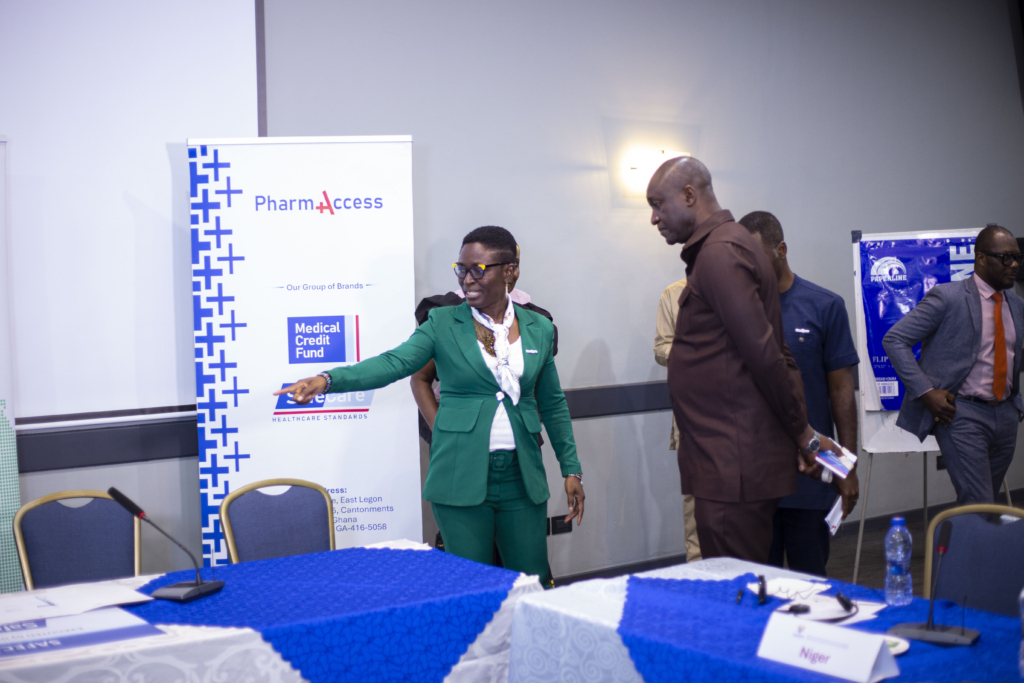
“This agreement gives us the opportunity to fully engage the private sector and support them in institutionalising quality care. Through the Healthcare Federation, we will be able to access private healthcare facilities and implement the SafeCare standards and processes to help build and sustain a long-term culture of quality,” she said.
For the past five years, PharmAccess has partnered with the Christian Health Association of Ghana (CHAG) to institutionalise SafeCare standards within faith-based facilities. At the same time, collaboration with the Ghana Health Service has seen strong momentum toward adopting SafeCare as a national quality strategy within the public sector.

With the private sector now formally integrated, the SafeCare model becomes a nationwide standard. Through the agreement, PharmAccess will support HFG to train assessors and roll out SafeCare across its vast and diverse membership - ranging from maternity homes and hospitals to pharmacies and laboratories.
“This agreement gives us the opportunity to fully engage the private sector and support them in institutionalising quality care. Through the Healthcare Federation, we will be able to access private healthcare facilities and implement the SafeCare standards and processes to help build and sustain a long-term culture of quality,” Ms. Agyei explained.
According to her, the impact of this integration is both clinical and operational. Facilities that adopt SafeCare are expected to improve client satisfaction, enhance service delivery and boost patient outcomes. But the benefits go even deeper - into how facilities are run, financed and perceived by partners and investors.

“Studies have shown that within about two years of implementing SafeCare, healthcare providers also achieve significant efficiency gains. That’s because SafeCare doesn’t just focus on clinical care—it looks at the entire ecosystem around service delivery: how you manage your stock, how you treat your clients, how the business side of care is handled.
By using SafeCare standards, facilities enhance their efficiency, reduce operational risks, and become more attractive to investors and development partners. This is a powerful opportunity for private sector healthcare providers to grow their businesses, improve service quality, and deliver better outcomes to the people they serve,” she indicated.
SafeCare is a digitally supported and continuous quality improvement cycle. Under this new phase, a cohort of professionals from within HFG will be trained as internationally certified assessors. These assessors will evaluate facilities using globally recognised SafeCare standards and then work alongside quality facilitators to support improvements through targeted coaching and structured planning.
“This improvement cycle will continue, building and reinforcing a sustainable culture of quality within the private health sector,” Agyei said.
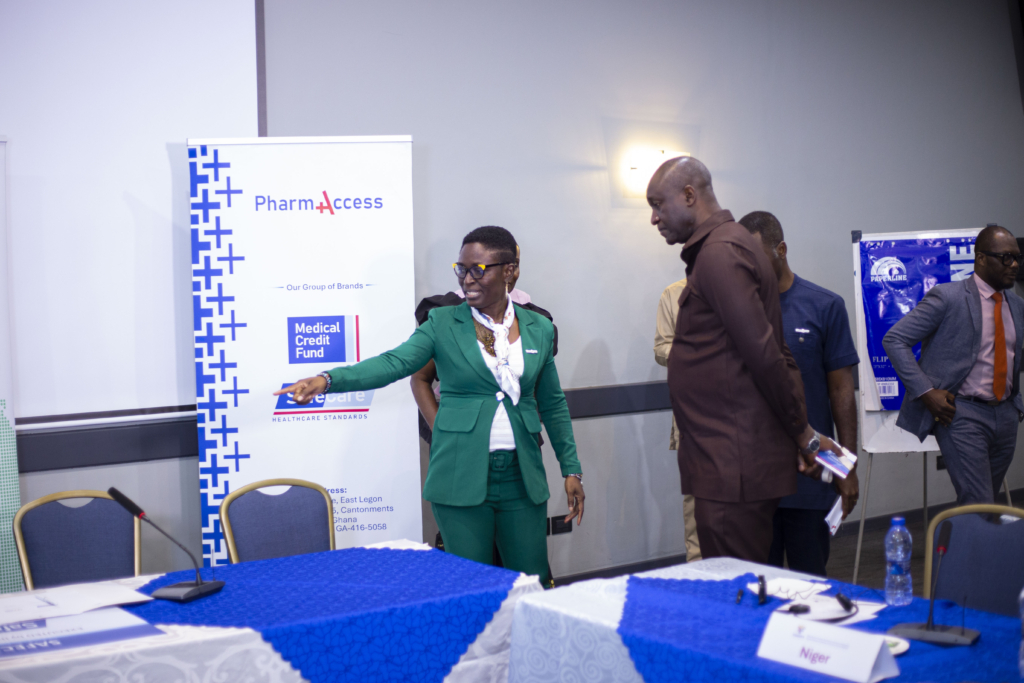
One of the most transformative features of this model is the ability to benchmark quality across sectors. With SafeCare now active in the public, private, and faith-based spaces, Ghana can for the first time speak a common language of quality - allowing for performance comparisons, shared learning and recognition of excellence.
“Another key benefit of this approach is benchmarking. With SafeCare now present in the public, private, and faith-based sectors, we’re using a common language and framework to measure quality. This allows us to accurately assess and compare facilities across sectors, identify high performers, and drive improvements across the entire health system in Ghana,” she said.
The quality healthcare assessor described the licensing agreement not simply as a contractual event but as a transformational step toward building a healthcare system that is accountable, patient-focused, and globally competitive.
With this “triangle of quality” now complete, Ghana’s health system is poised to enter a new era - where quality is not fragmented or optional, but embedded and measurable across every level of care.
Latest Stories
-
ICU urges GHABA members to transform hairdressing skills into sustainable enterprises
13 minutes -
Ghana eyes stronger trade ties as Australia hosts multicultural trade and investment forum
23 minutes -
Margaret-Marie Krakue
25 minutes -
Ayariga announces plans for live broadcast of MMDAs’ meetings on local radio stations
29 minutes -
Mrs Anna Tackie
31 minutes -
Ghana links Afghan heroin and Brazilian cocaine to global drug markets – Global Organised Crime Index
38 minutes -
NHIA launches nationwide inter-school quiz to deepen students’ knowledge of NHIS
44 minutes -
Political protection could be masking Ghana’s cocaine trade – Global Organised Crime Index
49 minutes -
AFCON 2027Q: ‘We have to dissolve the GFA’ – Effia MP after Black Stars lose to Gambia
51 minutes -
NPP announces voting schedule and ID requirements for October 3 national elections
53 minutes -
Lupus can mimic HIV symptoms and damage kidneys if untreated – KNUST expert
56 minutes -
Focus on Sickle Cell Foundation seeks to introduce sickle cell education through comics in Ghanaian schools
1 hour -
NPP rewrites the campaign playbok as opposition reality shapes National Executive contest
1 hour -
Road safety education will fail without enforcement – NRSA boss
1 hour -
Daily Insight for CEOs: Finishing Q3 strong and entering Q4 with purpose
1 hour