

Audio By Carbonatix
Ghana's healthcare system is undergoing a steady but significant shift, as new financing models, quality standards and digital tools begin to address long-standing gaps in access and service delivery.
At the centre of this effort is PharmAccess, a Dutch not-for-profit organisation, working with government, private providers and development partners to strengthen the health system.
According to Country Director of PharmAccess Ghana, Dr. Maxwell Antwi, the approach is built on aligning financing, data and innovation to deliver results that directly impact patients.

One of the key interventions is the SafeCare quality improvement system, which provides a structured framework for assessing and upgrading healthcare facilities. Globally, 74 percent of facilities assessed under SafeCare have recorded measurable improvements, with supported systems delivering about 9.6 million patient visits each month.
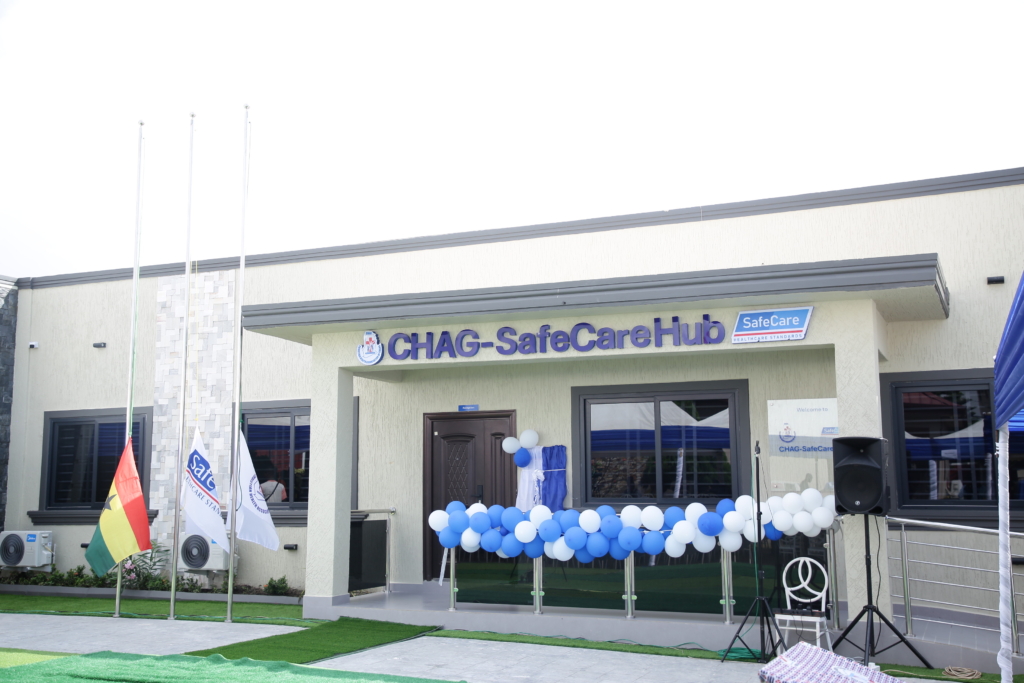
In Ghana, the model is being integrated across public, private and faith-based facilities, pushing toward a more consistent national standard of care.
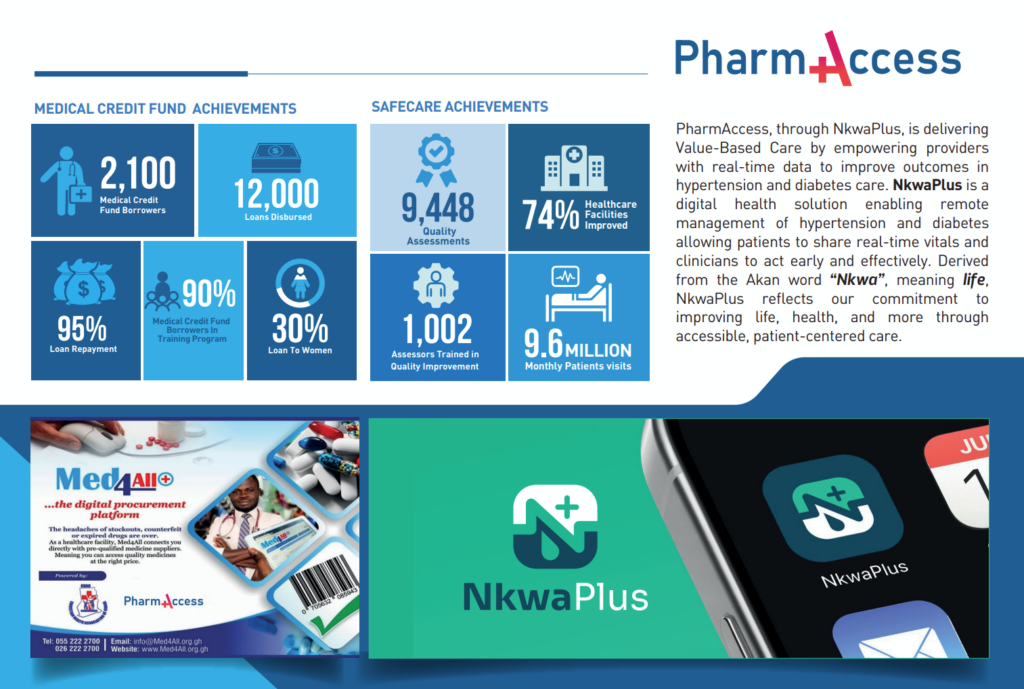
Access to funding, often a major barrier for providers, is being addressed through the Medical Credit Fund. The facility has supported more than 2,100 healthcare providers worldwide, disbursing over 12,000 loans with a repayment rate of 95 percent. Nearly 30 percent of these loans have gone to women-led health businesses. The financing is helping facilities expand infrastructure, acquire equipment and improve service delivery.
PharmAccess is also addressing inefficiencies in pharmaceutical supply through its Med4All platform, which enables facilities to procure quality-assured medicines at competitive prices. The system is designed to reduce stock-outs and improve affordability.
Beyond infrastructure and supply chains, the focus is shifting to how care is delivered. In partnership with the National Health Insurance Authority and the Christian Health Association of Ghana (CHAG), Value-Based Care models are being rolled out to improve management of chronic conditions such as hypertension and diabetes. These models prioritise continuous care, patient engagement and measurable health outcomes.
Supporting this shift is NkwaPlus, a digital platform that allows patients to share real-time health data with clinicians, enabling early intervention and sustained monitoring. The system is designed to move care beyond facility walls and improve long-term disease management.
Dr. Antwi says the results emerging from these interventions show how coordinated investments can strengthen the system. The next phase, he notes, will focus on scaling these solutions and ensuring they remain accessible to all.
The developments point to a gradual but clear transition in Ghana’s healthcare system-toward a model that is more coordinated, data-driven and responsive to patient needs.
Latest Stories
-
The 7-foot giant of Ngleshie Amanfro: Seven-foot Ghanaian Ephraim Saawa dreams of joining the national basketball team
30 minutes -
Government promises support for Kumasi Central Market fire victims
37 minutes -
Vibes The Movie: Big Ghun’s Ghanaian film earns five nominations at 2026 REFFA
1 hour -
MamaCare CEO warns unresolved conflicts among health workers could undermine maternal and neonatal care
2 hours -
Health professionals urged to translate medical knowledge into practice to save mothers
2 hours -
Conflicts among care providers linked to maternal, neonatal deaths – Expert
3 hours -
GIS marks 10th TIME conference, champions improved teaching practices
3 hours -
BRICS Or Balance? What Ghana’s bid really means
4 hours -
GPRTU wants full TRAFFITECH-GH implementation to start in 2027
4 hours -
Mahama announces plans to import electric wheelchairs for PWDs
4 hours -
KGL U17 Colts 2026: Western beat Prempeh Elite Academy to set up final final with Greater Accra Region
4 hours -
Late Solanke strike salvages 10-man Spurs draw at Man United
5 hours -
Gender Ministry to monitor welfare of Nana Akua Addo’s children amid domestic violence case
5 hours -
Benedict Okyere Yeboah: Ghana’s football problem goes beyond sacking a coach
5 hours -
GPL 2026/27: Darkwah Wiafe’s winner sees All Blacks beat Kotoko
5 hours