

Audio By Carbonatix
Walk down any street in Accra, Lagos, Nairobi, or Dakar, and you’ll notice a common sight: people squinting under the relentless African sun. Unlike in parts of the world where sunglasses are part of everyday attire, in much of Africa, they are still often regarded as a fashion luxury rather than a health necessity. Yet the truth is that prolonged squinting does more than cause momentary discomfort; it leaves permanent marks on the face and damages the eyes over time.
The folds etched on many foreheads are not only signs of ageing but also a reflection of environmental stressors. Excessive sunlight forces people to squeeze their eyelids and wrinkle their brows to cope. In a region where most people do not wear sunglasses, the cumulative effect is premature wrinkling and, more importantly, long-term eye strain.
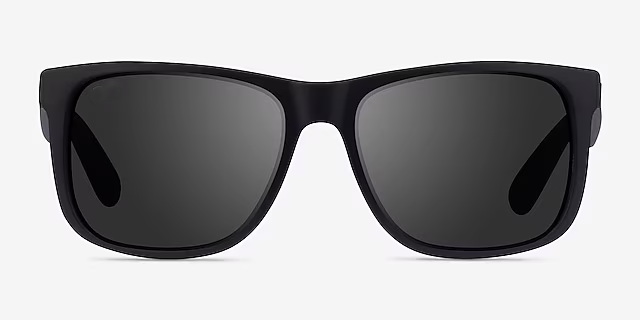
This reality creates a missed opportunity. Sunglasses should not be treated merely as accessories for the elite but as essential health gear, much like sunscreen in Europe or face masks in Asia. The conversation must shift from fashion to preservation, preserving eyesight, protecting the skin around the eyes, and maintaining a youthful appearance.
If approached this way, sunglasses could ignite a new multi-billion-dollar industry in Africa. The continent already has the demographics: a vast, youthful population exposed to strong sunlight almost year-round. What is lacking is the reorientation of demand. Once people understand that sunglasses are about eye health and appearance preservation, mass adoption could follow quickly.
For opticians, the opportunity is immense. Prescription lenses paired with UV-protective sunglasses could address both vision and sunlight protection in one product. Industrialists, meanwhile, could localize production, tapping into Africa’s growing appetite for affordable, stylish, and functional goods. With investments in manufacturing, Africa could move from being a passive importer of foreign brands to a producer of its own sunglasses, tailored to local tastes and climates.
The multiplier effect would be significant. Local production means jobs across design, manufacturing, distribution, and retail. Fashion industries could collaborate with healthcare to drive campaigns normalising sunglasses for all, not just the wealthy or style-conscious. Export potential to other sunny regions, particularly in the Global South, could further expand revenue streams.
Consider Ghana alone: if just ten million Ghanaians were to spend an average of 100 cedis annually on sunglasses, that would generate one billion cedis in domestic market value every single year. Scale this across Africa’s 1.4 billion people, and the numbers speak for themselves. Sunglasses are not just about style; they are about health, economics, and opportunity.
In a time when Africa seeks industries beyond extractives, sunglasses present a surprisingly practical option. The sun is not going anywhere. But the habit of squinting, with all its consequences, can be addressed, turning a health necessity into an economic engine. What Africa needs is a shift in mindset: to see sunglasses not as vanity, but as vision.
Latest Stories
-
He entered at eight. He is now 16: Ghana’s children growing up in prayer camps
2 hours -
‘Development must not always begin from Accra’ — Anwelle Foundation launched in Jirapa
2 hours -
PKO trio eye victories at Odwira Festival
5 hours -
346 Ghana Navy recruits pass out after 26 weeks of intensive training
5 hours -
Newsfile to discuss EOCO-MP arrest, drug trafficking, speech arrests and $235m water debt
6 hours -
JoyNews gets results as listeners raise GH¢40,000 to help 17-year-old student with cerebral palsy attend SHS
6 hours -
Vice President calls for stronger local pharmaceutical production to reduce medicine imports
6 hours -
The brewing tension at KNUST; Beware the Ides of October….
7 hours -
Health Ministry moves to integrate traditional medicine into mainstream healthcare
7 hours -
550 pupils in Kintampo South get educational lifeline as ‘Seeds of Hope’ reaches farming communities
7 hours -
Opoku Mensah urges Christian Council, House of Chiefs to speak up on democratic freedoms
8 hours -
Teacher unions’ strike: Minority demands immediate payment of teacher arrears, 20% deprived area allowance
8 hours -
The Accra-Kumasi Expressway: Building it right
8 hours -
Beyond gold exports: Building value and economic resilience from Ghana’s gold
8 hours -
2027 AFCONQ: Ghana under pressure as Gambia beat Somalia 2-1
8 hours