

Audio By Carbonatix
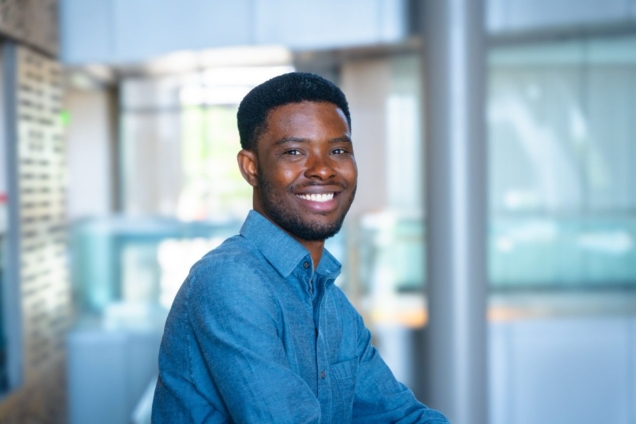
For Ghanaian scientist Aaron Boakye, science is more than just experiments; it’s a mission to solve real-world problems that affect everyday lives. His journey began with a deep concern for neglected tropical diseases, especially leishmaniasis, a painful and often deadly illness that affects thousands across Africa but receives little global attention.
As a young researcher, Aaron was committed to uncovering this previously neglected disease. He investigated how the parasite behind leishmaniasis survives and spreads, using computer-based tools to identify weaknesses in its biology, points where new drugs could intervene. His work blends scientific precision with a strong sense of purpose: to offer hope to communities long overlooked by mainstream medicine. Recently, his research has concentrated on two enzymes, OASS and PTR1, which are vital for the survival of Leishmania donovani, the species that causes visceral leishmaniasis.
Through advanced simulations, Mr. Boakye has identified compounds that bind to these enzymes and inhibit their function. Some of these molecules come from plants traditionally used in African medicine. “Nature has already done the hard work,” Mr. Boakye says. “We’re just learning how to listen.”
But his research goes beyond identifying drug leads. Boakye is also developing reproducible workflows that allow other scientists, especially those in low-resource settings, to run complex simulations without expensive equipment. His scripts emphasize clarity, error handling, and transparency, making them ideal for collaborative research across borders.
That passion soon led him deeper into the world of microbes. Aaron became fascinated by quorum sensing, the way bacteria “talk” to each other using chemical signals. These tiny conversations help bacteria coordinate attacks, resist antibiotics, and form powerful communities. By studying how to interrupt these signals, Aaron uncovered new strategies to fight infections, especially in places where antibiotic resistance is becoming a major threat.
But his journey didn’t stop there.
Today, Aaron is a PhD candidate in Biochemistry at the University of Utah in the United States, where he’s tackling one of the biggest health challenges of our time: diabetes. His research focuses on the insulin receptor, a protein that helps the body regulate blood sugar. When this receptor fails, it can lead to type II diabetes, a disease that affects millions, including many in Ghana.
Despite its importance, the insulin receptor remains poorly understood. It’s large, flexible, and difficult to study. Aaron is using advanced imaging techniques like cryo-electron microscopy (cryoEM) to capture the receptor in action, especially when it interacts with molecules that block insulin’s effects. His goal is to reveal the receptor’s hidden structure and open new doors for treatment.
To do this, Aaron blends ideas from different fields, drawing inspiration from virus research, protein engineering, and computational modeling. He’s adapting methods used to study HIV and COVID-19 proteins, applying them to human biology in creative ways. His work is helping scientists see the insulin receptor more clearly than ever before.
What makes Aaron’s story so powerful is his unwavering commitment to impact. Whether he’s modeling molecules or writing for the public, he believes science should serve the people. He’s especially passionate about sharing knowledge with African audiences, making complex research accessible and relevant.
From fighting tropical diseases to decoding human metabolism, Aaron Boakye’s journey is a testament to what science can achieve when driven by purpose, curiosity, and heart.
Latest Stories
-
Why I proposed Gold-for-Oil and Domestic Gold Purchase Programme – Bawumia discloses
3 minutes -
Sista Afia urges artistes to disinfect mics or get personal ones for shows
28 minutes -
Joy FM Back to School Discount Fair returns September 4–5
30 minutes -
Supporting small-scale miners to become medium-scale miners key to tackling galamsey menace – Bawumia
39 minutes -
No politician can beat Bawumia in 2028 if voters focus on issues – Miracles Aboagye
54 minutes -
Mahama reaffirms Ghana’s investment drive, calls on global investors to partner in Africa’s growth
1 hour -
Beyond the Numbers: Understanding the Bank of Ghana’s Domestic Gold Purchase Programme(DGPP)
2 hours -
AI can’t replace lawyers, Supreme Court nominee Anthony Forson warns
2 hours -
Teacher unions threaten strike over automatic promotion deadline
3 hours -
Yango Ghana earns Great Place to Work Certification for 2026
3 hours -
Over 400 companies ready to join 24-Hour Economy – Dr Rashid Pelpuo
3 hours -
Zanetor proposes CSIR funding for cassava, hemp-based alternatives to plastics
3 hours -
‘Judges don’t mingle with appointing authorities’ – Amoako Asante defends judicial independence
3 hours -
‘We’re getting close to A’ – Pelpuo rates government’s job creation B+
3 hours -
90% of planned strikes were called off under my tenure – Pelpuo
3 hours